Malaysian street food is among the most diverse and consistently excellent in Southeast Asia - a product of three major culinary traditions (Malay, Chinese, Indian) layered with the Peranakan hybrid culture that emerged from centuries of trade along the Strait of Malacca. The hawker centre is the central institution: an open-air collection of independent stalls, each specialising in one or two dishes, serving food that typically costs MYR 4–15 (approximately USD 0.85–3.20) per plate as of 2026.
This guide covers the essential dishes, the best hawker centres by city, night market timing, and the halal/non-halal distinctions that matter if you have dietary requirements.
The Essential Dishes
Nasi Lemak
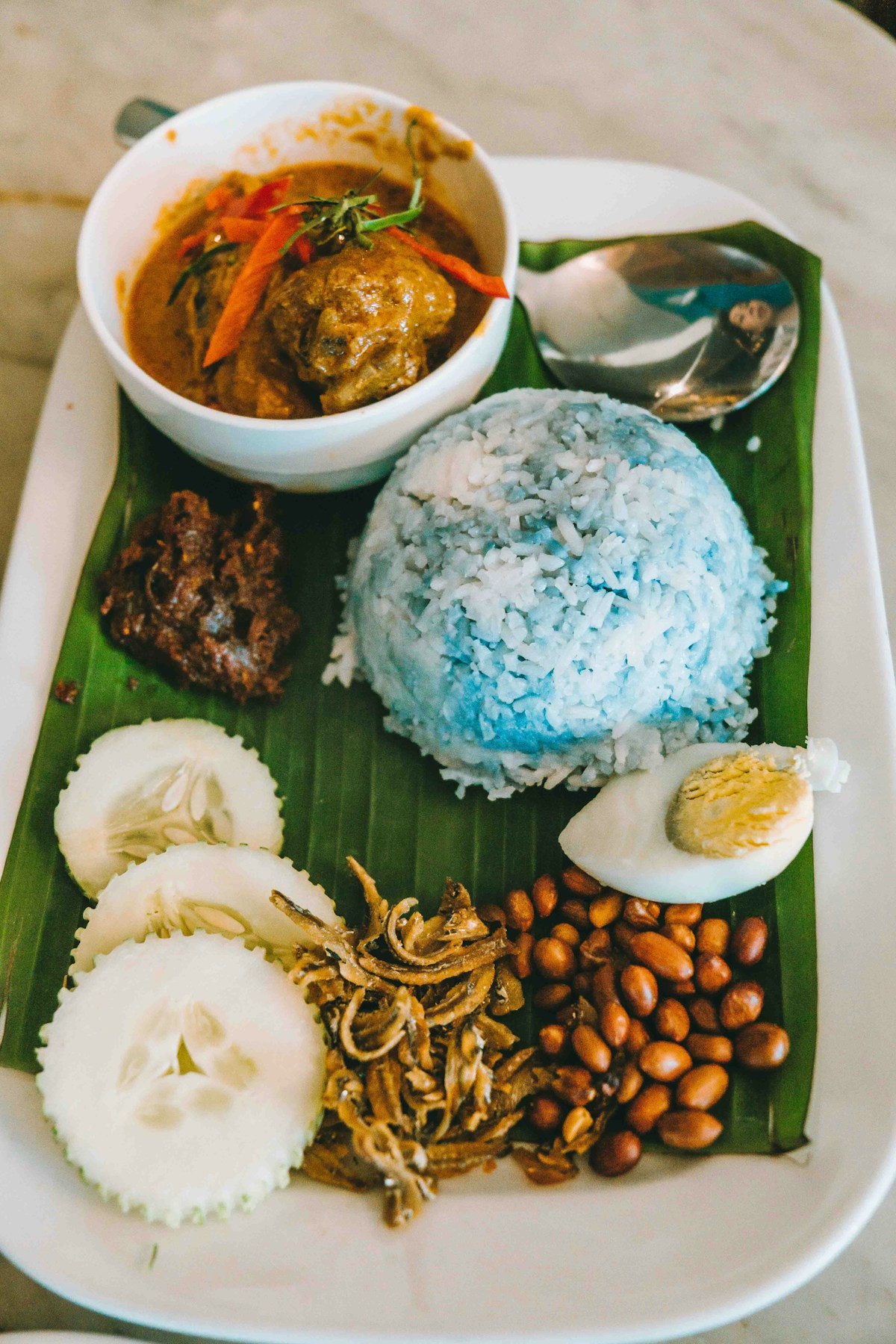
The national dish. Coconut-steamed rice served on a banana leaf with sambal (chilli paste), crispy fried anchovies (ikan bilis), roasted peanuts, sliced cucumber, and a hard-boiled or fried egg. The sambal is the defining element - every stall has its own recipe, ranging from sweet and mild to intensely spicy. A standard plate costs MYR 3–5 at a hawker stall; versions with fried chicken or beef rendang run MYR 8–14.
Nasi lemak is eaten at all hours - it’s as common for breakfast as for a late dinner. The version wrapped in banana leaf and served at predawn market stalls is often the best.
Where to find it: Kampung Baru in KL (the original Malay village neighbourhood) has some of the most respected nasi lemak stalls in the country. Ali Nasi Lemak Daun Pisang on Beach Street in Georgetown, Penang, is a well-known version using banana leaf.
Char Kway Teow
Flat rice noodles stir-fried over very high heat with dark soy sauce, prawns, cockles, bean sprouts, eggs, and Chinese sausage (lap cheong). The key is wok hei - the smoky, slightly charred flavour that comes from cooking on a ripping hot wok. The best versions come from hawker stalls where the cook has been working the same wok for decades.
Penang’s version is considered definitive: it’s done with lard and cockles, and the noodles have more char than the KL interpretation. A plate at a hawker centre costs MYR 7–12 as of 2026.
Where to find it: Jalan Alor in KL is the most tourist-accessible location. In Penang, the stalls along Lorong Selamat in Georgetown are among the most-cited. Note: traditional char kway teow uses lard and is not halal.
Roti Canai
A flaky, layered flatbread of South Indian origin, cooked on a flat griddle and served with dhal (lentil curry) or fish/chicken curry for dipping. The dough is repeatedly stretched and folded before cooking, producing distinct layers. Sold at mamak stalls from 6am onwards - MYR 1.50–2.50 for a plain version, MYR 3–5 with egg (roti telur) or banana (roti pisang).
Mamak stalls are Tamil Muslim eateries and are halal. They operate 24 hours in many neighbourhoods and are a social fixture across all communities in Malaysia.
Where to find it: Any mamak stall across Malaysia. In KL: Restoran Kayu Nasi Kandar in Bangsar is a reliable standard. In Penang: the mamak strip along Jalan Burma is always open.
Satay
Skewers of marinated chicken or beef, grilled over charcoal and served with a thick peanut sauce, compressed rice (ketupat), sliced cucumber, and raw onion. The marinade typically includes turmeric, lemongrass, and galangal. Satay is halal when made with chicken or beef, but always confirm at the stall.
Kajang, a town southeast of KL, has a decades-old reputation as the satay capital of Malaysia. The prices are MYR 0.80–1.50 per skewer at a hawker stall; a serving of 10–15 skewers with ketupat and sauce is a typical portion for one person.
Where to find it: Kajang town centre for the full experience. In KL: Satay Kajang Hj Samuri at Sungai Wang Plaza is a well-established outlet. Night markets (pasar malam) across the country reliably have satay stalls.
Curry Laksa
A spiced noodle soup with a coconut-curry broth, yellow noodles or vermicelli, tofu puffs, cockles, bean sprouts, and a dollop of sambal. The broth is rich and aromatic - built on dried chillies, lemongrass, galangal, and coconut milk. Not to be confused with Penang’s assam laksa (tamarind-soured fish broth, no coconut) or Sarawak laksa.
A bowl costs MYR 7–13 at a hawker centre as of 2026. Vegetarian versions replace cockles and prawns with tofu and fishcake.
Where to find it: KL’s Jalan Imbi area has several well-regarded curry laksa stalls. In Penang, the two versions (curry laksa and assam laksa) are usually served at different stalls - don’t confuse them.
Cendol
An iced dessert of green pandan rice flour jelly strands, coconut milk, and palm sugar (gula Melaka) syrup poured over shaved ice. Optional additions include red beans, glutinous rice, and durian. The palm sugar is what distinguishes a good cendol - the dark, treacle-like Melaka variety is richer than the refined sugar versions used in cheaper stalls. A bowl costs MYR 3–6.
Where to find it: Penang’s Teochew Chendul stall on Jalan Penang (Georgetown) is one of the most frequently cited. In Melaka: the stalls at Jonker Street market serve versions using authentic Gula Melaka.
Apam Balik
A thick, crispy-edged pancake folded over a filling of crushed roasted peanuts, creamed corn, and sugar. The batter is poured into a round pan and cooked until crisp on the outside with a soft centre. A common night market item, priced at MYR 2.50–5 per piece.
The Penang version (often called “terang bulan” or “martabak”) uses a thinner, crispier batter. The KL version tends to be thicker and more bread-like.
Murtabak
A stuffed savoury pancake of South Indian origin - a thin dough envelope filled with minced mutton or chicken, egg, and onion, then pan-fried until crispy. Served with a bowl of watered-down curry or pickled vegetables. MYR 7–14 depending on filling. Available exclusively at mamak stalls (halal).
Where to find it: Hameediyah Restaurant on Campbell Street, Georgetown - one of the oldest murtabak specialists in Penang (operating since 1907). In KL: the mamak stalls around Masjid India sell murtabak around the clock.
The Best Hawker Centres by City
Kuala Lumpur - Jalan Alor
The most accessible introduction to KL’s street food scene. A full street of hawker stalls operating from late afternoon until 2–3am. The stalls are predominantly Chinese-Malaysian: char kway teow, grilled fish, BBQ seafood, oyster omelette, wonton noodles. Prices are slightly higher than local neighbourhood hawker centres (MYR 10–20 per dish as of 2026) given the tourist footfall, but the range is broad.
Getting there: Bukit Bintang MRT or monorail station, then a 5-minute walk south on Jalan Bukit Bintang and right on Jalan Alor.
For a more local alternative, Pudu Wet Market (Pasar Pudu) has a surrounding cluster of hawker stalls operating from early morning and is significantly cheaper.
Penang - Gurney Drive Hawker Centre
The most-visited hawker centre in Penang, located along the northern seafront of Georgetown. Around 100 stalls operating from 5pm until midnight. This is one of the better places to try the full range of Penang specialities in one location: assam laksa, char kway teow, Penang hokkien mee (prawn mee), cendol, rojak, and char koay kak (fried carrot cake / radish cake). The outdoor setting with sea views is pleasant in the evening.
Prices: MYR 5–15 per dish as of 2026.
For a local alternative without the tourist crowds: New Lane (Lorong Baru) hawker stalls, operating from 6pm, are considered by many Penangites to have the better cooking.
Melaka (Malacca) - Jonker Street Night Market
Jonker Street (Jalan Hang Jebat) in Melaka’s UNESCO heritage zone runs a weekend night market on Friday, Saturday, and Sunday evenings, approximately 6pm–midnight. The food stalls sell cendol, popiah (fresh spring rolls), Nyonya kuih (dessert cakes), chicken rice balls (a Melaka speciality), and satay. The street is narrow and crowded on weekends - arriving by 6pm gets you a manageable crowd.
Beyond the night market: The hawker stalls at Glutton’s Street (Jalan Tun Tan Cheng Lock area) operate daily and offer a more local eating experience away from the tourist strip.
Night Markets (Pasar Malam)
Night markets in Malaysia are weekly rotating affairs: each neighbourhood has a designated night for their pasar malam, typically running 5pm–10pm. They sell fresh produce, clothing, and household goods alongside food stalls. For street food, the key items to look for are: satay, grilled corn (jagung bakar), fried sweet potato balls, apam balik, and various Malay kuih (rice-cake snacks).
KL night markets worth knowing:
- Taman Connaught (Wednesday): One of the largest in KL, running approximately 5pm–11pm. Strong on variety.
- SS2 Petaling Jaya (Monday): Popular suburban market with a broad range of stalls.
- Taman Wahyu (Tuesday and Thursday): Local-feeling, less tourist-oriented.
Best times to visit: Arrive 30–60 minutes after opening (around 6pm) when the stalls are fully set up but the crowd hasn’t peaked. Avoid arriving at 8–9pm if you want a seat at popular stalls.
Halal and Non-Halal Distinctions
Approximately 60% of Malaysia’s population is Muslim, and halal compliance is taken seriously. Understanding the distinction matters for dietary planning:
Halal stalls: All Malay-run stalls and mamak stalls are halal. These serve dishes including nasi lemak, roti canai, murtabak, satay (chicken/beef), nasi kandar, and mee goreng. Look for “Halal” signage (often green) or ask at the stall.
Non-halal stalls: Chinese-Malaysian stalls frequently use pork products (lard for wok frying, pork ribs, char siu). Char kway teow cooked with lard is a notable example. Bak kut teh (pork rib soup) is exclusively non-halal. These stalls often display certificates from Buddhist or Chinese associations rather than halal logos.
Mixed hawker centres: Most large hawker centres have a mix of halal and non-halal stalls side by side - this is normal and accepted. Each stall maintains its own standards. The utensils, plates, and cooking equipment are not shared between halal and non-halal stalls.
Vegetarian options: Indian stalls and banana leaf restaurants frequently have vegetarian curries, dhal, and vegetable dishes. Ask for “no meat” (tiada daging) - staff at most hawker centres understand basic English requests.
Prices and Practical Notes
A hawker meal for one person (one main dish, a drink) typically costs MYR 7–15 as of 2026, depending on the dish and location. Tourist-facing hawker centres in Georgetown and Jalan Alor KL run slightly higher. Drinks (teh tarik, iced Milo, sugar cane juice) add MYR 2–4.
Payment: Most hawker stalls are cash only. Bring small bills - MYR 5, 10, and 20 notes are easiest. Some larger food courts accept touch-and-go e-wallets (Touch ‘n Go, GrabPay) but this is not universal.
Ordering: Point and pay at the stall. There’s usually no table service at traditional hawker centres - you collect your food and find a seat at any shared table. Drink orders are typically taken by a separate vendor who walks between tables.
Take a Guided Street Food Tour
The breadth of Malaysian street food is one of its main challenges: with three culinary traditions — Malay, Chinese, and Indian — running in parallel at every hawker centre, knowing which stall to prioritise takes either local knowledge or weeks of trial and error. A guided street food tour through Kuala Lumpur or Penang compresses that process into three hours, with a guide who knows which stall in a row of five identical-looking ones is worth the queue. Evening tours typically cover 8–12 tastings across hawker centres, night market stalls, and kopitiam coffee shops that don’t appear in travel guides.
Book a guided street food tour in Malaysia.
Related Food Guides
- Penang food guide - char kway teow at Lorong Selamat, assam laksa, cendol, and the best hawker stalls in Georgetown
- Nyonya cuisine guide - the Peranakan cooking tradition: asam laksa, otak-otak, Nyonya kuih, and where to eat it
- Food to try in Kuala Lumpur - nasi lemak, roti canai, bak kut teh, and the best hawker centres by neighbourhood
- Food to try in Penang - Penang’s distinct street food culture and where to find the originals
- Halal food travel in Malaysia - navigating halal menus, Muslim-friendly restaurants, and halal certification across Malaysia