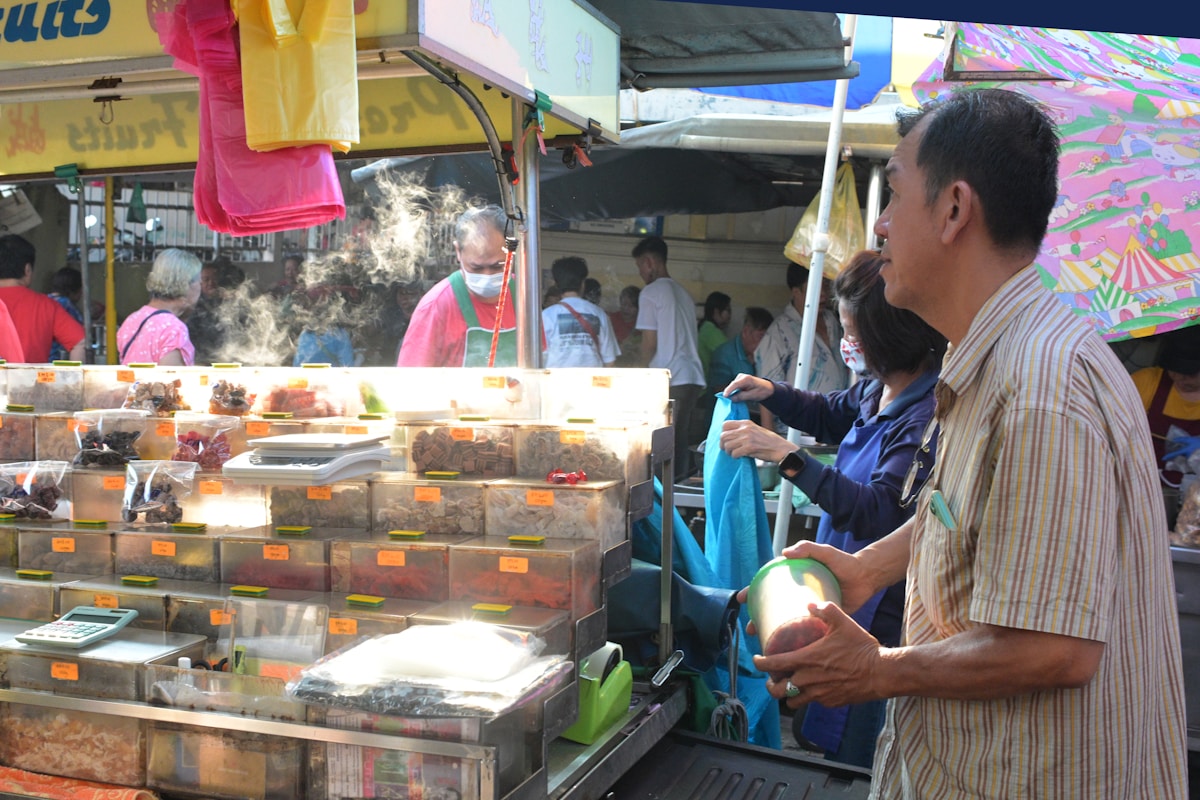
Penang’s reputation as Malaysia’s best food city is not marketing - it is the considered opinion of most Malaysians who travel for food, and most food writers who have spent time in the country. The reasons are partly historical: Penang’s position as a major trading port from the 15th century meant that Chinese, Malay, Indian, and Peranakan food cultures developed here in close proximity, with enough affluence in the merchant class to create a demanding local food culture. The results have been refined over generations.
The best food in Penang is almost uniformly at hawker stalls and coffee shop kitchens (kopitiam), not at restaurants with printed menus. A few key dishes to know:
Char Kway Teow
Flat rice noodles stir-fried at very high heat with eggs, bean sprouts, Chinese sausage (lap cheong), prawns, and blood cockles. The key is wok hei - the smoky caramelisation that comes from brief intense heat. Penang char kway teow uses a distinctly dark soy-based sauce and is cooked on small individual portions in a single wok over charcoal or high-output gas.
Siam Road Charcoal Char Koay Teow (Jalan Siam, off Penang Road) is one of the most referenced versions in the city. The charcoal fire produces a smokier flavour than gas-cooked versions. A plate runs RM10–14 (prawns and cockles extra) and there is usually a queue from noon onward. Arrive at 11:30am to minimise wait time.
Lorong Selamat Char Koay Teow is another frequently cited location - a husband-and-wife stall that has been operating for decades in a Jalan Gurdwara area coffee shop. Prices and quality are comparable.
Penang Laksa (Asam Laksa)
This is the dish that most clearly distinguishes Penang from the rest of Malaysia. The broth is built from fish (typically mackerel), tamarind, lemongrass, galangal, and chilli, giving it a sharp sour and spicy character quite unlike the coconut-cream laksa common in KL. The noodles are thick and round (laksa noodles), and the bowl is garnished with raw onion, cucumber, pineapple, mint, and a spoonful of thick prawn paste (hae ko) stirred in at the table.
Air Itam Market (Pasar Air Itam) is where the most widely cited laksa in Penang is served - a stall run by a family that has been at the same spot for decades. A bowl costs RM7–9. The market is 6 km from Georgetown, reachable by Grab (RM10–14) or bus. Go at lunchtime when the broth is freshest.
Cendol
Shaved ice layered with green rice flour jelly (the cendol strands), coconut milk, gula melaka (palm sugar syrup), and red beans. It sounds simple; the difference between a good version and an ordinary one is the quality of the coconut milk and the palm sugar. A cup costs RM3–5.
Penang Road Teochew Chendul (Jalan Penang, near the corner of Lorong Kapitan Keling) is the stall most associated with Penang cendol. There is usually a queue. The stall has been at this location for decades and runs from mid-morning until sell-out.
Nasi Kandar
Rice with a selection of meat, seafood, and vegetable curries poured over. The curries are kept warm in large pots and you point to what you want added to your plate. The quality of nasi kandar in Penang comes from the layering of the different curry sauces - each one mingles with the others on the rice in a way that is hard to replicate when ordering each dish individually.
Line Clear (Lorong Baru, off Jalan Penang) is the most storied nasi kandar in Georgetown. It opens around 10pm and runs until the food is gone - usually around 4–5am. Eating there at midnight or 2am is a genuine Penang experience. Queues form quickly at opening time. A full plate runs RM10–20 depending on what you add.
Hameediyah Restaurant on Jalan Campbell has been operating since 1907 and is the oldest nasi kandar restaurant in Malaysia. It is open during daytime hours, making it more accessible for visitors. The mutton masala and the fish curry are the things to order. A plate runs RM12–22.
Loh Bak
Five-spice pork wrapped in beancurd skin and deep-fried, served with a dark prawn sauce for dipping. Usually sold alongside other items: prawn fritters, fried tofu, fish cake slices. A plate of mixed items costs RM8–15.
Sin Guat Keong (often called the “Famous Loh Bak” stall) on Jalan Macalister area is the most referenced. It operates from a coffee shop and usually sells out by early afternoon.
Lor Mee
Thick yellow noodles in a dark, starchy gravy made from pork stock, five-spice, and soy. Served with braised pork slices, deep-fried shallots, and egg. A bowl costs RM6–9. Best found at the New Lane (Lorong Baru) hawker centre, which has multiple stalls operating from late afternoon into the evening.
Apom Manis
Sweet crepe-like pancakes cooked on a small round iron griddle. Slightly crispy at the edges, soft in the middle, eaten plain or with kaya (coconut jam). A breakfast food, sold from roadside stalls from 6am until mid-morning. Cost: RM1.50–3 per piece. Look for the stalls with queues of office workers en route to the bus stop.
Oh Chien (Oyster Omelette)
Small fresh oysters cooked in a starch and egg mixture on a flat griddle until the outside crisps and the inside remains slightly gooey. Served with a thick red chilli dipping sauce. A plate costs RM10–15 depending on oyster size and quantity.
Where to Eat
Gurney Drive Hawker Centre (Padang Kota Lama area) is the most visitor-friendly hawker location in Georgetown - a purpose-built covered open-air centre with multiple stalls covering most Penang dishes, open from late afternoon until midnight. Prices are slightly higher than local haunts (RM10–30 per dish) but the quality is consistent and the environment is manageable. For a more guided experience, join a Penang food tour that takes in the hawker stalls locals actually queue at - the best versions of char kway teow and laksa are not always the ones with the biggest signage.
New Lane (Lorong Baru) is where many local residents eat in the evening - a street lined with hawker stalls setting up from around 5pm. Less polished than Gurney Drive, cheaper, and worth the slight difficulty in navigating.
Red Garden Food Paradise (Jalan Leith) is a popular evening hawker complex in central Georgetown with seating, bar service, and a wide selection of stalls. Prices are tourist-range but the food is good.
Take a Guided Food Tour of Penang
Penang’s signature dishes — assam laksa, char kway teow, cendol, oh chien — each have a definitive version somewhere in Georgetown, but finding it requires knowing which stall opens when, how long the queues run, and which of the many vendors selling the same dish is the one that matters. A guided food tour is the most practical way to work through the key dishes in one outing: evening tours typically cover Gurney Drive, New Lane, and several heritage-zone hawker spots, with a guide who knows the stall history and can explain what distinguishes Penang’s versions of these dishes from those served elsewhere in Malaysia.
Book a guided food tour of Penang.
For a closer look at sit-down dining across budgets, the best restaurants in Penang covers specific venues from Nyonya dining rooms to hawker-style classics.