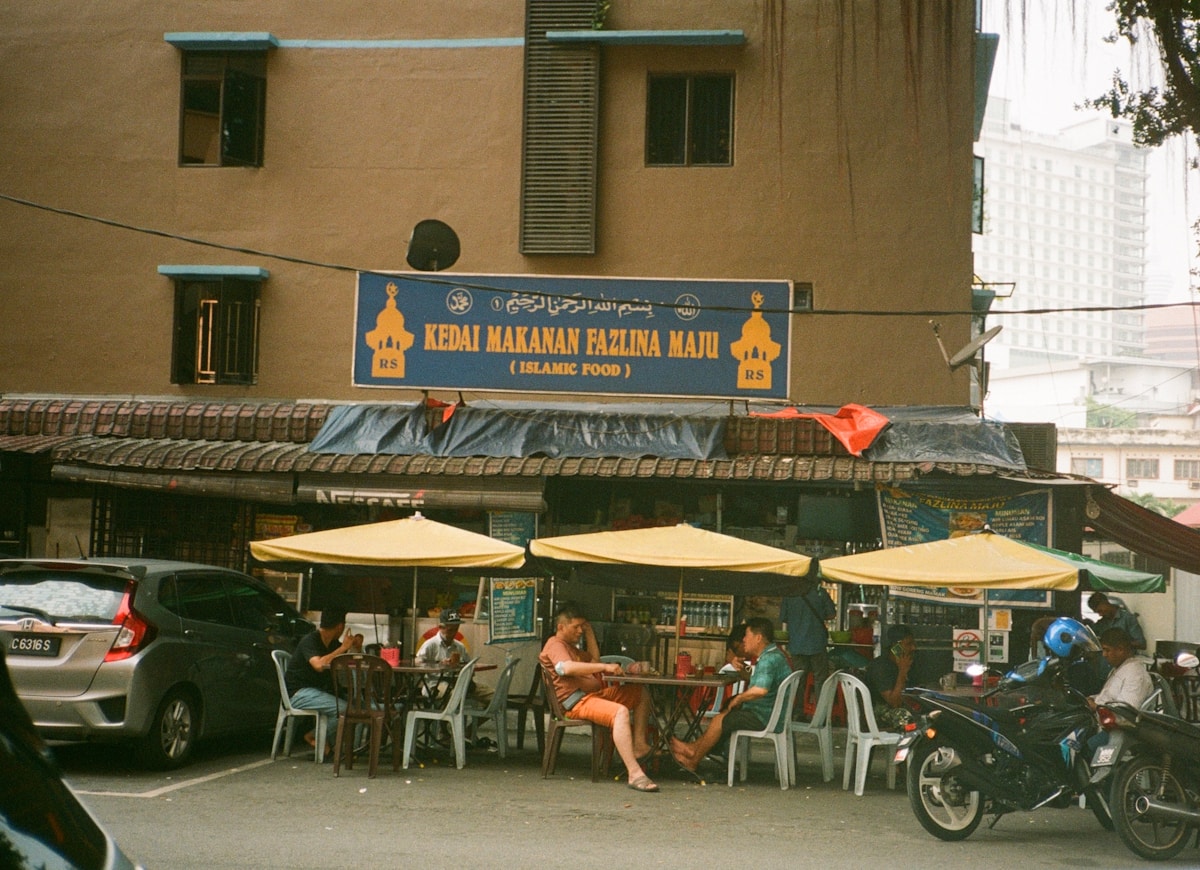
Malaysia consistently tops the Mastercard-CrescentRating Global Muslim Travel Index as the world’s most Muslim-friendly destination, and after a week here it is obvious why. Halal food is the default rather than the exception, every mall has a prayer room, and Ramadan turns the country into a giant evening food festival. This guide covers how the halal system works, where to eat in the three big food cities, and what Muslim travellers should know about prayer facilities, Ramadan, and alcohol.
How halal certification works: the JAKIM logo
Malaysia’s halal certification is run by JAKIM (Jabatan Kemajuan Islam Malaysia), the federal Islamic development department, and it is one of the strictest and most respected systems in the world. The JAKIM logo - a white eight-pointed star on a dark circle with “HALAL” in Arabic and Latin script - appears on certified restaurants, packaged food, and even hotel kitchens.
In practice, you will rarely need to hunt for the logo. Three quick rules cover most situations:
- Malay-run stalls and restaurants are halal - certification or not, the food is prepared by Muslims to halal standards
- Mamak restaurants (Indian Muslim eateries) are halal - these 24-hour institutions serve roti canai, nasi kandar and teh tarik, and are arguably Malaysia’s national dining room
- Chinese coffee shops and hawker stalls are generally not halal unless explicitly signed - many serve pork or cook with lard
Fast-food chains (McDonald’s, KFC, Pizza Hut) are JAKIM-certified across Malaysia, as are most mall food courts on the Peninsula.
Halal street food in Kuala Lumpur
Skip Jalan Alor for halal eating - it is predominantly Chinese. The best halal street food in KL clusters in three areas:
- Kampung Baru - the Malay village in the middle of the city. Nasi Lemak Wanjo (Jalan Raja Muda Musa) is the benchmark nasi lemak, approximately RM2.50–8 as of 2026 depending on your add-ons; the surrounding streets fill with stalls every evening
- Jalan Masjid India and Lorong Tuanku Abdul Rahman - murtabak, putu piring, and one of KL’s biggest Ramadan bazaars. The Saturday night market on Lorong TAR is entirely halal
- Mamak classics - Valentine Roti (Jalan Semarak) for roti canai around RM1.50–4, and the Nasi Kandar Pelita branches (open 24 hours, mains roughly RM8–15) for late-night nasi kandar
Halal eating in Penang
Penang’s most famous hawker dishes - char kway teow, Hokkien mee - are mostly Chinese-run and not halal, but the island is also the home of nasi kandar, Malaysia’s great Indian Muslim food tradition:
- Hameediyah (Campbell Street) - operating since 1907 and claimed to be the oldest nasi kandar restaurant in the country; a plate with two sides runs approximately RM12–20 as of 2026
- Line Clear (alley off Penang Road) - the most famous nasi kandar queue in Penang, open nearly round the clock, roughly RM10–18 a plate
- Deen Maju (Jalan Gurdwara) - the local favourite for fried chicken nasi kandar; expect a queue before opening
- Padang Kota Lama food court (the Esplanade) - a halal-section seafront food court where you can try Malay-style versions of pasembur and mee goreng for RM6–10
Halal versions of asam laksa and char kway teow exist at Malay-run stalls - look around Gurney Drive’s halal rows and the stalls near Masjid Kapitan Keling on Pitt Street.
Halal eating in Melaka
Melaka’s Jonker Street night market is mixed, so check stalls individually. Reliable halal picks:
- Pak Putra Tandoori & Naan (Jalan Laksamana 4) - Pakistani-run tandoori chicken institution, quarter chicken with naan approximately RM12–16 as of 2026, evenings only, closed Mondays
- Klebang Original Coconut Shake - Melaka’s signature drink, around RM4–5 with ice cream
- Medan Selera Bandar Hilir and the stalls around Dataran Pahlawan for satay, ikan bakar and nasi campur at RM6–12
Prayer facilities
This is where Malaysia is genuinely unbeatable. Every shopping mall has a surau with separate men’s and women’s sections and ablution facilities - Suria KLCC, Pavilion and Mid Valley all have multiple. Highway R&R rest stops, KLIA, KL Sentral and most petrol stations have prayer rooms. Hotel rooms almost universally have a qibla sticker on the ceiling or desk.
Mosques worth visiting as a traveller: Masjid Negara (the National Mosque, KL), Masjid Jamek at the historic confluence of KL’s two rivers, the pink Putra Mosque in Putrajaya, and Penang’s Masjid Kapitan Keling. All welcome respectful non-Muslim visitors outside prayer times, with robes provided.
Travelling during Ramadan
Ramadan is a rewarding time to visit. Daytime travel is normal - restaurants and tourist sites stay open - but the evenings are the event. Ramadan bazaars open around 4pm in every town, selling food for iftar: the Kampung Baru and Lorong TAR bazaars in KL run to hundreds of stalls. Hotel buffets switch to elaborate iftar spreads, usually RM80–200 per person as of 2026. Book intercity transport early around Hari Raya at the end of the month - the entire country travels home, and buses and trains sell out days ahead. Ramadan dates shift each year, so check the current calendar before booking.
Get a Malaysia eSIM, Compare travel insurance, or Browse tours and activities.
Alcohol and alcohol-free travel
Alcohol is legal and available in Malaysia but heavily taxed - a beer in a KL bar runs RM15–30 as of 2026. Most Malay restaurants, mamaks and food courts simply don’t serve it, so travellers avoiding alcohol will find the default environment easy. Kelantan and Terengganu on the east coast restrict sales further, with alcohol available mainly in Chinese-run shops and some resorts. Fresh juice, teh tarik and kopi culture more than fill the gap.
For more on costs across the country, see our Malaysia budget guide, and if you are planning your trip dates around the seasons, start with the best time to visit Malaysia.
Plan Your Trip
✈️ Book your flights to Malaysia 🛡️ Get travel insurance 📱 Stay connected with an eSIM 🚗 Rent a car