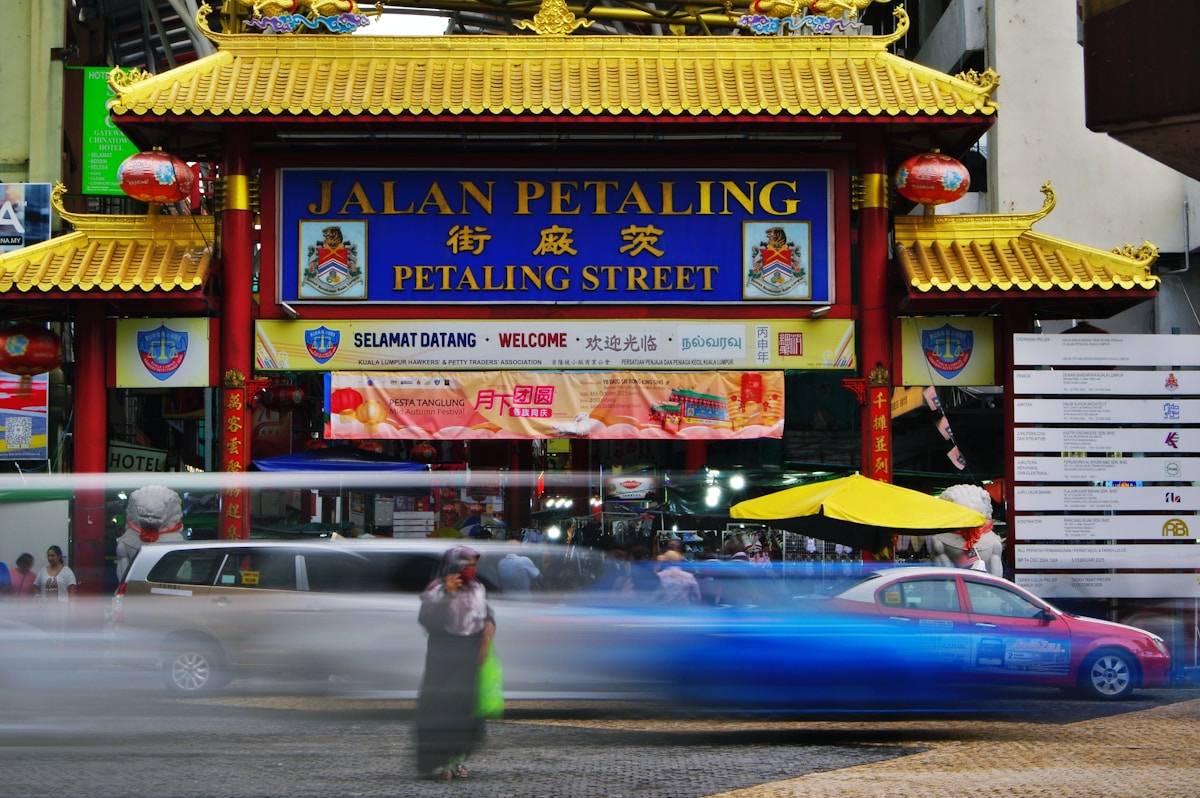
Bahasa Melayu (Malay) is the national language of Malaysia, spoken by over 30 million people. While English is widely used as a second language - especially in Kuala Lumpur and Penang - knowing some basic Malay will enrich your experience, particularly at hawker stalls, rural homestays, and local markets. Malay uses the Latin alphabet and is largely phonetic, making it one of the easier Asian languages for English speakers to pick up.
The phrase categories below cover everything the average traveller actually needs: greetings, polite requests, directions, numbers, colours, food orders, and emergencies. We have also included a pronunciation guide and notes on regional dialect differences - because what you hear in Kelantan sounds quite different from what you hear in Kuala Lumpur.
Pronunciation Guide
Malay is phonetic, meaning words are pronounced as they are written. A few rules cover almost everything:
Vowels are consistent and short:
- a - always “ah” (makan = mah-KAN, not “may-kan”)
- e - two sounds: schwa (a soft “uh”) at the start of a word (emak = uh-MAK), or “eh” in the middle (beli = BEH-lee). The schwa is the trickier one - selamat sounds like “seh-LAH-mat”, not “SEE-la-mat”
- i - always “ee” (ikan = EE-kan)
- u - always “oo” (pulau = POO-low)
Consonants mostly match English, with three exceptions:
- c - always “ch” (cakap = CHA-kap, never “kap”)
- g - always hard, never soft (gula = GOO-lah, rhymes with “hula”)
- ny - a single nasal sound, like the “ny” in “canyon” (nyanyi = NYAH-nyee)
Stress typically falls on the second-to-last syllable. So terima is teh-REE-mah, not TEH-ree-mah.
One useful quirk: the prefix me- on verbs is often dropped in casual speech. Locals say makan (eat) instead of memakan, and beli (buy) instead of membeli. You will hear the shorter forms far more often at markets and hawker stalls.
Greetings and Basics
| English | Malay | Pronunciation |
|---|---|---|
| Hello | Helo / Hai | HEH-loh / HIGH |
| Good morning | Selamat pagi | seh-LAH-mat PAH-gee |
| Good afternoon | Selamat tengah hari | seh-LAH-mat TENG-ah HAH-ree |
| Good evening | Selamat petang | seh-LAH-mat peh-TAHNG |
| Goodbye | Selamat tinggal | seh-LAH-mat TING-gal |
| Yes / No | Ya / Tidak | YAH / TEE-dak |
| Please | Tolong / Sila | TOH-long / SEE-lah |
| Thank you | Terima kasih | teh-REE-mah KAH-see |
| Excuse me | Maafkan saya | mah-AHF-kan SAH-yah |
| I don’t understand | Saya tidak faham | SAH-yah TEE-dak FAH-ham |
| Do you speak English? | Anda cakap Bahasa Inggeris? | AHN-dah CHA-kap bah-HAH-sah ING-geh-ris |
Getting Around
| English | Malay | Pronunciation |
|---|---|---|
| Where is…? | Di mana…? | dee MAH-nah |
| How much is the fare? | Berapa tambangnya? | beh-RAH-pah tam-BAHNG-nyah |
| Left / Right | Kiri / Kanan | KEE-ree / KAH-nan |
| Straight ahead | Terus | teh-ROOS |
| Stop here | Berhenti di sini | ber-HEN-tee dee SEE-nee |
| Train station | Stesen keretapi | STAY-sen keh-reh-TAH-pee |
| Airport | Lapangan terbang | lah-PAHNG-an ter-BAHNG |
| Bus | Bas | BAHS |
| Too far | Terlalu jauh | ter-LAH-loo JOWH |
Food and Dining
| English | Malay | Pronunciation |
|---|---|---|
| I would like… | Saya nak… | SAH-yah NAHK |
| Water | Air | AH-yer |
| Rice | Nasi | NAH-see |
| Chicken | Ayam | AH-yam |
| Fish | Ikan | EE-kan |
| Spicy | Pedas | peh-DAHS |
| Not spicy | Tidak pedas | TEE-dak peh-DAHS |
| Delicious | Sedap | seh-DAHP |
| The bill, please | Bil, tolong | BIL, TOH-long |
| No pork | Tiada babi | tee-AH-dah BAH-bee |
Numbers 1–10
Knowing numbers 1–10 is genuinely useful for prices, floor numbers, and ordering multiples at hawker stalls. Note that in casual speech, Malaysians often use ringgit (RM) with the number directly: dua ringgit = RM2.
| Number | Malay | Pronunciation |
|---|---|---|
| 1 | Satu | SAH-too |
| 2 | Dua | DOO-ah |
| 3 | Tiga | TEE-gah |
| 4 | Empat | EM-pat |
| 5 | Lima | LEE-mah |
| 6 | Enam | EH-nam |
| 7 | Tujuh | TOO-joo |
| 8 | Lapan | LAH-pan |
| 9 | Sembilan | sem-BEE-lan |
| 10 | Sepuluh | seh-POO-loo |
For larger numbers: 11 is sebelas, 20 is dua puluh, 50 is lima puluh, 100 is seratus. Prices at markets often involve round tens (tiga puluh = 30, empat puluh lima = 45), so those are worth memorising alongside 1–10.
Colours
Colours come up more often than you might expect - describing a product at a market, asking for a different size, or confirming a landmark (“the red door on the left”). These are the ones worth knowing:
| English | Malay | Pronunciation |
|---|---|---|
| Red | Merah | MEH-rah |
| Blue | Biru | BEE-roo |
| Green | Hijau | HEE-jow |
| Yellow | Kuning | KOO-ning |
| White | Putih | POO-tee |
| Black | Hitam | HEE-tam |
| Orange | Oren | OH-ren |
| Pink | Merah jambu | MEH-rah JAM-boo |
| Brown | Coklat | CHOK-lat |
| Purple | Ungu | OON-goo |
The word for pink - merah jambu - literally means “rose-apple red.” It is a small window into how descriptive and poetic Malay can be once you go beyond the basics.
Polite Forms and Social Phrases
Malaysian social culture places high value on politeness. A few key phrases will set you apart from tourists who skip them entirely:
| English | Malay | Pronunciation | Notes |
|---|---|---|---|
| Please (requesting help) | Tolong | TOH-long | Literally “help” - used before requests |
| Please (inviting someone) | Sila | SEE-lah | Used when offering or welcoming |
| Thank you | Terima kasih | teh-REE-mah KAH-see | The single most useful phrase |
| You’re welcome | Sama-sama | SAH-mah SAH-mah | Literally “same-same” |
| Sorry / Excuse me | Maaf | mah-AHF | Use when bumping into someone or entering a space |
| No problem | Takpe / Tak apa | TAHK-peh / TAHK AH-pah | Very casual; tak apa is the full form |
| It’s okay | Boleh | BOH-leh | Also means “can” - highly versatile |
| I am fine | Saya baik | SAH-yah BAH-ik | Standard response to “how are you?” |
| How are you? | Apa khabar? | AH-pah KAH-bar | Literally “what news?” |
| Good / Fine | Baik | BAH-ik | The standard reply |
Boleh deserves special attention. It is one of the most versatile words in casual Malay - used to mean “can,” “possible,” “okay,” “fine,” and sometimes just a general affirmation. If you hear boleh boleh with a wave of the hand, it means “yes, that’s fine, no problem.”
Market and Shopping Malay
Night markets and pasar malam (night markets) are where travellers most often need practical Malay. Prices are rarely fixed, and a few words go a long way when browsing stalls and ordering street food.
| English | Malay | Pronunciation | When to use |
|---|---|---|---|
| How much? | Berapa? | beh-RAH-pah | Quickest way to ask a price |
| Too expensive | Mahal sangat | MAH-hal SAHNG-at | Opens negotiation politely |
| Can you lower the price? | Boleh kurang tak? | BOH-leh KOO-rahng TAHK | A softer way to bargain |
| I don’t want it | Tak nak | TAHK NAHK | Clear refusal without offence |
| I’ll take it | Saya ambil | SAH-yah AHM-bil | Confirming a purchase |
| Takeaway / to go | Tapau | TAH-pow | Used at hawker stalls |
| One portion | Satu | SAH-too | Ordering quantity |
| More rice | Tambah nasi | TAHM-bah NAH-see | Essential at nasi kandar stalls |
| Less spicy | Kurang pedas | KOO-rahng peh-DAHS | Adjust heat at hawker stalls |
| Very delicious | Sedap sangat | seh-DAHP SAHNG-at | Genuine compliment; stall owners love it |
Bargaining is acceptable at markets and independent stalls, but not in malls or fixed-price shops. When in doubt, asking boleh kurang tak? in a friendly tone is never offensive — the vendor will simply say tak boleh (cannot) if the price is firm, and you can proceed. Shouting or aggressive negotiation is not the norm and will close the conversation immediately.
Emergency Phrases
| English | Malay | Pronunciation |
|---|---|---|
| Help! | Tolong! | TOH-long |
| I need a doctor | Saya perlukan doktor | SAH-yah per-LOO-kan DOK-tor |
| Police | Polis | POH-lis |
| Hospital | Hospital | hos-PEE-tal |
| I am lost | Saya sesat | SAH-yah seh-SAHT |
| Emergency | Kecemasan | keh-cheh-MAH-san |
Malay pronunciation is forgiving for English speakers. Most consonants sound as they do in English, and vowels are consistent: “a” is always “ah,” “i” is always “ee,” and “u” is always “oo.” The letter “c” is always pronounced “ch” (so cakap sounds like “CHA-kap”). Stress typically falls on the second-to-last syllable. Even an imperfect attempt at Malay will earn you warm smiles - Malaysians are famously friendly and will often help you practice.
Regional Dialect Variations
Standard Malay (Bahasa Melayu Baku) is what you will hear on TV and see in signage. But spoken Malay varies significantly by state - and the further you go from Kuala Lumpur, the more pronounced those differences become.
Kelantanese Malay (northeast Malaysia) This is the most distinct regional dialect and can be difficult even for other Malaysians to follow. Key differences: the standard tidak (no) becomes dok, and makan (eat) is often pronounced make. The “-an” suffix frequently drops to a nasal ending. If you are visiting Kota Bharu or the beaches of Kelantan, do not be alarmed if your standard phrases draw blank looks - just slow down and use the written word if needed.
Sabah and Sarawak (East Malaysia) East Malaysian Malay is generally closer to standard than Kelantanese, but you will notice the particle bah used constantly at the end of sentences - similar to lah in the west. Boleh bah means “sure, no problem.” The word sini (here) is often extended to sinilah for emphasis. English is also more widely spoken in Sabah and Sarawak than in rural peninsular Malaysia.
Malaysian informal Malay (“Bahasa Pasar” or market Malay) Across the whole country, everyday Malay is heavily peppered with loanwords from Hokkien, Cantonese, Tamil, and English. You will hear:
- Makan used as both “eat” and “food” interchangeably
- Tapau (from Cantonese da bao) - to take food away: “tapau satu nasi lemak” = “one nasi lemak to go”
- Cincai (from Hokkien) - roughly “it doesn’t matter / whatever you like”: a waiter asking cincai ke? is asking if the seat is okay
- Lah, leh, lor, meh - sentence particles that modify tone rather than meaning. Boleh lah is more casual than boleh; mah at the end suggests obviousness
You do not need to learn particles to be understood, but recognising them helps you follow the rhythm of local speech.
A note on Arabic-origin phrases Because the majority Malay Muslim community weaves religious phrases into daily speech, you will hear these regularly:
- Alhamdulillah - “Praise be to God” - used when things go well or to express gratitude
- Insya-Allah - “God willing” - used when making plans or expressing hope; it does not mean “no,” despite the Western joke
- Assalamualaikum - “Peace be upon you” - standard greeting between Muslims; if you are non-Muslim, a smile and nod is the appropriate response; you do not need to reply in kind
Get a Malaysia eSIM, Compare travel insurance, or Browse tours and activities.
Related Guides
- Halal food travel in Malaysia - understanding halal menus, ordering in Malay, and what to expect in Muslim-majority dining
- Tourist scams and tipping in Malaysia - common phrases that help when haggling at markets and navigating taxi pricing
- Malaysia travel costs and budget - price reference for food, transport, and accommodation across the country
- Getting around Malaysia - trains, buses, Grab, and domestic flights explained
Plan Your Trip
✈️ Book your flights to Malaysia 🛡️ Get travel insurance 📱 Stay connected with an eSIM 🚗 Rent a car