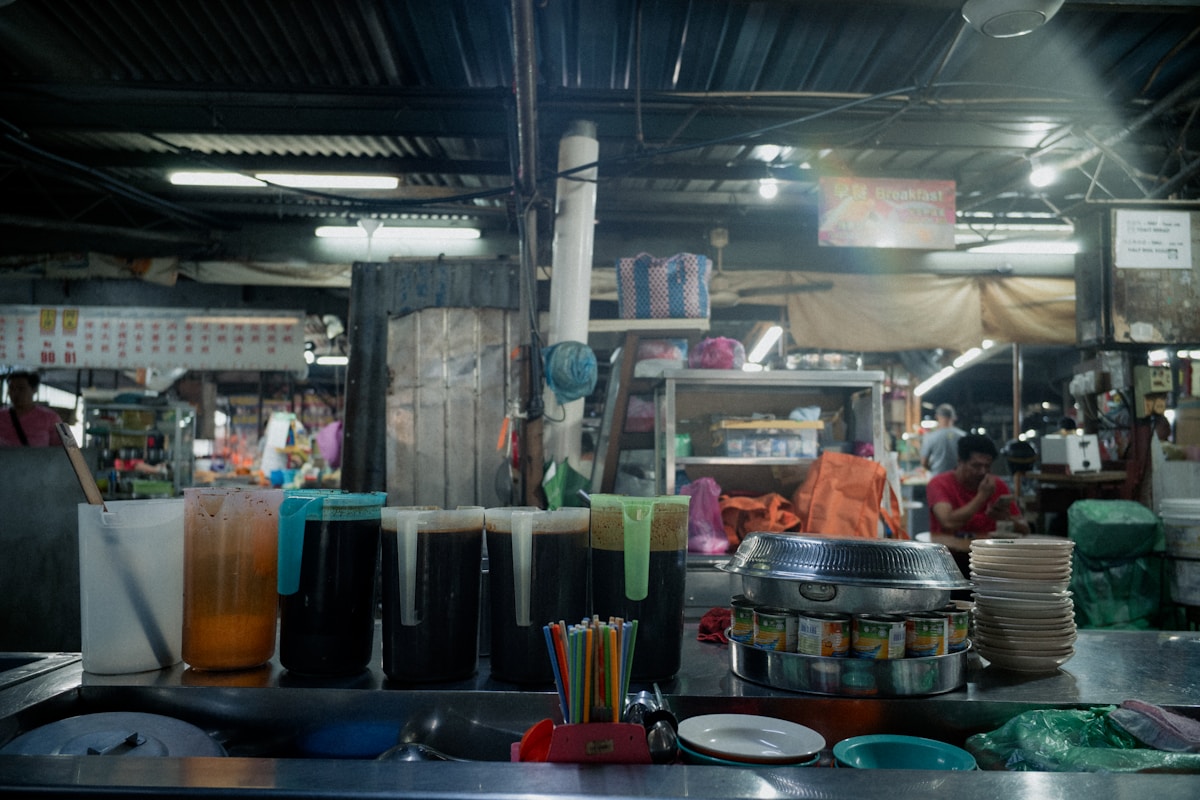
Kuala Lumpur’s food culture is a direct product of its demographics - Malay, Chinese, and Indian cooking traditions sit alongside one another in the same markets, the same streets, and sometimes the same building. The best food in the city rarely comes from restaurants with menus and printed prices. It comes from hawker centres, coffee shop kitchens, and mamak stalls that have been doing the same thing for decades.
The Essentials
Nasi lemak is the national dish and available everywhere from 6am until midnight. It is rice cooked in coconut milk, served with sambal (chilli paste), dried anchovies, half a hard-boiled egg, and roasted peanuts. A basic plate at a roadside stall wrapped in banana leaf costs RM3–5. Versions at proper restaurants with added sides - fried chicken, rendang, curry - run RM12–20. Both are worth eating.
Roti canai is a flaky flatbread cooked on a hot iron griddle and served with dhal or curry. At any mamak stall (the Tamil Muslim coffee shops that are open 24 hours and are central to KL food culture), roti canai runs RM1.50–3. Eating roti canai at 1am after a night out is as normal in KL as it is at breakfast. The Restoran Kayu Nasi Kandar near KLCC is a well-known mamak - the roti canai is reliable and the dhal is good.
Bak kut teh is a pork rib soup simmered with herbs and spices, eaten with rice and you tiao (fried dough sticks) on the side. The dish is Chinese in origin and the best versions in the Klang Valley are found in the satellite towns of Klang and Petaling Jaya rather than central KL itself. In the city, the Pudu and Chow Kit areas have decent options. A full meal with rice and a pot of tea costs RM15–25.
Char kway teow is flat rice noodles stir-fried in a very hot wok with eggs, bean sprouts, lap cheong (Chinese sausage), and prawns. The characteristic smoky flavour comes from wok hei - the brief caramelisation and char you get from cooking over extremely high heat. A good plate costs RM8–15 depending on whether you go for prawns and the size of the portion.
Hokkien mee in KL is a different dish from the Penang version: thick yellow noodles braised in a rich dark soy and lard sauce. Vendors in Pudu and Chinatown do this well. A plate runs RM8–12.
Satay is skewered and grilled meat - chicken, beef, or mutton - served with peanut sauce, compressed rice (ketupat), cucumber, and raw onion. Jalan Alor in Bukit Bintang has several satay vendors; the version in Kajang (30 minutes south by MRT) is considered the best in the country by most people who have an opinion on the matter. Per skewer: RM1.50–2.50.
The Mamak Stall
The mamak stall deserves its own mention because it is not just a place to eat - it is where KL residents gather to watch football, argue, drink teh tarik, and exist at any hour of the day or night. Teh tarik (literally “pulled tea” - condensed milk tea poured between two containers to create froth) costs RM1.50–2.50. Milo dinosaur (iced Milo with a heap of Milo powder on top) costs about the same. These are not tourist experiences. They are daily life for millions of people in this city.
Where to Eat
Jalan Alor (Bukit Bintang) is the most visitor-friendly night food street. Dozens of stalls and restaurants line the road, open from late afternoon until 2am. Prices are slightly higher than local markets - RM10–30 per dish - and the experience is designed partly around tourists, but the food is generally good. Char kway teow, satay, and grilled seafood are the things to order here.
Pudu Market area (Jalan Pudu, east of Chinatown) is where a lot of KL residents eat. Hawker stalls, old coffee shops, and market vendors selling cooked food early morning through to lunchtime. Less crowded than Jalan Alor and considerably cheaper.
Chow Kit has the largest wet market in KL and a string of stalls along the surrounding streets selling Malay home-cooking at market prices. Nasi lemak, nasi campur (mixed rice), and kuih (Malay sweets) are the things to look for here in the morning.
Brickfields / Little India is the place for South Indian food. Banana leaf rice (rice served on a fresh banana leaf with various vegetable curries, papadum, and sambar, RM8–15) is the standard lunch here. Several restaurants serve it from noon, and all-you-can-eat banana leaf is common. The dosai and idli at breakfast time are just as good.
Take a Guided Food Tour of Kuala Lumpur
KL’s food scene covers three culinary traditions across dozens of neighbourhoods — and the best versions of each dish are rarely in the most obvious locations. A guided street food tour connects the dots efficiently: a guide who lives in KL will take you to the nasi lemak stall that opens at 6am and sells out by 9, the roti canai mamak that residents queue for, and the bak kut teh corner that has been there since before the city centre was redeveloped. Evening tours through Jalan Alor, Chinatown, and the Pudu market area typically include 8–12 tastings and cover more ground than a week of self-guided eating.
Book a guided food tour of Kuala Lumpur.
Dim Sum
Dim sum (yum cha) is a Sunday morning institution in KL’s Chinese community. The Chow Kit and Pudu areas have the best traditional dim sum houses. Expect to share large round tables, trolleys pushed by aunties, and a bill of RM15–30 per person for a thorough spread. Arrive by 9am - the best items go quickly and the houses are often full by 10am.
For a wider look at where to eat beyond street food, the best restaurants in KL covers specific venues across budget categories.