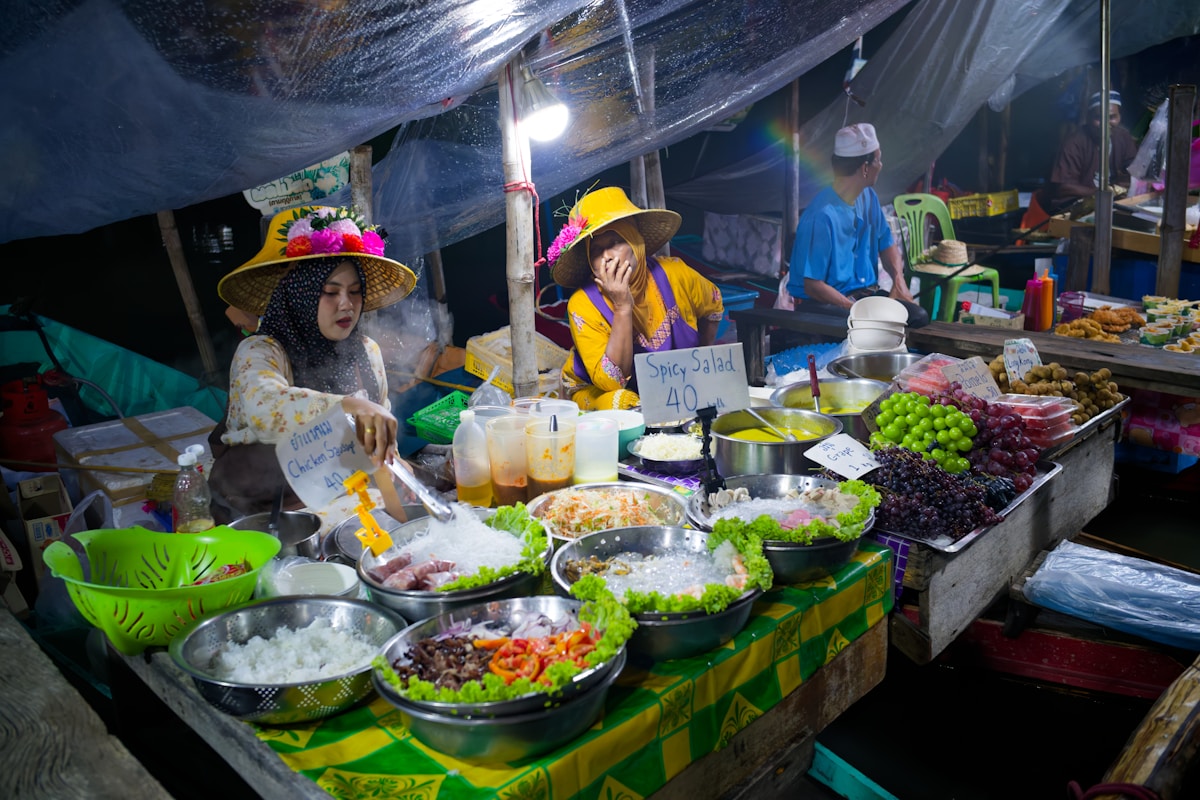
The best food in Kuala Lumpur does not necessarily come from the most expensive or the most polished places. Price in this city is not a reliable indicator of quality. A RM4 plate of nasi lemak from the right stall will beat a RM40 version at a hotel buffet almost every time. That said, the spectrum from hawker stools to high-end dining rooms is full of genuinely good options. Below is a working selection across that range.
Hawker Stalls and Coffee Shops
Ali, Muthu & Ah Hock on Jalan Imbi (near Bukit Bintang) is one of the most talked-about hawker-concept restaurants in KL. It uses the three names to represent the three main food cultures - Malay, Indian, Tamil Muslim, and Chinese - and the kitchen rotates through dishes from each. The nasi lemak and the roti canai are both reliably good. A full meal costs RM12–20. It is more restaurant than stall, but prices remain accessible.
Old China Cafe on Jalan Balai Polis in Chinatown occupies a 1920s guild hall and serves Peranakan (Nyonya) food in a room filled with old photography, porcelain, and carved furniture. The inche kabin (marinated fried chicken), the Nyonya curry laksa, and the pong teh (pork stewed in bean paste) are the dishes to order. Budget RM35–55 per person for a full meal with drinks.
Restoran Kayu Nasi Kandar (several branches, the original near KLCC on Jalan Raja Chulan) is a well-established mamak serving nasi kandar - rice served with a selection of fish, meat, and vegetable curries poured over the top. The mark of a good nasi kandar is the mix of the curry sauces (called campur, meaning “mixed”). A full plate with several curries costs RM10–18 and the kitchen is open around the clock.
Capitol Cafe on Jalan Bukit Bintang is an old-school Hainanese coffee shop serving toast with kaya (coconut jam), soft-boiled eggs, and Nanyang-style white coffee in a room that has not changed much in 40 years. Breakfast here costs RM8–15. A good base before heading out for the day.
Mid-Range
Rebung Chef Ismail in the Lake Gardens / Bangsar area serves traditional Malay food in a buffet format, with dishes drawn from regional recipes across Malaysia. The ulam selection (fresh herbs and raw vegetables eaten with sambal), the rendang, and the various sayur (vegetable) dishes are the main draw. The buffet lunch runs approximately RM60–80 per person and is popular with both locals and visitors who want a thorough overview of Malay cooking. Book ahead on weekends.
Enak KL in Starhill Gallery (Bukit Bintang) takes Malay cuisine into a formal dining room. The menu is built around the same regional dishes you find at hawker stalls - but with sourcing care, better technique, and presentation. Mains run RM45–90. The gulai tempoyak (fish in fermented durian curry) is the most distinctive dish on the menu and worth trying if you are comfortable with funky fermented flavours.
Dewakan (Mont Kiara) is the most ambitious kitchen in KL - the chef uses indigenous Malaysian ingredients and techniques in a progressive tasting menu format. Currently listed in Asia’s 50 Best Restaurants. Dinner is RM350–500 per person including the beverage pairing. It requires advance booking and does not suit every traveller, but for anyone with a serious interest in Malaysian food it is worth the cost.
Mandi and Middle Eastern
Mandi House near KLCC serves mandi rice - a whole slow-cooked lamb or chicken dish served over spiced rice - a style popular with KL’s Arab and South Asian communities. A sharing portion for two to three people runs RM60–120 depending on the protein. The chicken mandi is the safer starting point; the lamb is richer and better.
Take a Guided Food Tour of Kuala Lumpur
KL is one of Southeast Asia’s most diverse food cities, where Malay, Chinese, and Indian cooking have developed side by side for over a century — but the best of it is scattered across neighbourhoods in a way that takes time to navigate alone. A guided street food tour is one of the fastest ways to understand the city’s food geography: which hawker centres produce the best nasi lemak, where the kopitiam that has been serving bak kut teh for forty years actually is, and how to tell the difference between a tourist-facing food court and a place residents use. Evening tours typically run three to four hours across Chinatown, Jalan Alor, and Chow Kit.
Book a guided food tour of Kuala Lumpur.
A Note on Picking Well
In KL, the best guidance for finding good food is to follow people rather than menus. A coffee shop kitchen that has been running the same dish for 30 years is almost always a better bet than a restaurant that recently rebranded. Look for queues, look for tables full of working-age locals eating quickly, and look for places that have run out of a dish by mid-afternoon - that is usually a good sign.
For a broader overview of what to eat and where to find it at street level, the KL food guide covers the dishes themselves in detail.