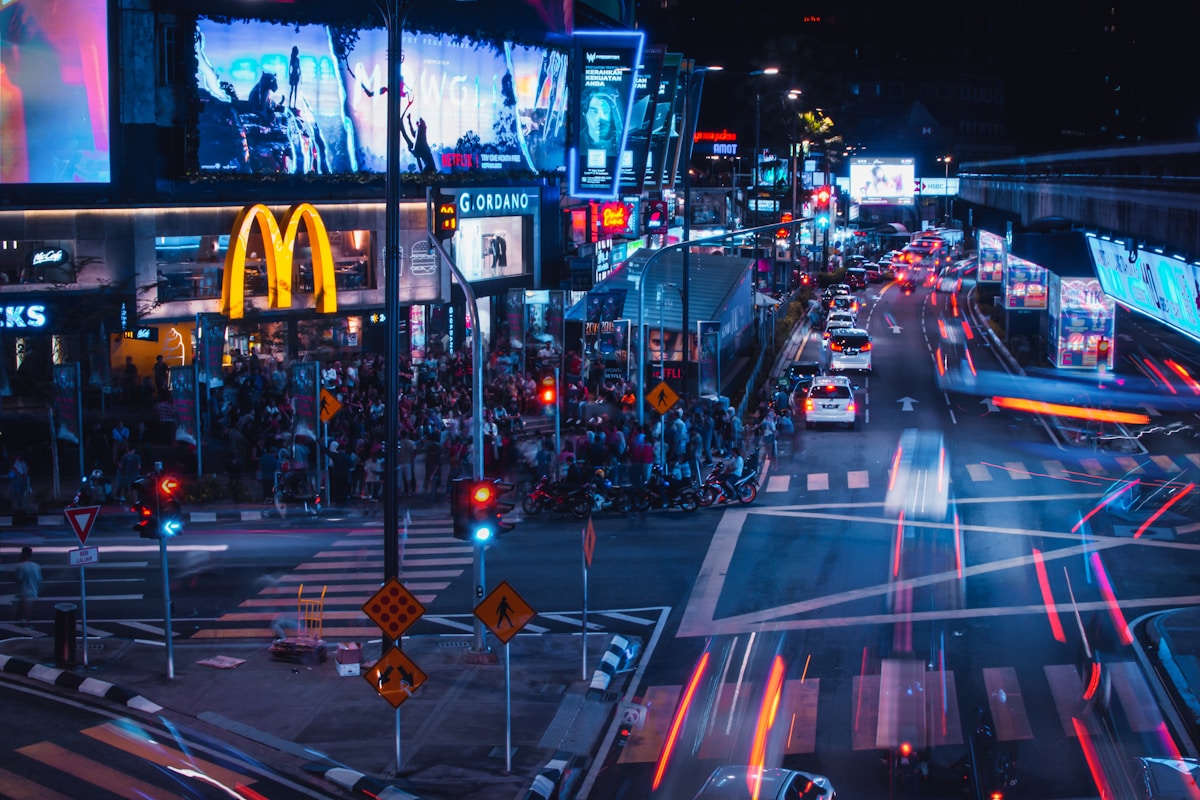
Kuala Lumpur is a city of distinct districts rather than a single centre, and choosing the wrong base can mean spending your trip in taxis. The good news: the LRT, MRT, and monorail networks connect every neighbourhood listed here, and a Grab between most of them costs RM8–15 as of 2026. Here is how the six areas that matter to visitors actually compare.
Bukit Bintang - Shopping, Nightlife, and Jalan Alor
Bukit Bintang is KL’s commercial heart and the default base for first-time visitors. The Pavilion and Lot 10 malls anchor the main junction, Changkat Bukit Bintang runs the bar scene, and Jalan Alor - the open-air food street one block south - serves char kway teow, grilled chicken wings at Wong Ah Wah (approximately RM3.50 per wing), and sate until 2am most nights.
Stay: The Westin and JW Marriott sit directly on Jalan Bukit Bintang (from approximately RM550 per night as of 2026); mid-rangers do well at Hotel Capitol (from RM200) or The Robertson serviced suites (from RM280). Eat: beyond Jalan Alor, the Lot 10 Hutong basement food court collects famous heritage hawker stalls under one roof - most plates RM12–18.
Best for: first visits, food, nightlife, shopping. Downside: traffic noise and crowds; pick a room high up.
KLCC - Petronas Towers and Luxury
KLCC is the polished business district around the Petronas Twin Towers and the 20-hectare KLCC Park. It is the most expensive base in the city, but evening walks under the illuminated towers and the Lake Symphony fountain shows (nightly from 8pm, free) are something no other neighbourhood offers. Tower observation deck tickets cost approximately RM98 for adults as of 2026 - book ahead via the official site, as same-day slots sell out.
Stay: the Mandarin Oriental and Grand Hyatt face the park (from approximately RM700); Impiana KLCC (from RM350) is the value pick with the same walkway access. An air-conditioned elevated walkway links KLCC to Bukit Bintang in about 15 minutes on foot.
Best for: couples, business travellers, skyline views. Downside: restaurants skew to malls and hotels; street food requires a walk.
Chinatown / Petaling Street - Heritage and Budget
KL’s oldest quarter has reinvented itself over the past decade. Petaling Street’s market stalls still sell counterfeit everything, but the surrounding shophouse lanes now hold KL’s best cafés and bars - Kwai Chai Hong laneway’s restored murals, rooftop cocktails at PS150, and third-wave coffee at Luckin Kopi-style heritage joints. Food is the real draw: Hokkien mee at Kim Lian Kee (from approximately RM13), claypot rice on Jalan Sultan, and the century-old Sin Sze Si Ya Temple in between.
Stay: Four Points by Sheraton Chinatown (from approximately RM320) for comfort; The Travel Hub Guesthouse or BackHome KL hostels for dorms from RM50–70 as of 2026. Pasar Seni MRT/LRT interchange makes this the best-connected budget base in the city.
Best for: budget travellers, heritage architecture, café-hopping. Downside: quiet after 11pm outside the bar lanes.
Bangsar - Cafés and Upscale Local Life
Bangsar, 4 km southwest of the centre, is where well-off KL-ites actually eat and drink. Telawi Street’s blocks pack in brunch cafés, wine bars, and boutiques; the Sunday night pasar malam (night market) at Jalan Telawi is one of the city’s best. Banana leaf rice at Sri Nirwana Maju - approximately RM10–15 for a full spread - is reason enough for the trip. The neighbouring APW Bangsar creative compound hosts weekend markets and events.
Stay: options are limited but good - serviced apartments around Bangsar South or Hotel Pullman Bangsar (from approximately RM300). Bangsar LRT station is a 15-minute walk from Telawi; most visitors use Grab (RM10–12 from the centre).
Best for: repeat visitors, food-focused stays, a local pace. Downside: few sights; you commute to the landmarks.
Brickfields - Little India
Brickfields sits directly beside KL Sentral, the city’s main transport hub, which makes it oddly underrated as a base. Jalan Tun Sambanthan is painted in Little India’s full colour palette - flower-garland stalls, sari shops, and some of the best South Indian food in Malaysia. Vishal Food & Catering serves banana leaf meals from approximately RM9; thosai breakfasts across the district rarely top RM5. The 120-year-old Sri Kandaswamy Kovil temple anchors the southern end.
Stay: Hilton Kuala Lumpur and Le Méridien tower over KL Sentral (from approximately RM450) - practical luxury if you have early trains or the KLIA Ekspres to catch. Budget hotels along Jalan Thambipillay run RM120–180.
Best for: transit convenience, Indian food, temple architecture. Downside: busy roads, limited nightlife.
Chow Kit - Markets and the New Frontier
Chow Kit, north of the centre on the monorail line, is KL at its most unfiltered. The Chow Kit wet market - one of Malaysia’s largest - is a sensory experience of durian stacks, fish stalls, and kuih tables, best visited before 11am. The district has a gritty reputation, but openings like The Chow Kit Hotel (an Ormond Group boutique property, from approximately RM280 as of 2026) and a wave of nasi padang institutions such as Kedai Makanan Minuman TKS are pulling the area upmarket street by street.
Best for: market lovers, photographers, travellers who have done KL before. Downside: patchy after dark; not a first-timer’s base.
Browse tours and activities, Get a Malaysia eSIM, or Compare travel insurance.
How to Choose
- First visit, want everything walkable: Bukit Bintang
- Honeymoon or skyline views: KLCC
- Budget and heritage: Chinatown
- Eat like a local, no sightseeing agenda: Bangsar
- Early flight or train connections: Brickfields / KL Sentral
- Second visit, want the unpolished city: Chow Kit
Whichever you choose, stay within a 10-minute walk of an LRT, MRT, or monorail station - KL traffic between 5pm and 8pm will otherwise absorb your evenings. For ideas on filling your days once you have a base, see our things to do in Kuala Lumpur guide and our 3-day KL itinerary.
Book Your Trip
- ✈️ Flights — Aviasales
- 🛡️ Travel insurance — EKTA
- 📱 eSIM — Airalo
- 🚖 Airport transfers — Kiwitaxi
- 🚗 Car rental — Rentalcars
- 🎭 Tours & experiences — GetYourGuide
For accommodation, search hotels in Kuala Lumpur on Booking.com.