Kuala Lumpur covers a lot of ground and the attractions are spread across several districts. A practical approach is to group visits by area rather than hopping across the city for individual sights - the heat and traffic make unnecessary journeys tiring. Below is a working overview of what is genuinely worth your time, with entry prices and logistics.
Petronas Twin Towers
The Towers are the obvious starting point. The observation deck (floor 86) and sky bridge (between floors 41 and 42 of both towers) are open to visitors. Tickets range from RM80 for the sky bridge only to RM170 for the full sky bridge and observation deck combination. The view from floor 86 - 370 metres above street level - is one of the best in the city on a clear day.
The key practical point: book online in advance at petronastwintowers.com.my. Tickets regularly sell out days or weeks ahead, especially on weekends and public holidays. Walk-in availability is not guaranteed. The towers open to visitors at 9am; the first session is usually the clearest (haze and cloud build through the afternoon).
Suria KLCC, the mall at the base of the towers, is also worth noting for the food court on the ground floor and the KLCC Aquaria (RM65, reasonable if you have children). The towers are in the KLCC neighbourhood, served by the KLCC LRT station.
Batu Caves
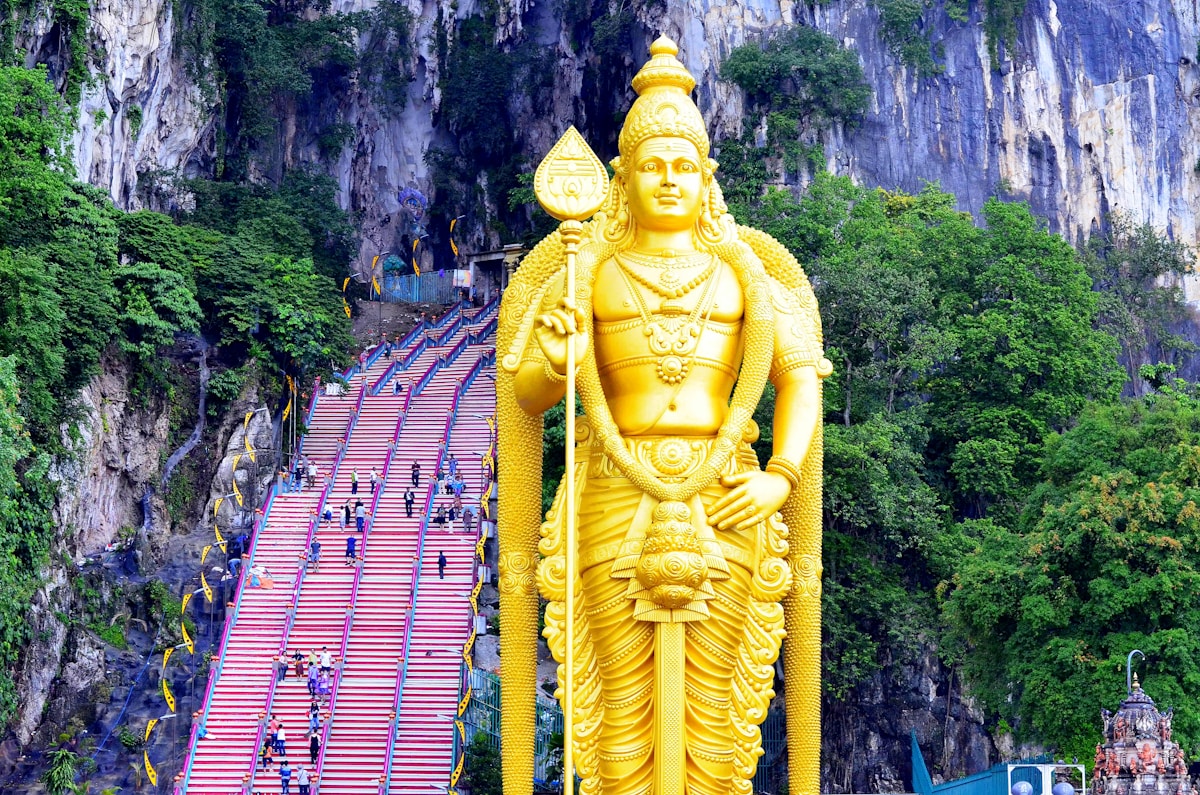
Batu Caves is a Hindu temple complex built inside a series of limestone caves 13 km north of the city. Three main caves are accessible: Cathedral Cave (the main cave at the top of the staircase), Dark Cave (separate tour, RM35), and Ramayana Cave (ground level, free).
Entry to Cathedral Cave is free. The 272-step climb is steep and takes about 15 minutes at a steady pace. At the base of the staircase stands a 42.7-metre gold statue of Lord Murugan - the largest in the world of its type. The cave interior is genuinely dramatic, with shafts of light coming through the cave ceiling.
Getting there: the KTM Komuter train runs from KL Sentral to Batu Caves station (30 minutes, RM2.60). The cave entrance is a 5-minute walk from the station. Arrive before 9am on weekdays to avoid peak crowds. Dress modestly - shoulders and knees covered. A guided Batu Caves and city tour combines the caves with the Petronas Towers and other highlights in a single day, which saves time if you are on a tight schedule.
KL Tower (Menara KL)
Standing 421 metres tall on Bukit Nanas hill, KL Tower predates the Petronas Towers but still gives an excellent 360-degree view of the city. The observation deck entry is RM105 for adults. There is also an outdoor Sky Deck (RM168) with a glass floor section for those who want it. Same-day tickets are not sold online - book observation deck entry at least a day ahead to avoid the counter queue.
A short jungle path leads up Bukit Nanas to the tower base through protected lowland forest - the only remaining primary forest in the city centre. The walk takes about 20 minutes and is a pleasant contrast to the urban heat below.
Islamic Arts Museum Malaysia
Located near Lake Gardens, this is the best museum in KL and one of the finest collections of Islamic art and decorative arts in Southeast Asia. The collection includes manuscripts, textiles, ceramics, jewellery, and a hall of scale architectural models of major mosques from across the Islamic world.
Entry costs RM20 for adults. The building itself, with its Ottoman-influenced dome ceilings, is worth seeing. Allow two to three hours for a thorough visit. The museum is a 10-minute walk from KL Sentral or reachable via Grab.
Merdeka Square and the Surroundings
Merdeka Square (Dataran Merdeka) is the open ground where the Union Jack was lowered and the Malaysian flag raised on 31 August 1957. The Sultan Abdul Samad Building on the east side of the square - a Moorish Revival structure with copper domes - is one of the most photographed buildings in KL. Both are free to see.
A short walk south brings you to the National Mosque (Masjid Negara), which is open to non-Muslim visitors outside prayer times (free, robes provided). The Sri Mahamariamman Temple in Chinatown, about 10 minutes’ walk, is the oldest Hindu temple in KL (free, small donation appreciated).
Central Market and Petaling Street
Central Market (Pasar Seni) is a colonial-era wet market repurposed as a craft and souvenir centre. Quality varies, but the ground floor has some genuinely good batik and pewter work. The surrounding streets - particularly Jalan Hang Kasturi - have independent food stalls and old-school coffee shops.
Petaling Street, five minutes east on foot, is the covered market at the heart of Chinatown. Vendors sell clothes, bags, watches, and electronics, and prices are negotiable. It is a tourist market and prices will be inflated until you bargain - start at half the asking price and meet somewhere in the middle.
KLCC Park
KLCC Park sits at the base of the Petronas Towers and is free to enter. The park has a jogging track, wading pool, and a large fountain. The fountain light show runs nightly (check current schedules on the Suria KLCC website). Sitting in the park at dusk with the towers lit above is one of the better free experiences in the city.
KL Bird Park
The Bird Park in Lake Gardens is the largest free-flight aviary in the world. Around 3,000 birds across 200 species roam a series of netted enclosures. Entry is RM67 for adults. It is a good half-day activity, particularly early morning when the birds are most active.
Comparing Guided Tour Options in Kuala Lumpur
The most popular guided formats in KL split into three main types: city sightseeing tours, food and heritage walks, and day-trip combinations. City sightseeing tours — typically half-day (4 hours) or full-day (8 hours) — cover the Petronas Towers exterior, Batu Caves, Merdeka Square, and Chinatown in a single loop. Half-day tours start from approximately RM80–120 per person; full-day formats with Petronas Towers observation deck access included run RM180–260. For first-time visitors with limited time, the bundled approach makes real sense — navigating Batu Caves by train and then crossing the city to the towers independently eats up two to three hours of transit time that a guided tour eliminates. KL tours on GetYourGuide list both formats with operator reviews.
Food-focused tours target the night market circuit and Chinatown hawker stalls, typically departing late afternoon and running 3–4 hours through Petaling Street, the Imbi area, and Jalan Alor. Prices run RM120–180 per person. These are worthwhile for visitors who would otherwise default to hotel restaurants — a guide who knows the specific stalls makes the difference between a genuinely memorable hawker meal and a mediocre tourist version. The evening timing also means you avoid the midday heat while covering the best of KL’s food geography in one pass.
For repeat visitors or those with specialist interests, private tour formats allow custom routing. A morning at the Islamic Arts Museum followed by Perdana Botanical Gardens, or an architecture-focused walk through the colonial quarter and Little India, runs approximately RM350–500 for a private guide with transport included. The premium is significant but the flexibility — stopping when you want, skipping the standard crowd-heavy stops — suits travellers who have already done the highlights circuit. Browse Kuala Lumpur tours to compare operators, read independent reviews, and check availability before booking.
For a deeper look at planning time in the city, the Kuala Lumpur city guide covers transport, climate, and neighbourhoods. If you are planning a day outside the city, the day trips from KL page covers Putrajaya and Malacca. For accommodation, search hotels in Kuala Lumpur on Booking.com.