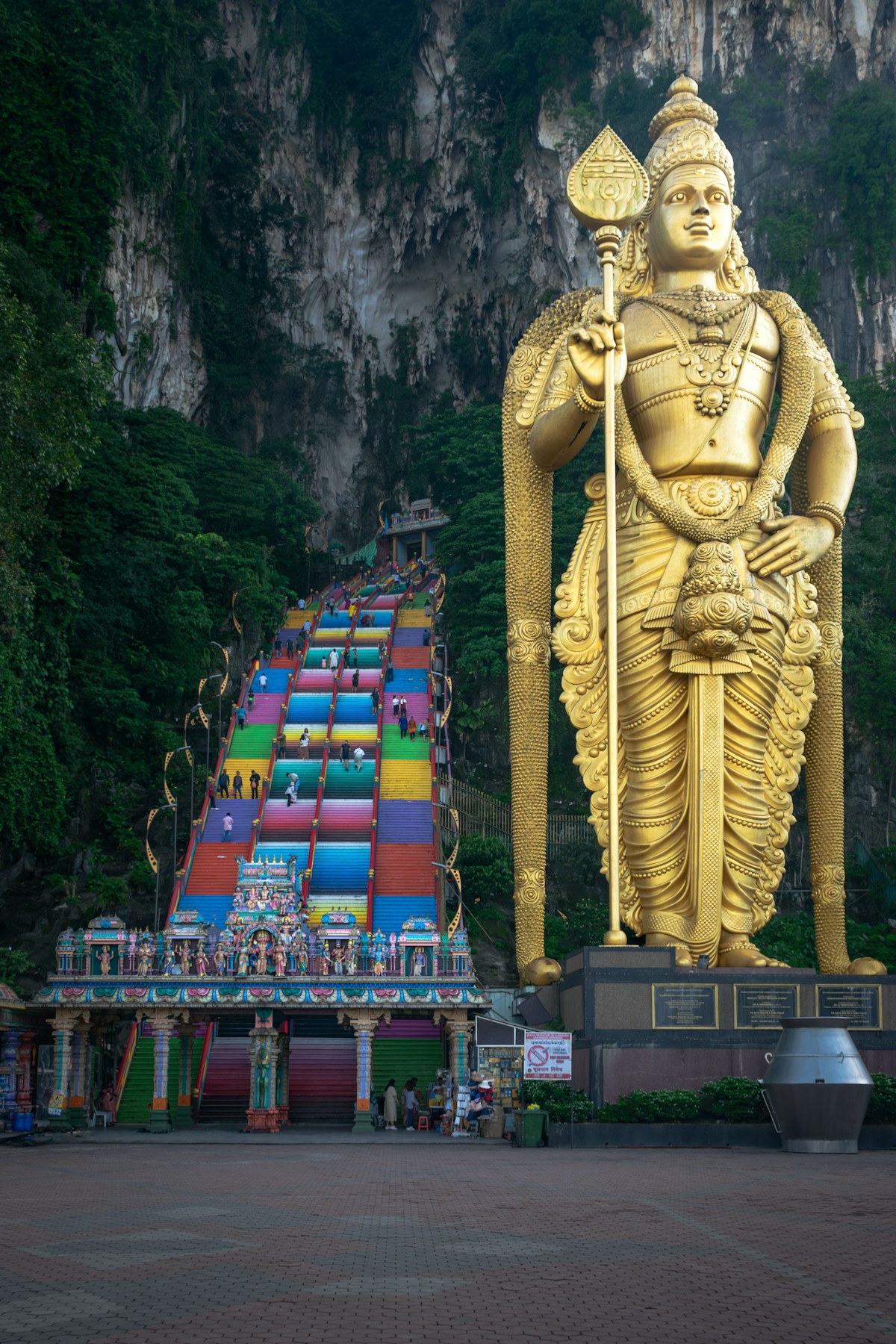
Kuala Lumpur packs a serious amount into a compact centre. Three days gives enough time to cover the city’s headline attractions, eat through several of its food districts, and still have a half-day for a trip out to Batu Caves. This itinerary works for first-time visitors and assumes you are staying near Bukit Bintang.
Budget overview
| Category | Budget | Mid-range | Comfort |
|---|---|---|---|
| Hotel/night | MYR 60–120 (USD 13–26) | MYR 250–450 (USD 54–97) | MYR 500–900 (USD 108–194) |
| Meals/day | MYR 30–50 (USD 6–11) | MYR 80–150 (USD 17–32) | MYR 200+ (USD 43+) |
| Transport/day | MYR 10–20 (USD 2–4) | MYR 30–50 (USD 6–11) | MYR 50–80 (USD 11–17) |
All prices are approximate as of 2026.
Day 1: Petronas Towers, KLCC Park and Bukit Bintang
Morning: Petronas Towers and KLCC Park
Start at the Petronas Twin Towers. Book Skybridge and Observation Deck tickets online at least two days ahead - entry costs approximately MYR 98 (USD 21) for adults as of 2026. The first slot at 09:00 has the shortest queues.
After the towers, walk through KLCC Park below. The park is free, well shaded, and has a children’s wading pool. The 1.3km jogging track loops past fountains and the mosque.
For a late breakfast, walk to Nasi Lemak Antarabangsa on Jalan Kampung Pandan (about 10 minutes by Grab from KLCC, approximately MYR 8). Their nasi lemak with ayam goreng berempah costs around MYR 10–15 and is one of the best plates of nasi lemak in the city.
Afternoon: Bukit Bintang and Pavilion KL
Take the covered KLCC Walkway (air-conditioned, free) from Suria KLCC to Bukit Bintang - about a 15-minute walk. This connects directly to Pavilion KL, the city’s flagship mall.
Explore the streets around Bukit Bintang on foot. Lot 10 Hutong food court in the basement of Lot 10 mall has hawker-style stalls from famous KL operators - try the Hokkien mee from Kim Lian Kee (from MYR 12) or the curry laksa from Sister’s Crispy Popiah (from MYR 11).
Evening: Jalan Alor food street
Jalan Alor comes alive after 17:00. This is KL’s most famous food street and it is tourist-heavy, but the food is legitimate. We recommend:
- Wong Ah Wah - grilled chicken wings, approximately MYR 2.50 per piece
- Restoran Mee Tarik Warisan Asli - hand-pulled noodle soup, from MYR 10
- Restoran Kin Kin - chilli pan mee, from MYR 9
Budget MYR 40–60 per person for a multi-dish hawker dinner. Pair it with a fresh coconut (MYR 5–7) from one of the street vendors.
Where to stay:
- Budget: BackHome KL (Bukit Bintang) - dorm from MYR 45/night, private room from MYR 140/night. Clean, social hostel with rooftop.
- Mid-range: Travelodge Bukit Bintang - from approximately MYR 250/night. Central location, modern rooms.
- Comfort: Mandarin Oriental KL - from approximately MYR 650/night. Directly connected to KLCC and the Petronas Towers via skybridge.
Search hotels in Kuala Lumpur on Booking.com.
Day 2: Batu Caves, KL Tower and Chinatown
Morning: Batu Caves
Take the KTM Komuter train from KL Sentral to Batu Caves station - approximately MYR 2.60 one way, 30 minutes. Trains run every 15–30 minutes. Alternatively, a Grab from Bukit Bintang costs approximately MYR 15–25 depending on traffic.
Arrive early (before 09:00) to beat the heat and crowds. The 272-step climb to the Cathedral Cave (Temple Cave) is free. Wear knee-length clothing - shorts and short skirts are not permitted, though sarong rentals are available at the base for MYR 5.
The Dark Cave tour costs approximately MYR 35 (USD 7.50) for a 45-minute educational walk and approximately MYR 80 (USD 17) for the longer adventure tour. The educational tour is worth the fee for the limestone formations and cave ecosystem.
Budget 2–2.5 hours total including the train ride.
Midday: KL Tower
Return to KL Sentral, then take a Grab or walk (20 minutes uphill) to Menara KL (KL Tower). The Observation Deck costs approximately MYR 52 (USD 11) and the Sky Deck (open-air, higher) costs approximately MYR 105 (USD 23) as of 2026.
The KL Tower gives arguably a better view than the Petronas Towers because you can see the Petronas Towers themselves from here. Clear mornings offer the best visibility.
Lunch at Atmosphere 360 revolving restaurant in the tower - buffet lunch from approximately MYR 128 (USD 28) per person. Decent food and the view is the real draw.
Afternoon: Central Market and Chinatown
Walk downhill from KL Tower to Central Market (Pasar Seni) - a heritage building now housing craft vendors, batik shops, and small art galleries. Free to enter. The Annexe Gallery upstairs occasionally hosts exhibitions.
Cross the road to Petaling Street (Chinatown). The covered street market sells mostly fast fashion and souvenirs, but the food around it is the draw:
- Madras Lane (off Petaling Street) - curry noodles, yong tau foo, and apom balik from hawker stalls. Meals from MYR 6–12.
- Kwai Chai Hong - restored heritage laneway with murals and small cafes. Good for photos and a coffee break.
- Koon Kee Wan Tan Mee (Petaling Street) - wonton noodles from MYR 8, a long-running local stall.
Evening: Rooftop drinks or night market
Options for the evening:
- Heli Lounge Bar - rooftop bar on a literal helipad. Cocktails from MYR 35–50. Open from 18:00, arrive early for sunset.
- Taman Connaught Night Market (Wednesday only) - one of KL’s largest pasar malam (night markets), 30 minutes by Grab from Bukit Bintang, approximately MYR 12–18.
Day 3: Islamic Arts Museum, Merdeka Square and Lake Gardens
Morning: Islamic Arts Museum Malaysia
Start at the Islamic Arts Museum Malaysia in the Lake Gardens area. Entry costs approximately MYR 14 (USD 3) for adults as of 2026. The scale-model mosque gallery on the top floor is the highlight - dozens of handcrafted models of mosques from around the world.
The museum opens at 10:00 and is rarely crowded. Budget 1.5–2 hours.
Late morning: Merdeka Square and surroundings
Walk or take a short Grab ride to Merdeka Square (Dataran Merdeka) - the open field where Malaysian independence was declared in 1957. The square itself is quick to see, but the surrounding colonial architecture is worth a slow walk:
- Sultan Abdul Samad Building - the Moorish-style government building facing the square
- St Mary’s Anglican Cathedral - one of the oldest churches in KL, adjacent to the square
- KL City Gallery - free entry, small exhibits on the city’s history, plus a large miniature model of KL
For lunch, walk to Nasi Kandar Pelita on Jalan Ampang - a 24-hour mamak chain with consistently solid roti canai (from MYR 2), murtabak (from MYR 8), and teh tarik (from MYR 3.50). Mamak restaurants are a Malaysian institution and this is a reliable introduction.
Afternoon: Lake Gardens (Perdana Botanical Garden)
Return to the Perdana Botanical Garden (Lake Gardens), a 91-hectare green space in the centre of KL. Highlights:
- KL Bird Park - one of the world’s largest covered aviaries. Entry approximately MYR 67 (USD 14) for adults as of 2026. Budget 1.5 hours.
- Orchid Garden - free entry, small but pleasant. Best in the morning when orchids are freshest.
- National Monument (Tugu Negara) - bronze sculpture commemorating those who died during the Malayan Emergency. Free, 10-minute walk from the gardens.
Evening: Farewell dinner
For a final evening meal, two options depending on budget:
- Hawker: Head to ICC Pudu (Imbi Market) - a modern hawker centre near Bukit Bintang. Oyster omelette, char kuey teow, and roasted duck are standout stalls. Full dinner from MYR 25–40 per person.
- Restaurant: Bijan Bar & Restaurant on Jalan Ceylon - upscale Malay cuisine. Rendang, sambal prawns, ulam salads. Mains from approximately MYR 45–85. Reserve ahead for dinner.
Getting around KL
Public transport: The MRT, LRT, and monorail cover central KL well. A single ride costs MYR 1–5. Buy a Touch ‘n Go card (MYR 10 for the card, then top up) at any station - it works on trains, buses, and at convenience stores.
Grab: The dominant ride-hail app. Most rides within central KL cost MYR 8–20. Faster than public transport for off-peak trips.
Airport transfer: KLIA Ekspres train from KLIA/KLIA2 to KL Sentral - 28–33 minutes, MYR 55 one way (approximately USD 12) as of 2026. Grab from KLIA costs approximately MYR 80–110 depending on time of day. Budget buses (Skybus, Aerobus) run for approximately MYR 12–15 but take 60–75 minutes. For a fixed-price private pickup with luggage handling, Welcome Pickups operates from both KUL and Subang Airport into the city.
Where to stay: area comparison
| Area | Best for | Walk to |
|---|---|---|
| Bukit Bintang | First-timers, food, nightlife | Jalan Alor, Pavilion KL, KLCC Walkway |
| KLCC | Business travellers, upscale | Petronas Towers, KLCC Park |
| Chinatown | Budget travellers, heritage | Petaling Street, Central Market, Merdeka Square |
| Bangsar | Cafes, bars, local feel | Not central - Grab or LRT required |
Tips for 3 days in KL
- Dress modestly for Batu Caves and mosques - knees and shoulders covered.
- Carry an umbrella - afternoon thunderstorms are common year-round, especially from March to November.
- Eat at hawker centres and mamak restaurants for the best value and most authentic food. KL’s hawker food is world-class and rarely costs more than MYR 15 per dish.
- Download Grab before arriving - it replaces Uber in Malaysia and is essential for getting around.
- Book Petronas Towers tickets online - walk-up tickets sell out by mid-morning most days.
Browse tours and day trips, check last-minute availability, or Get a Malaysia eSIM.
Deeper Guides for KL
- Kuala Lumpur travel guide - full city overview covering all neighbourhoods, transit, and the best time to visit
- Things to do in Kuala Lumpur - complete attractions guide beyond the standard 3-day circuit
- Food to try in Kuala Lumpur - nasi lemak, roti canai, char kway teow, and where to find the best of each
- Best restaurants in Kuala Lumpur - from hawker centres to sit-down dining by budget
- Day trips from Kuala Lumpur - Malacca, Putrajaya, Batu Caves, and the Genting Highlands within easy reach
- 10-day Malaysia itinerary - extend your KL trip with Malacca, Cameron Highlands, Penang, and Langkawi
Book Your Trip
- Flights - Find the best fares to Malaysia
- Travel Insurance - Get covered before you go
- eSIM - Stay connected from landing
- Airport Transfers - Pre-book your transfer from Kuala Lumpur International
- Car Rental - Compare prices across providers
- Tours & Activities - Browse Malaysia tours on GetYourGuide