Kuching has a quieter reputation than Penang for food, which is unfair. Sarawak’s capital sits at the intersection of Malay, Iban, Bidayuh, Hakka Chinese, and Foochow culinary traditions, with access to ingredients — midin ferns from the jungle, freshwater prawns from the Sarawak River, wild boar from longhouse communities — that simply do not exist elsewhere in Malaysia. The result is a food scene that is distinct, affordable, and deeply underexplored by visitors who arrive expecting a lesser version of Penang. It isn’t.
Sarawak Laksa: The Dish That Defines Kuching
If there is one dish that Kuching is known for internationally, it is Sarawak laksa. Anthony Bourdain famously declared it the best breakfast in the world, and while that is a bold claim, it is not an unreasonable one.
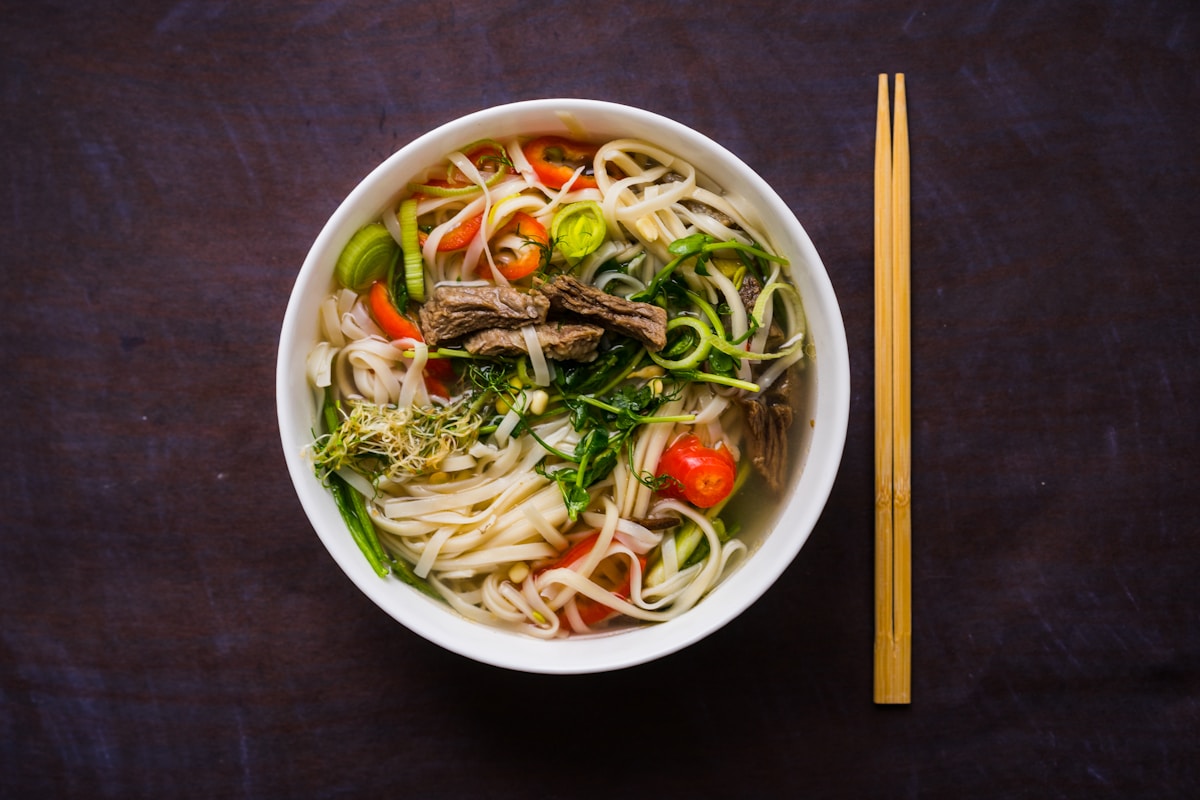
Sarawak laksa is not the spiced-curry laksa common in Peninsular Malaysia, nor is it the thick coconut-heavy variety found in Singapore. It starts with a sambal-and-prawn broth enriched with coconut milk and blended lemongrass, galangal, and belacan shrimp paste. The broth is poured over rice vermicelli and topped with bean sprouts, thin strips of omelette, peeled prawns, and shredded chicken. Fresh coriander and a halved calamansi lime arrive on the side — squeeze the lime in, give it a stir, and eat it immediately.
It is served almost exclusively at breakfast and morning coffee shops. By 10am, the most popular stalls have sold out. Plan accordingly.
Where to eat Sarawak laksa:
- Chong Choon Cafe, 234 Jalan Ban Hock — one of Kuching’s most-cited laksa addresses, with queues from 7am. A bowl runs RM 10-12. Cash only.
- Mohammed’s Laksa, Jalan Tabuan — popular with locals, open from 7am. Halal-certified, RM 9 a bowl.
- Market Laksa stalls, Jalan Padungan area — several competing kopitiam on this stretch all do competent laksa; useful if you are staying near the waterfront.
Kolo Mee: Kuching’s Other Essential
Kolo mee is the dish Kuching residents eat when they want something familiar and satisfying — at any time of day. Springy egg noodles are tossed in a dressing of rendered pork lard (or vegetable oil for halal versions), light soy sauce, and a splash of white vinegar to cut the fat. The noodles arrive in a bowl with sliced char siu barbecue pork, minced pork, and often a few wonton dumplings on the side.
It is a dry noodle dish — no broth — and the texture of the noodle matters. Good kolo mee has a bounce and a slight chew; bad kolo mee is soft and clumps together. The best versions are made fresh each morning.
Kolo mee is everywhere in Kuching’s coffee shops. Expect to pay RM 6-9 per bowl. Topping variations include char siu only, braised pork, or mixed seafood for a premium version (RM 12-16).
Where to eat kolo mee:
- Soon Hock Cafe, Jalan Padungan — reliably good kolo mee, busy at breakfast and lunch.
- Any kopitiam near Jalan Satok Market on a weekend morning — the proximity to the market means freshness of ingredients.
Midin: The Jungle Fern on Every Kuching Table
Midin is a wild jungle fern unique to Sarawak. It is stir-fried with garlic and belacan, or sometimes with dried shrimp and chilli, and served as a side vegetable. The texture is somewhere between asparagus and water spinach — firm, slightly crunchy, with a faint vegetal flavour that absorbs the wok seasoning well.
You cannot get midin outside Sarawak. It is harvested from secondary jungle and has a short shelf life, so it is never exported. Ordering it in Kuching is both a regional eating experience and a practical necessity — it appears on the menu of virtually every Chinese coffee shop and Malay restaurant in the city.
Expect to pay RM 10-16 for a stir-fried plate of midin at a Chinese restaurant. At mamak (Malay-Muslim) stalls, it often appears as one of the rice plate vegetable options.
Top Spot Food Court: The Rooftop Seafood Institution
Top Spot Food Court occupies the top floor of a car park off Jalan Bukit Mata, and it is the most famous seafood destination in Kuching — and arguably in all of Sarawak. Around 20 individual seafood stalls compete for business across the rooftop, open from around 5pm until midnight.
The format is hawker-style: walk to a stall, point at the live or fresh fish and shellfish you want, agree on a cooking method (steamed, sweet-and-sour sauce, black pepper, butter garlic) and return to your table. The stall staff bring the food to you.
What to order at Top Spot:
- Empurau fish — Sarawak’s most prized freshwater fish, caught in highland rivers. The flesh is naturally fatty with a clean, mild flavour. Prices are high — RM 100-200 per kilogram depending on season and size — but this is the one seafood splurge in Kuching that is genuinely worth it for food-serious visitors.
- Bamboo clams (siput buluh) — steamed with garlic and ginger. RM 15-20 per plate.
- Mantis prawns — stir-fried with salted egg or black pepper sauce. Fresh and generous portions. RM 25-40 per plate.
- Midin with belacan — the fern again, done properly, at essentially every stall.
A full seafood dinner for two at Top Spot — a fish, two shared plates, rice, and drinks — typically costs RM 80-150. It is more expensive than a kopitiam meal but still good value by regional standards.
Top Spot is open every day except during major public holidays. Arrive before 6.30pm on weekends to avoid a queue for tables.
Jalan Satok Weekend Market: Where Kuching Cooks Shop
The Jalan Satok market operates on Saturday evenings from around 4pm until late, and Sunday mornings from around 6am until noon. It is primarily a wet market serving Kuching residents, not a tourist market — which is exactly why it is worth visiting.
The Sunday morning section is particularly good. Vendors from longhouse communities bring produce you will not see in urban supermarkets: wild boar meat, jungle vegetables including midin and paku fern, fresh river fish, tuak (rice wine), packets of dried salted fish, and homemade sauces made from fermented durian (tempoyak). Indigenous Iban and Bidayuh vendors tend to arrive early and pack up by late morning.
Bring cash in small denominations. The market has no signage in English, which adds to the experience. Most food items cost RM 2-10. This is a genuinely local grocery environment, not a curated market for visitors.
Sarawak Layer Cake (Kek Lapis Sarawak)
Kek lapis is Kuching’s most photogenic export. These multi-layered cakes — made by baking alternating thin layers of spiced dough, each coloured differently — look more like stained glass than food when sliced. A standard kek lapis has 12 to 30 layers, and the process of building them is both labour-intensive and precise.
Flavours include pandan, prune, chocolate, and more elaborate variations using Sarawak pepper or local spices. The texture is dense and buttery; a thin slice is enough.
Kek lapis is sold at dedicated cake shops throughout Kuching and at the airport. The best shops for buying to take home are on Jalan Song and around the Carpenter Street area. Expect to pay RM 30-60 for a whole cake; individual slices are available from RM 3. The cakes keep well for several days at room temperature and up to two weeks refrigerated.
Manok Pansoh: Iban Bamboo Chicken
Manok pansoh is a traditional Iban dish cooked inside a bamboo tube. Chicken — often with local herbs, lemongrass, and tapioca leaves — is packed into a section of green bamboo, sealed with leaves, and cooked over an open fire. The bamboo imparts a light, grassy flavour to the meat, and the sealed cooking keeps the chicken moist.
It is one of the indigenous dishes most likely to appear on a menu in Kuching outside of a longhouse visit. Several restaurants near the waterfront offer it, typically for RM 20-35 per portion.
Reservations: Manok pansoh takes 45-60 minutes to prepare — call ahead or ask the restaurant if they need advance notice.
Laksa Paste: What to Bring Home
Sarawak laksa paste is sold jarred in supermarkets and specialty food shops throughout Kuching. The paste contains the sambal, dried shrimp, and lemongrass base that forms the broth foundation — you add coconut milk and prawn stock at home. The quality of commercial paste varies significantly; the brands sold at Jalan Satok market and in smaller Kuching provision shops tend to be better than supermarket versions.
The laksa paste available at Kuching Airport (departures hall) is conveniently packaged for travel, though the selection is limited. Buy it in the city if possible. Most jars cost RM 6-15 and easily fit in checked luggage.
Where to Eat in Kuching: At a Glance
| Dish | Where | Price Range |
|---|---|---|
| Sarawak laksa | Kopitiam, Carpenter St area | RM 8-12 |
| Kolo mee | Any coffee shop | RM 6-9 |
| Midin stir-fry | Chinese coffeeshop | RM 10-16 |
| Seafood | Top Spot Food Court | RM 80-150 (2 pax) |
| Manok pansoh | Waterfront restaurants | RM 20-35 |
| Kek lapis | Jalan Song cake shops | RM 3 (slice) / RM 30-60 (whole) |
Getting Around Kuching to Eat
Kuching’s main food areas cluster around the waterfront (Jalan Padungan, Jalan Carpenter), the Jalan Song food belt to the east, and the Jalan Satok market area. The city is small enough that a taxi or Grab ride between these areas costs RM 8-15 and takes under 15 minutes.
The Kuching Waterfront itself is largely tourist restaurants with inflated prices and average food. Eat there for the setting, not the food. Walk two blocks inland and the quality-to-price ratio improves immediately.