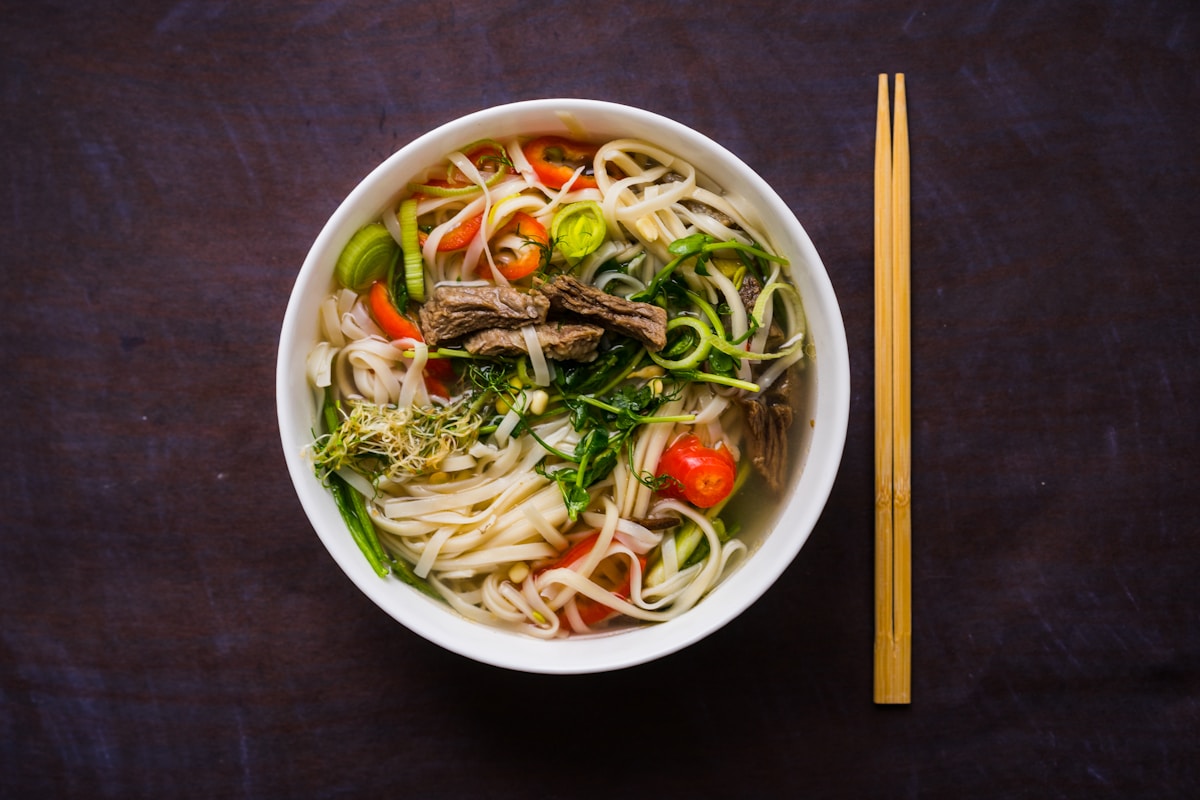
Kuching has the strongest food identity of any city in Borneo, and several of its signature dishes are found nowhere else - or nowhere as well. The food is cheap, the portions are generous, and most of what is worth eating is in coffee shops and hawker stalls rather than formal restaurants. Below is a guide to the dishes that define Kuching’s culinary character, with where to find them.
Sarawak Laksa
Sarawak laksa is the dish Kuching is most famous for and the one that rewards trying multiple versions across different stalls. It is nothing like the curry laksa of peninsular Malaysia or the lemak laksa of Singapore. The broth is built on a base of sambal belacan (prawn paste and chilli), coconut milk, and aromatics - lemongrass, galangal, candlenut, coriander root - producing a soup that is tangy, slightly spicy, and deeply savoury without being heavy. The bowl arrives with thin rice vermicelli, shredded chicken, whole prawns, omelette strips, fresh coriander, and a wedge of lime. Squeeze the lime at the table.
Prices run RM7–12 depending on prawn size and location. The best Sarawak laksa is found in morning coffee shops rather than tourist restaurants - the dish is a breakfast food for locals, and most stalls stop serving by 11am or noon. Chong Choon Café on Jalan Ban Hock and the stalls in the Carpenter Street area are frequently cited as standout versions. For those who want a reliable tourist-facing version later in the day, James Brooke Bistro on the waterfront does a competent bowl.
Kolo Mee
Kolo mee is Kuching’s other signature noodle - served dry rather than in broth. Fresh springy egg noodles are tossed with a light dressing of lard, spring onion, and a small amount of soy sauce, then topped with minced pork and sometimes char siu (barbecued pork). The result is deceptively simple: the balance depends on the quality of the noodle and the rendering of the lard, and a good bowl elevates well beyond its ingredients. Prices are RM5–8. Available at coffee shops throughout the day, unlike laksa which disappears before lunch.
Kolo mee halal variants exist and are made without pork, substituting chicken or beef - look for stalls marked halal. The dish is also sometimes served with wonton soup on the side.
Umai
Umai is a Melanau raw fish salad and one of the more unusual dishes in Malaysian cuisine. Thin slices of fresh raw fish - traditionally river fish or saltwater species like mackerel - are marinated in lime juice and mixed with sliced shallots, fresh chilli, and sometimes daun bawang (Chinese chives). The acid from the lime partially denatures the fish protein, giving the flesh a slightly firmer texture similar to ceviche. The flavour is clean and sharp, with the fish quality making the critical difference.
Umai is typically RM15–25 at seafood restaurants in Kuching. It is a restaurant dish rather than a hawker stall dish - look for it at Bla Bla Bla Restaurant in Padungan or at seafood restaurants along the waterfront. Freshness matters: ask the restaurant when the fish arrived. It should not be ordered at places where it is not a menu staple.
Manok Pansoh
Manok pansoh is a traditional Dayak dish - chicken cooked with lemongrass, ginger, and tapioca leaves inside a sealed bamboo tube placed over an open fire. The bamboo imparts a subtle woody note and the chicken steams in its own juices rather than being boiled or fried. The result is tender meat with a clean herbal flavour. Traditionally prepared at longhouse gatherings, it is available at restaurants in Kuching that specialise in Sarawakian cuisine - Bumbu Restaurant in Jalan Tabuan does a reliable version for RM30–50 for two. Booking ahead is advisable for dinner.
Kompia
Kompia is a Foochow Chinese bread roll baked in a wood-fired oven and finished with a sesame-seed coating. The texture is somewhere between a bagel and a Chinese bao - dense, slightly chewy, with a characteristic smoky crust. They are eaten plain as breakfast rolls, split and filled with pork or kaya (coconut jam), or paired with kopi (local coffee). Prices are RM0.80–2 per piece. The best kompia comes from bakeries that still use wood-fired ovens - ask at your hotel or guesthouse for the nearest one, as locations shift.
Tuak
Tuak is a traditional Dayak rice wine - fermented glutinous rice, clear to slightly opaque in colour, mildly alcoholic, with a sweet-sour flavour. It is brewed in longhouses throughout Sarawak and is served at festivals, ceremonies, and increasingly at cultural restaurants in Kuching. Expect to pay RM5–10 a glass at restaurants - Arang Road Food Court and cultural restaurants around Padungan serve it. It is not widely available in hawker stalls.
Take a Guided Food Tour of Kuching
Kuching is one of Malaysia’s most underrated food cities — Sarawak laksa, kolo mee, and midin jungle fern are dishes you can only eat in their original form here, shaped by the Iban, Chinese, and Malay communities that have cooked side by side in Sarawak for generations. A guided food tour through the old city’s morning coffee shops and riverside stalls is one of the most rewarding ways to spend a morning in Borneo, moving through the colonial shophouse streets from one kopitiam to the next with a guide who can explain the culinary traditions behind each dish. Kuching’s food scene is compact enough that a three-hour morning walk covers the essential stops without rushing.
Book a guided food tour of Kuching.
Where to Eat
Morning (6–11am): Coffee shops around Carpenter Street, India Street, and Jalan Ban Hock - this is when Sarawak laksa and kolo mee are freshest and the coffee shop atmosphere is at its best.
Lunch and afternoon: Padungan district has the most variety, from Chinese shophouse restaurants to modern Malaysian café-restaurants. The Top Spot Food Court on Jalan Bukit Mata Kuching is a rooftop hawker centre with reliable seafood at fair prices.
Evening: Arang Road has a cluster of outdoor restaurants and stalls active from around 6pm. The waterfront esplanade has some food stalls on weekend evenings. For a sit-down dinner combining Sarawakian specialities in one place, Bumbu or Lepau Restaurant on Jalan Tabuan are both worth booking.
For broader Kuching context - Semenggoh, Bako, transport, and accommodation - see the Kuching travel guide.