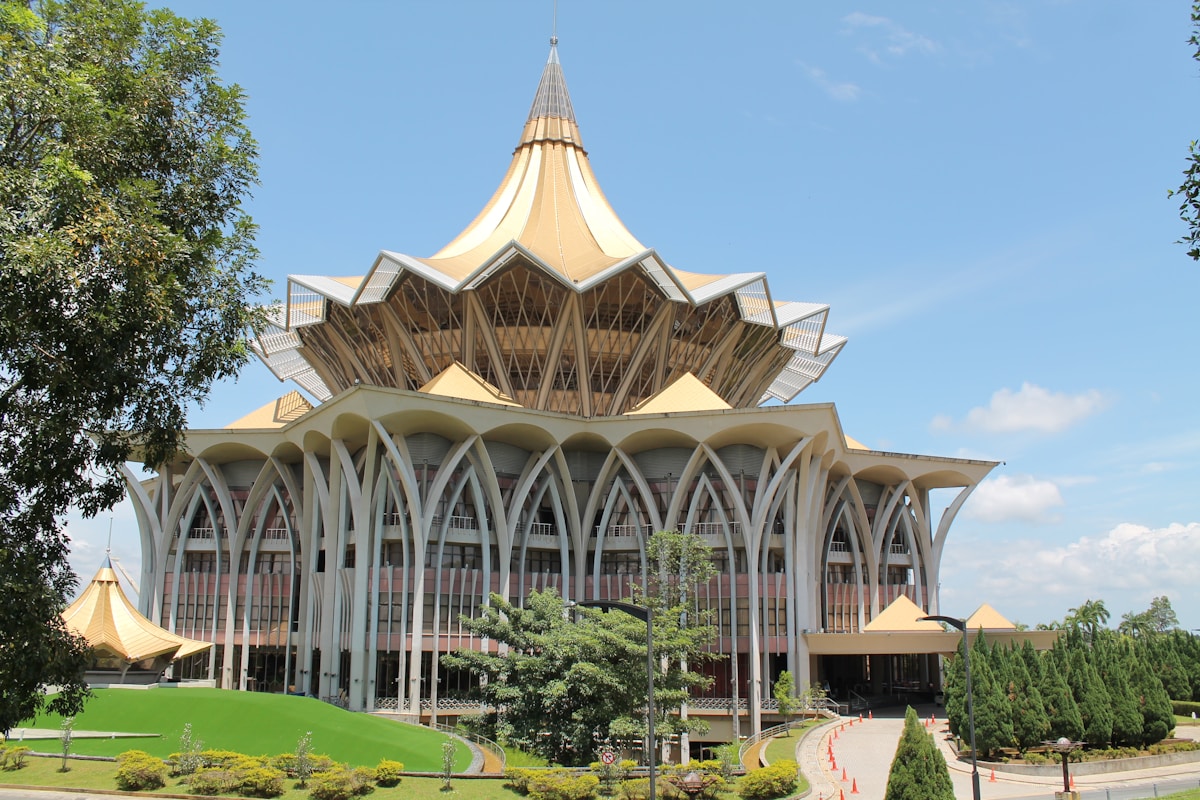
Kuching’s attractions split cleanly between the city and the surrounding forest. The city’s colonial waterfront, museum, and historic bazaars can fill a full day at a relaxed pace. The wildlife sites - Semenggoh and Bako - each deserve a dedicated day. Below is a practical breakdown of what is genuinely worth your time, with costs and logistics for each.
Kuching Waterfront
The kilometre-long waterfront promenade is free to walk and best in the early morning or evening. The Sarawak River runs wide and brown here, and the opposite bank - the north side - has the white Astana palace and the black-turreted Fort Margherita, both from the Brooke Raj era. Weekend evenings bring food stalls and occasional live music to the waterfront esplanade. The walk from the Hilton end to the Square Tower takes about 20 minutes at a slow pace and passes the main colonial buildings, including the Round Tower, the Old Courthouse, and the Chinese History Museum (free entry).
Sarawak Museum
The Sarawak Museum is arguably the finest museum in Borneo and is genuinely worth two to three hours of careful attention. It occupies two buildings connected by a footbridge: the original 1891 building (natural history focus - excellent mounted specimens of Borneo’s biodiversity, including the critically endangered species of the island) and the newer Dewan Tun Abdul Razak building (ethnographic collections covering Iban, Bidayuh, Orang Ulu, and other Sarawak peoples). The Iban artefacts are particularly strong - ritual textiles, ceremonial objects, and historical photographs from longhouse communities across the state. Entry is free for both buildings.
Fort Margherita
Built in 1879 by the second White Rajah, Charles Brooke, Fort Margherita was designed to protect Kuching from piracy on the Sarawak River. It now functions as a heritage museum. The fort is on the north bank - access is by a short sampan (wooden boat) crossing from the main waterfront (RM2–5 return depending on negotiation). Entry including the boat is approximately RM10. The fort’s rooftop gives clear views over the river and the Kuching waterfront. Allow 45 minutes.
Semenggoh Wildlife Centre
Located 24km south of the city, Semenggoh is the most meaningful wildlife encounter available to visitors in Sarawak. The orangutans here are not in enclosures - they are rehabilitated animals released into a forest reserve that they can move through freely. During the twice-daily feeding sessions (9–10am and 2–3pm), rangers put out supplementary food at a platform, and orangutans may or may not appear depending on whether wild fruit is available in the forest.
This uncertainty is the point. When wild fruit is abundant, some animals will not come to the platform - they are genuinely free and choosing not to. When fruit is scarce, multiple orangutans often appear, including mothers with young clinging to them. The encounters that do happen - with unenclosed animals choosing to be close to you - are unlike anything in a conventional zoo or tourist set-up.
Entry: RM10 for foreigners. Arrive at least 30 minutes before the feeding session. Grab from central Kuching costs approximately RM30 each way (30 minutes). Several half-day tour packages include transport, guide, and the morning session for RM80–120 per person. For combined Semenggoh and Bako itineraries, tours from Kuching are a practical option for visitors with limited days.
Bako National Park
Bako is 37km from Kuching by a combination of bus and boat (see the Kuching travel guide for transport logistics). The park covers a peninsula of coastal Borneo forest - sandstone sea stacks, mangrove fringes, cliff-top heath forest, and interior dipterocarp forest. The proboscis monkey population here is the most reliably visible in Malaysia - look for them in mangrove trees near the jetty in the morning and evening, and on the forest edge along the trails.
Also present: bearded pigs (bold, used to visitors, often seen on the paths), silver leaf monkeys, long-tailed macaques, sambar deer, water monitor lizards, and an exceptional range of pitcher plants along the cliff-top trails. The Telok Assam short trail near the park headquarters is the most productive for proboscis monkeys in a short time. Longer trails (Lintang Loop, Paku Waterfall) offer greater forest depth and birdwatching.
Day permit: RM20 for foreigners. The park closes to day visitors at 6pm; if you want to see wildlife at dusk (the best time for proboscis monkeys), staying overnight in the park’s chalets (book well ahead via Sarawak Forestry) makes the experience substantially richer. Guided tours from the park office range from RM50 for a short trail.
Fort Margherita, Main Bazaar, and the Historic Core
The area between Fort Margherita (accessed by boat, as above) and the Main Bazaar is Kuching at its most atmospheric. Walk the bazaar in the morning when coffee shops are serving breakfast and the antique dealers are opening shutters. The India Mosque at the bazaar’s end is a small but architecturally distinctive 1876 building. The Cat Museum (in the City Hall complex, a short taxi ride from the centre) is small and earnest in its commitment to the cat theme - RM5 entry, 45 minutes, worth it if you appreciate deadpan institutional quirk.
Comparing Guided Tour Options in Kuching
Kuching’s guided tour market divides into three main formats: orangutan and wildlife tours, Bako National Park day trips, and city heritage walks. The orangutan and Semenggoh combination is the most popular single experience — a half-day morning tour covering the Semenggoh Wildlife Centre feeding session (9–10am) with return transport from Kuching runs RM80–120 per person, including the RM10 park entry fee. The value relative to going independently is primarily transport: Grab to Semenggoh (RM30 each way) plus the entry fee comes to a similar total, but the tour handles timing and the guide adds context on orangutan rehabilitation and behaviour that makes the encounter more meaningful. Kuching tours on GetYourGuide list both half-day Semenggoh options and combined Semenggoh-plus-Bako full-day formats.
Combined Semenggoh and Bako one-day tours — covering both the morning orangutan feeding and an afternoon boat trip to Bako — run RM220–320 per person and represent the most efficient single day of wildlife viewing available from Kuching. The tight timing (Semenggoh feeding ends by 10am; the Bako boat takes 40 minutes; park entry and trails follow) means independent visitors who do not plan carefully miss one or the other. A guided combined tour handles the logistics, though the afternoon at Bako is necessarily shorter than a dedicated Bako day. For visitors with two days available, a separate Bako overnight stay — booked through Sarawak Forestry — adds dusk proboscis monkey viewing and a full second morning trail, which is substantially richer.
City heritage tours of Kuching’s colonial waterfront, Main Bazaar, and Sarawak Museum run 3–4 hours and cost RM80–140 per person for group formats. Kuching’s colonial history — the Brooke Raj, the White Rajahs who governed Sarawak as a personal kingdom from 1841 to 1941 — is genuinely unusual and rewards a guide who covers it properly rather than surface-level. Private guide rates for a half-day heritage walk are RM200–280. The Sarawak Museum is free to enter independently; the value added by a guide here is context on the ethnographic collections and understanding the distinction between Iban, Bidayuh, and Orang Ulu material culture. Browse Kuching tours to compare current wildlife and heritage options.
For accommodation, search hotels in Kuching on Booking.com.