Malaysia and Thailand are Southeast Asia’s most accessible, most developed, and most visited destinations - and for travellers with limited time in the region, they’re often compared directly. Both reward every day you give them. But they excel in genuinely different ways. Here’s where each country wins.
Quick Verdict
| Category | Malaysia Wins | Thailand Wins |
|---|---|---|
| Food variety and depth | Yes | - |
| Beaches and islands | - | Yes |
| Borneo wildlife | Yes | - |
| City architecture (KL vs Bangkok) | Even | - |
| Budget value | Yes (slight) | - |
| Multicultural culture | Yes | - |
| Temple culture | - | Yes |
| Night markets | - | Yes |
| Diving (reef quality) | Yes (Sipadan) | - |
| Short trip (under 10 days) | - | Yes |
Malaysia wins for food diversity, Borneo wildlife, and multicultural depth. Thailand wins for beaches, island-hopping, and the classic Southeast Asian temple and street food experience that dominates travel photography.
Climate and Best Time to Visit
Both countries straddle the equator and experience year-round heat with varying wet seasons. Crucially, they don’t always synchronise - which helps if you’re combining both.
Malaysia: The Peninsula’s east coast (Perhentian Islands, Tioman) is best November–February when the west coast (Langkawi, Penang) is in monsoon. The west coast is best November–April. Borneo has its own patterns: Sabah is best March–October.
Thailand: Best time overall is November to April (cool-dry season). Phuket, Krabi, and Koh Lanta are inaccessible by boat during monsoon (May–October). The Gulf of Thailand islands (Koh Samui, Koh Tao) have a different monsoon cycle and are generally good November to July.
A practical combined trip: Kuala Lumpur + Penang + northern Thailand (Chiang Mai + Bangkok) works well November to April, avoiding both countries’ worst monsoon windows simultaneously.
Cost Comparison
Both countries offer excellent value by Western standards, with Malaysia having a slight edge.
| Expense | Malaysia | Thailand |
|---|---|---|
| Budget accommodation | USD 15–25 | USD 15–30 |
| Mid-range hotel | USD 50–90 | USD 55–100 |
| Street food meal | USD 1.50–4 (RM 5–15) | USD 1.50–4 (THB 50–120) |
| Restaurant dinner | USD 10–25 | USD 12–30 |
| Local transport (day) | USD 3–6 | USD 4–8 |
| Daily budget | USD 35–50 | USD 40–55 |
Kuala Lumpur is cheaper than Bangkok across most categories. Malaysian street food in hawker centres - nasi lemak, char kway teow, roti canai - typically costs RM 5–12 (USD 1–2.50). Bangkok’s equivalent market stalls run THB 50–100 (USD 1.50–3).
Thailand’s islands add a significant premium. Koh Phi Phi and Koh Lanta accommodation runs substantially higher than mainland prices - USD 40–80 for a basic beach bungalow in high season. Langkawi, as Malaysia’s duty-free island, is cheaper for alcohol and can offset some accommodation costs for bar-focused travellers.
Top Experiences and Highlights
Malaysia
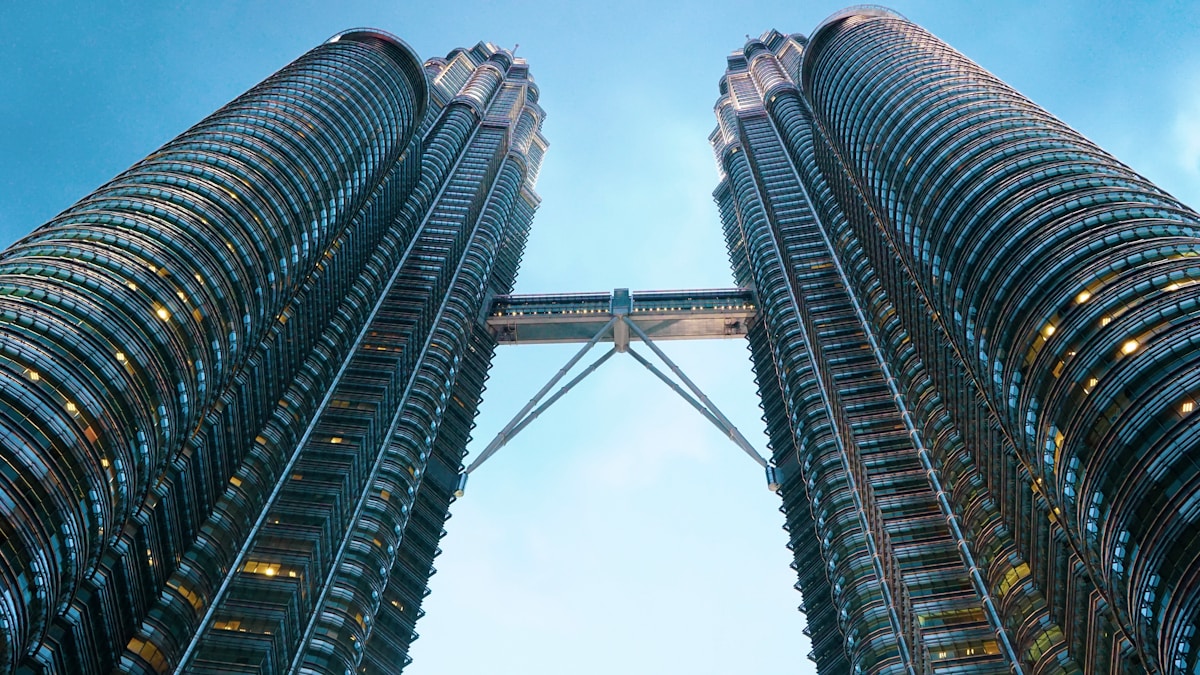
Kuala Lumpur is the natural start. The Petronas Twin Towers - still the world’s tallest twin towers - are best viewed from KLCC Park at ground level (free) or from the Skybridge (Level 41, approximately RM 100 as of 2026). Batu Caves, 13km north of the city centre (free entry), is a Hindu temple complex built into a limestone cave above a 272-step staircase. Chinatown (Petaling Street) and Brickfields (Little India) are best explored on foot and reward a slow afternoon.
Penang is Malaysia’s cultural and culinary capital - a UNESCO-listed George Town with remarkable street art, Peranakan shophouses, and a hawker food scene that rivals anywhere in Southeast Asia. The famous Penang Hill (Funicular railway, approximately RM 30 return) provides panoramic views of the Malacca Strait.
Langkawi is Malaysia’s primary beach destination - 99 islands off the northwest coast with duty-free prices, the Langkawi Sky Bridge (RM 30), and mangrove boat tours. Less developed than Phuket, which suits travellers who find Thailand’s mega-resort infrastructure overwhelming.
Borneo (Sabah and Sarawak) is Malaysia’s ace card. The Sepilok Orangutan Rehabilitation Centre near Sandakan (entry approximately RM 30, as of 2026) is one of the world’s most responsible wildlife encounters - semi-wild orangutans attend twice-daily feedings in their natural forest habitat. Turtle Islands Park (Pulau Selingan) off Sandakan runs overnight tours where guests watch sea turtles lay eggs and hatchlings reach the ocean - a deeply affecting experience.
Mount Kinabalu at 4,095m is the highest peak in Southeast Asia outside Indonesian Papua. The two-day summit climb requires advance booking through Sutera Sanctuary Lodges (approximately RM 1,200–1,500 for the full package as of 2026).
Cameron Highlands is a cool-climate highland region at 1,500m elevation - Boh Tea Estate (free entry to plantation walking paths, café sells tea), strawberry farms, and mossy forest walks make it a refreshing contrast to lowland heat.
Thailand
Thailand’s strength is concentration - the greatest hits are easy to reach and well set up for tourists. Bangkok requires at minimum two to three days: Wat Pho (entry THB 200, contains the giant Reclining Buddha) and Wat Phra Kaew (Grand Palace complex) (THB 500) anchor the temple circuit. Chatuchak Weekend Market - 15,000 stalls across 35 acres - is Bangkok’s best market experience. Rooftop bars in Silom and along the Chao Phraya River give Bangkok’s skyline its cinematic quality.
Chiang Mai in the north is a different Thailand: slower, cooler (November to February, temperatures 15–25°C), and centred on Buddhist temple culture. Doi Inthanon National Park (Thailand’s highest peak, THB 300 entry) is a rewarding day trip. Elephant sanctuaries - specifically ethical ones that offer no riding - cluster around Chiang Mai from approximately THB 2,000–3,000 per half-day.
Southern islands: Koh Lanta for families and divers, Koh Tao for budget diving (open water PADI certification from approximately THB 9,500), Koh Phi Phi for scenery, Koh Phangan for Full Moon Party. Thailand’s island circuit has a decades-long infrastructure investment that Malaysia simply hasn’t matched.
Food and Drink
Malaysia Wins on Diversity
Malaysia is arguably the most diverse food culture in Southeast Asia, a product of three major culinary traditions - Malay, Chinese, and Indian - living alongside each other for generations. Nasi lemak (coconut rice, sambal, anchovies, peanuts, hard-boiled egg) is the national breakfast dish, available from roadside stalls for RM 2–5. Char kway teow (wok-fried flat rice noodles with egg, prawns, and Chinese sausage) is the Penang benchmark. Roti canai (flaky flatbread with dal or curry) is the Indian-Malaysian morning staple at any mamak (24-hour Indian-Muslim café).
Laksa varies dramatically by region - Penang laksa (sour tamarind-fish broth) and KL’s curry laksa (coconut milk, spice) are entirely different dishes sharing a name. Bak kut teh (pork rib herbal soup) is a Chinese-Malaysian Sunday ritual.
Thailand Wins on Street Food Culture
Thailand’s street food scene is arguably the world’s most celebrated and for good reason. Pad Thai (wok-fried rice noodles) done properly by a street vendor is a different thing entirely from its Western restaurant versions. Tom yum goong (lemongrass prawn soup) is a masterclass in balance. Som tum (green papaya salad, spiced with fish sauce and lime) is the northeast’s contribution to the national table.
Bangkok’s Or Tor Kor Market (near Chatuchak) is the premium version - high-quality produce and prepared foods at premium-by-Thai-standards prices. Chiang Mai’s Saturday Walking Street and Sunday Walking Street markets are the best night market experiences in the country.
Both countries have world-class coffee cultures - Malaysian kopitiam (traditional coffee shops) versus Bangkok’s explosion of specialty coffee shops in the last five years.
Getting There and Around
Both countries are easily reached from Europe, Australia, and North America. Kuala Lumpur International Airport (KLIA) and Bangkok Suvarnabhumi are both major Southeast Asian hubs. Malaysia Airlines, Thai Airways, AirAsia, and budget carriers connect both cities across the region.
Within Malaysia, the rail network is efficient on the Peninsula (KL to Penang approximately 3.5 hours, RM 50–80 by ETS train as of 2026). Flights are needed for Borneo (KL to Kota Kinabalu approximately 2.5 hours, from RM 100–200 each way on AirAsia as of 2026).
Within Thailand, domestic flights are cheap and frequent. BKK to Chiang Mai runs from approximately THB 800–1,500 (30 minutes). The overnight train from Bangkok to Chiang Mai (sleeper, approximately THB 700–1,500) is a comfortable and atmospheric alternative.
Combined Malaysia–Thailand Trip
The most popular combined route: KL (2 nights) + Penang (2 nights) + Langkawi (2 nights) + cross into Thailand + Krabi or Phuket (3 nights) + Bangkok (2 nights). Penang to Hat Yai (southern Thailand) is possible by bus or train; from Hat Yai, connect north to Krabi or Phuket.
Total trip: approximately 13 days, covering both countries’ highlights without rushing.
Who Should Choose Each?
Choose Malaysia if you:
- Want the world’s most diverse multicultural food scene in one trip
- Plan to visit Borneo for orangutans, Sepilok, or Mount Kinabalu
- Prefer cities that feel lived-in over tourist-optimised
- Want highland relief (Cameron Highlands) alongside beach time
- Are interested in Peranakan, Islamic, Hindu, and Chinese cultural layers simultaneously
Choose Thailand if you:
- Want classic Southeast Asian island-hopping (Phi Phi, Lanta, Phangan)
- Are combining with Cambodia, Vietnam, or Laos (overland routes are simpler)
- Want more variety of temple culture and Buddhist heritage
- Plan to dive and want Thailand’s well-developed dive school infrastructure (Koh Tao)
Get a Malaysia eSIM, Compare travel insurance, or Browse tours and activities.
Final Verdict
Thailand wins the beach and island comparison - it’s not close. The infrastructure, range of islands, and Thai hospitality industry have decades of lead time on Malaysia’s equivalents.
But Malaysia wins the overall experience for discerning travellers: more food complexity, more cultural layering, and Borneo - a destination with genuinely no equivalent in Thailand or anywhere else in the region. The wildlife encounters in Sabah are among the most meaningful travel experiences in Southeast Asia.
The good news: these two countries share a border and complement each other perfectly. Most travellers to the region visit both.
Plan Your Trip
✈️ Book your flights to Malaysia 🛡️ Get travel insurance 📱 Stay connected with an eSIM 🚗 Rent a car 🏨 Search hotels in Malaysia on Booking.com