Cameron Highlands Travel Guide
Complete guide to Cameron Highlands: tea plantations, mossy forest, strawberry farms, hiking, and cool-weather escape from Malaysia's heat.
Guides for Cameron Highlands
Cameron Highlands is a plateau in Pahang state, sitting at 1,400 to 1,800 metres above sea level in the Titiwangsa mountain range. It was surveyed in 1885 by William Cameron, a British government surveyor who noted its potential as a hill station. Development began in the 1920s, when the British colonial administration built roads to the plateau and established the tea estates that still define the landscape today.
The result is a destination unlike anywhere else in Malaysia - a cool, rolling plateau covered in tea bushes, market gardens, and mossy forest, with a working agricultural economy that predates the tourism infrastructure. Around 45,000 people live in Cameron Highlands, in a string of small towns along the main road.
What Cameron Highlands is Known For
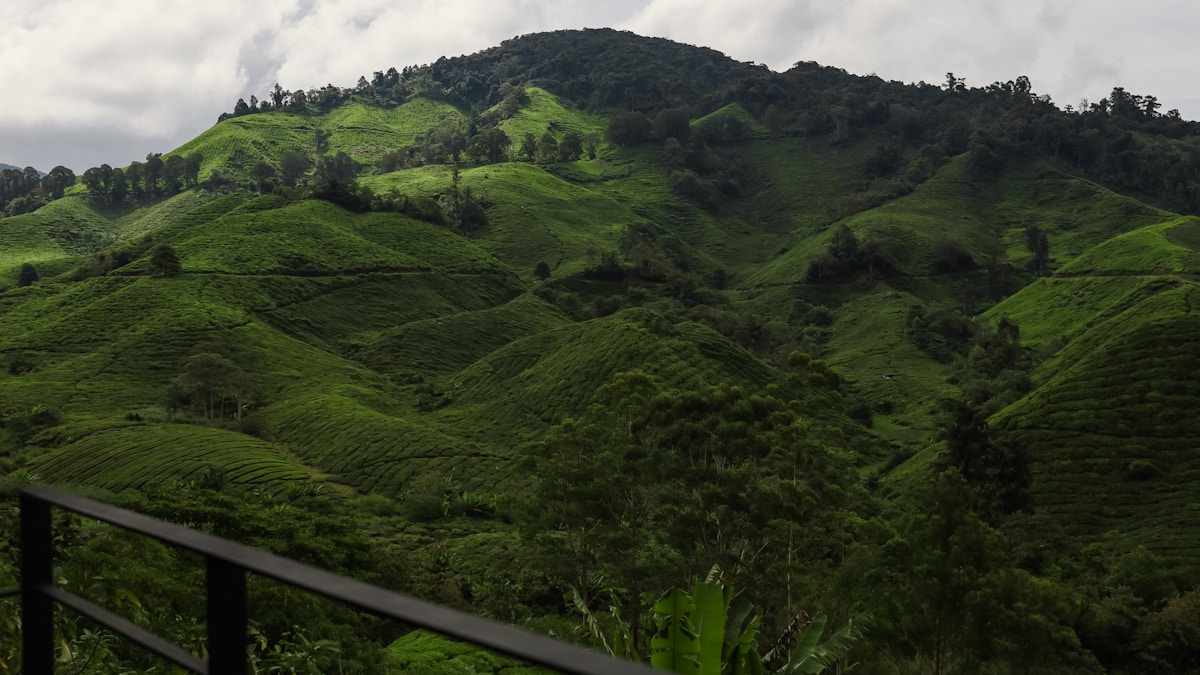
The BOH tea estates - particularly the Sungai Palas Tea Centre on the upper plateau - are the most photographed sight in the Highlands, and deservedly so: the rows of tea bushes covering steep hillsides with the visitor centre perched above them is one of the cleaner visual spectacles in Malaysia.
Beyond the tea, the draw is the mossy forest at Gunung Brinchang, the highland climate, strawberry picking farms scattered along the road, and a set of hiking trails of varying difficulty through the secondary and primary forest that surround the cultivated plateau. For visitors from the Malaysian lowlands, the temperature difference alone - arriving from 33°C KL into 22°C Tanah Rata - has its own appeal. For a structured single day covering the main sights, guided tours from Cameron Highlands bundle transport, a BOH tea estate visit, and the Gunung Brinchang mossy forest walk with a local guide.
Key Towns
Tanah Rata is the main town and the best base for most visitors. It has the highest concentration of accommodation, restaurants, travel agencies, and tour booking services. The town itself has limited visual appeal - a strip of shophouses and a market - but its central position makes it the practical choice.
Brinchang sits higher on the plateau, about 8 km north of Tanah Rata. It is closer to the Gunung Brinchang summit road and the mossy forest, and its Saturday night market is one of the better highland markets in Malaysia. Accommodation options are fewer and generally lower quality than Tanah Rata.
Ringlet is the southernmost and least visited town - the entry point when arriving from the south. It has some agriculture and a small market but limited tourist facilities.
Getting There
By bus from Kuala Lumpur: Buses depart from KL’s Puduraya bus station (Pudu Sentral) or TBS terminal to Tanah Rata several times daily. Journey time is 4 to 4.5 hours. Cost is RM30–40 one way. This is the most common route.
By bus from Penang: Coaches run from Penang’s Sungai Nibong terminal to Tanah Rata in 4 to 5 hours (RM35–45). Departures are less frequent than from KL - confirm schedules in advance.
By car via Simpang Pulai: From the PLUS North-South Highway, take the Simpang Pulai exit (between Ipoh and Gopeng). The road climbs steeply through secondary forest and plantation before opening onto the plateau. Journey from Ipoh is about 1.5 hours. The road is narrow and winding in sections - take it slowly, particularly in mist or rain.
An alternative route via Tapah (from the south) is longer but also used for buses from KL.
Getting Around
Grab operates in Tanah Rata and can reach most points on the main road. For the more remote tea estates and the Gunung Brinchang summit, taxis are more reliable - agree a price beforehand (RM20–40 for most journeys on the plateau).
Renting a car in Tanah Rata gives the most flexibility. The road from Tanah Rata to Brinchang and up to the Gunung Brinchang summit is paved throughout and manageable in a standard car.
Climate
The Highlands are cool year-round - 18–25°C. Evenings at Brinchang can drop closer to 16°C. Rain can arrive at any time of year, though afternoons tend to be wetter than mornings. Mist is common at the summits, often burning off by mid-morning on clear days. There is no distinct dry season - the plateau receives rainfall throughout the year from both monsoon systems.
How Long to Spend
Two nights covers the primary draws: BOH Sungai Palas, the mossy forest at Gunung Brinchang, strawberry farms, and a short hike. Three nights suits hikers who want a longer trail or anyone who wants to move slowly.
The Highlands work well as a standalone trip from KL or as a stop between KL and Penang. The route KL → Cameron Highlands (2 nights) → Penang (3 nights) is popular and logistically straightforward, with bus connections in both directions.
Browse tours and activities, Book airport transfers, or Get a Malaysia eSIM.
For accommodation, search hotels in Cameron Highlands on Booking.com.
More Cameron Highlands Guides
- Things to do in Cameron Highlands - tea estate visits, Gunung Brinchang mossy forest, hiking trails, and strawberry farms
- Best hotels in Cameron Highlands - accommodation by town and budget, from guesthouses in Tanah Rata to hill lodges near Brinchang
- Hiking in Cameron Highlands - trail options from short forest walks to summit routes
- Cameron Highlands tea plantations - BOH Sungai Palas, Boh Cameron Valley, and Bharat plantation visits
- Food to try in Cameron Highlands - steamboat, strawberry desserts, highland vegetables, and where to eat in Tanah Rata
- Cameron Highlands vs Genting Highlands - nature vs entertainment: choosing your Malaysian highland escape
- 10 days in Malaysia itinerary - the Cameron Highlands as part of the classic KL–Malacca–Highlands–Penang west coast route
- 2 weeks in Malaysia itinerary - how the Cameron Highlands fits into a two-week Malaysia and Borneo trip
- Best time to visit Malaysia - when to visit the Cameron Highlands: weather, school holidays, and off-peak timing
Upcoming Events in Cameron Highlands
Deepavali 2026 Malaysia: Dates, Celebrations & Where to Celebrate
Deepavali 2026 in Malaysia: public holiday 20 October. Kolam art and oil lamp displays in Brickfields KL and Penang's Little India, plus open houses.
Looking for somewhere to stay in Cameron Highlands? Browse hotels in Cameron Highlands , compare prices and book with free cancellation on most options.
Book an experience
Top experiences in Cameron Highlands
Explore the best tours and activities in Cameron Highlands, with instant confirmation and free cancellation on most bookings.