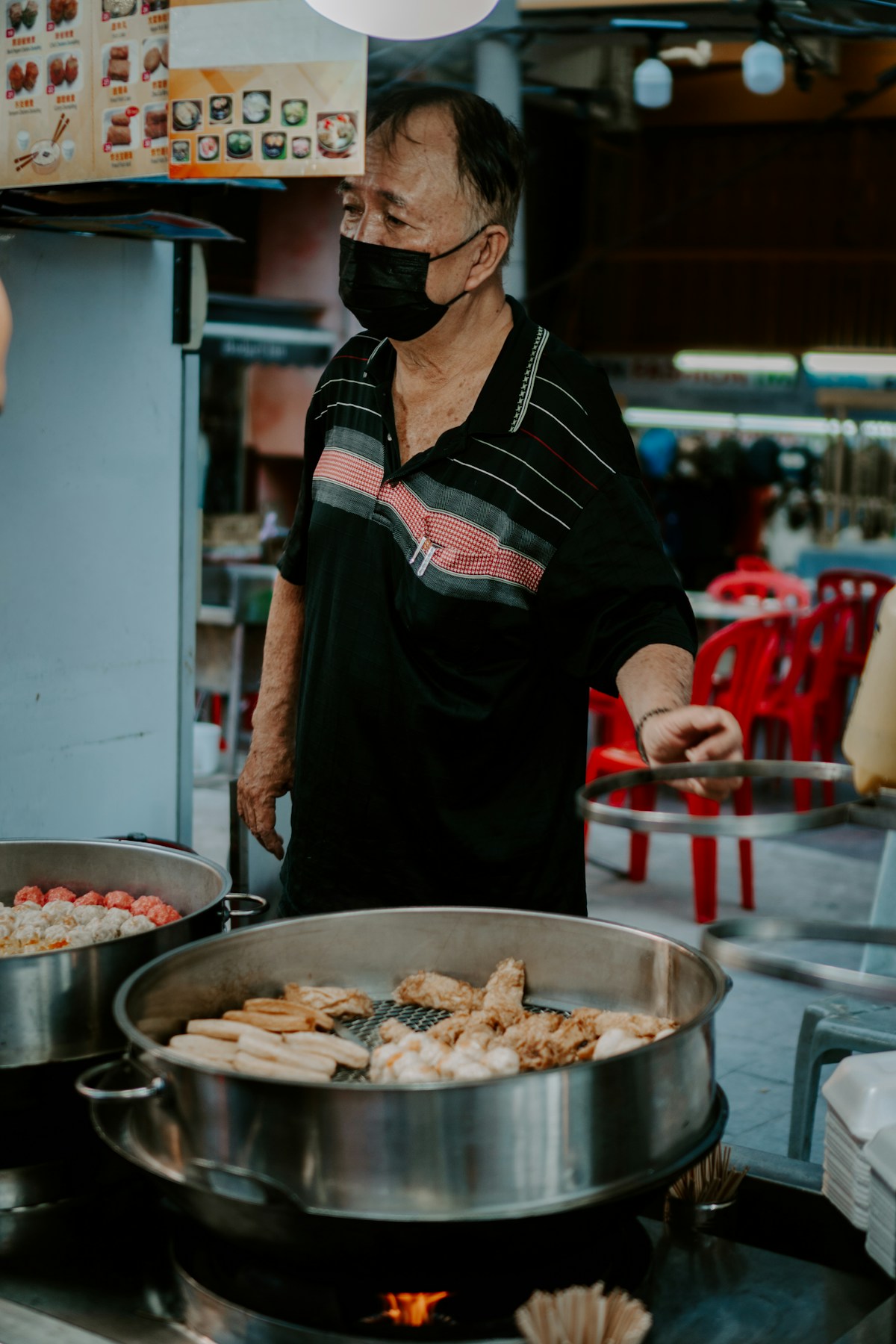
George Town, Penang’s UNESCO-listed capital, is widely considered the street food capital of Malaysia — and possibly of Southeast Asia. That is a bold claim, but it holds up. The city’s mix of Chinese, Malay, Indian Tamil, and Nyonya Peranakan culinary traditions has produced a density of great eating that takes days to work through properly. Hawker stalls that have been serving the same dish for forty years sit alongside newer spots, all competing on quality rather than price.
This guide covers the key hawker centres, the dishes you must not miss, the specific stalls worth seeking out, and how to get around Georgetown without spending the evening confused and hungry.
How Georgetown’s Street Food Scene Works
Penang’s street food operates primarily through two formats: hawker centres (permanent complexes with dozens of stalls under one roof or canopy) and roadside night markets (temporary setups along specific streets, usually from late afternoon). The hawker centre model means you can sit at a shared table, order from multiple stalls, and pay each stall separately — drinks are usually managed by the table’s drinks stall.
A full evening might involve eating char kway teow at one stall, ordering asam laksa from another, grabbing a plate of oyster omelette from a third, and finishing with cendol from the dessert vendor. Each stall specialises in one or two items and has perfected them over years.
Gurney Drive Hawker Centre
Gurney Drive Esplanade (Padang Kota Lama) is Penang’s most famous hawker complex, running along the seafront approximately 3km from Georgetown’s historic core. The view across the Penang Strait adds to the atmosphere, though regulars will tell you the best food is often inland — Gurney Drive’s fame has made it a tourist favourite, which keeps standards reasonably high but pushes some prices slightly above the Georgetown backstreet norm.
What to order here:
- Char kway teow — the Penang version is non-negotiable. Dark soy-sauce flat rice noodles, Chinese sausage, cockles, egg, and bean sprouts cooked at high heat in a wok. Look for stalls with smoke and a queue. Prices: MYR 6–9. Stall recommendation: Several char kway teow vendors operate at Gurney Drive — ask locals which has the shortest wait, as the best ones regularly rotate who’s busiest.
- Prawn mee (har mee) — intensely flavoured prawn-based broth with yellow noodles, rice noodles, prawns, and pork ribs. MYR 7–12.
- Laksa — Penang’s assam laksa is made with a mackerel-based broth soured with tamarind, topped with pineapple, cucumber, torch ginger flower, and shrimp paste. It tastes nothing like the coconut milk laksa of Kuala Lumpur. MYR 6–9.
- Oyster omelette (orh chien) — starchy, eggy, rich. Best eaten straight from the wok. MYR 8–12.
Getting there: Gurney Drive is a 15–20 minute walk from Komtar or a 5–10 minute Grab ride from Georgetown centre. Grab fares in the area are typically MYR 6–12.
New Lane (Lorong Baru) Night Market
New Lane (Lorong Baru) in the Macalister Road area is where many Georgetown residents go when they want to avoid the tourist-facing venues. It operates as a roadside market from approximately 6pm, with stalls setting up along both sides of a long back lane.
Highlights at New Lane:
- Pasembur (Indian rojak) — a Penang-specific salad of fried fritters, boiled egg, cucumber, turnip, and cuttlefish in a peanut-chilli sauce. Distinctly Penang Indian, and not well known outside the state. MYR 6–10 per plate.
- Fried chicken wings — marinated overnight and fried to order; several stalls at New Lane specialise in these, and the best ones have a queue by 7pm. MYR 3–5 per wing.
- Economy rice (chap fan) — mix-and-match rice with your choice of curries and vegetables. A filling plate costs MYR 6–10 depending on what you pick.
- Sugarcane juice — squeezed fresh at the market, MYR 2–3 per glass.
New Lane is roughly a 10-minute Grab from Georgetown’s heritage zone (MYR 6–10). Parking is difficult — leave the car or motorbike and go by Grab.
Chulia Street (Jalan Chulia) Night Market
Chulia Street in the heart of Georgetown’s budget accommodation district runs a night market from approximately 6pm. It is more compact than Gurney Drive and better positioned for walkers staying in the heritage zone — most Georgetown guesthouses are within 10 minutes on foot.
Stalls to look for:
- Mee goreng mamak — Malay-Indian fried noodles in a spiced tomato and egg sauce. MYR 5–8.
- Grilled chicken satay — peanut sauce, cucumber, and compressed rice (ketupat). MYR 1–2 per skewer.
- Roti canai — the Penang version is slightly crispier and richer than the KL standard. Best eaten with dhal or a fish curry. MYR 1.50–3 per piece.
- Fresh tropical fruit — papaya, mango, starfruit, and jackfruit sold by weight or per bag. MYR 3–6.
The Chulia Street night market is good for grazing rather than a single sit-down meal. Walk the length, pick up three or four small items, and consider it a pre-dinner warm-up before heading to a hawker centre later.
Chowrasta Market (Pasar Chowrasta)
Chowrasta Market on Jalan Penang is the place for breakfast and morning food. It opens from around 7am and winds down by early afternoon. The ground floor is a wet market; the upper levels house hawker stalls serving morning specialities.
Morning dishes to try:
- Nasi lemak — coconut rice with sambal, fried anchovies, boiled egg, and cucumber. The Penang version often adds a rich prawn sambal. MYR 4–7.
- Chwee kueh — steamed rice cakes topped with preserved turnip and chilli. MYR 3–5.
- Tau sar piah (mooncake) — Penang’s famous flaky pastry filled with sweet mung bean paste. Buy them by the box to take home. MYR 1.50–3 each.
- Cendol — shaved ice dessert with pandan jelly strands, coconut milk, and gula Melaka (palm sugar). Chowrasta has vendors selling this from morning; most hawker centres also have it. MYR 4–7.
Kek Seng Coffee Shop (Jalan Penang)
Kek Seng is an old-school kopitiam (traditional coffee shop) on Jalan Penang that has been operating since the 1940s. It is not a hawker centre — it is a fixed venue — but worth mentioning as an example of the kopitiam culture that still anchors much of Penang’s food scene.
Order: white coffee (kopi-O) MYR 2.50–3, toast with kaya and butter MYR 3–5, half-boiled eggs MYR 2. It is a different experience from the hawker centres — quieter, more deliberately slow — and gives a sense of what eating in Penang looked like decades before food tourism arrived.
Getting Around Georgetown for Food
Georgetown’s street food is spread across an area of roughly 3–4 square kilometres, so combining walking and Grab rides is the most efficient approach.
- Walking: The core heritage zone (from Penang Road to Lebuh Chulia, and from the waterfront to Jalan Masjid Kapitan Keling) is walkable and dense with food options. Allow 20–30 minutes between major areas.
- Grab: Consistently cheap within Georgetown — MYR 6–12 for most intra-city trips. Surge pricing can apply during peak evening hours; step back into an air-conditioned cafe for 10 minutes if the price looks high.
- Penang CAT Bus: Free shuttle buses run circuits through Georgetown from 7am to midnight. Routes vary — check the Rapid Penang app for current stops. Useful for the Gurney Drive run from Georgetown centre.
- Bicycle rental: Available from several guesthouses for MYR 10–20/day. Penang is reasonably flat within Georgetown and cycling between hawker centres is entirely viable in the evening.
- Trishaw (beca): Decorative bicycle rickshaws are a tourist staple rather than a practical transport option — MYR 30–50 per ride, negotiate before getting on.
Guided Food Tours
Several operators run evening food walks that cover 5–8 stops and include the guide explaining Penang’s food history and cultural context. These run 3–4 hours and cost MYR 120–200 per person, usually including all food samples.
Well-reviewed operators include Penang Food Tour and Eatcetera Penang — both run regular evening departures from Georgetown’s heritage zone. Booking through GetYourGuide or directly via operator websites gives the most flexibility on dates.
Guided tours add value on a first visit by eliminating the guesswork of ordering from stalls with Hokkien or Malay menus, and by covering more ground than most solo visitors manage. On a second or third visit, self-guided is the way to go.
The following GetYourGuide-listed tours are among the best-reviewed in Penang. Prices in USD as of 2026 — confirm current availability when booking.
- George Town Heritage Walking Tour with Street Food Tasting (4 hrs) — from $51 per person. Covers religious landmarks (St George’s Church, Kapitan Keling Mosque, Sri Mahamariamman Temple), Lebuh Armenian street art, and 5–6 street food tastings with cultural commentary. Good balance of history and food for first-timers.
- Beyond The Plate Penang Morning Food Tour (3.5 hrs, 15+ tastings) — from $56 per person. Starts at Chowrasta Market and winds through the hawker zones; dishes sampled include char kway teow, Penang laksa, nasi lemak, Nyonya kuih, and white coffee. The most food-focused option for serious eaters.
- Penang Plates Food Tour (4 hrs, 15+ tastings) — from $56 per person. Similar format to the morning tour but with an evening departure through the night market circuit; covers different stalls and adds satay and seafood dishes to the lineup.
[Browse all Penang food tours on GetYourGuide →](/go/tours-penang)
Practical Notes
- Cash is king at hawker stalls. Most do not accept cards or digital payments. Keep MYR 50–100 in small bills for an evening’s eating.
- Bring wet wipes — not all hawker tables are pristine and napkins are not always provided.
- Arrive hungry: Penang street food is designed for grazing across multiple stalls, not single-dish eating. The best approach is smaller portions from several vendors.
- Halal considerations: Most Chinese hawker stalls use pork. Indian and Malay stalls are typically halal. Look for the halal logo or ask at the stall — in Penang, vendors are accustomed to the question and will answer clearly.
- Allergies: Prawn paste (belacan) and dried shrimp appear in many Penang dishes, including some that do not appear to contain seafood. Always ask if shellfish is a concern.
Penang’s street food scene rewards curiosity and a willingness to point at something unfamiliar and see what arrives. The worst case is a MYR 6 dish that is not to your taste; the best case is a discovery that you will spend years trying to replicate.