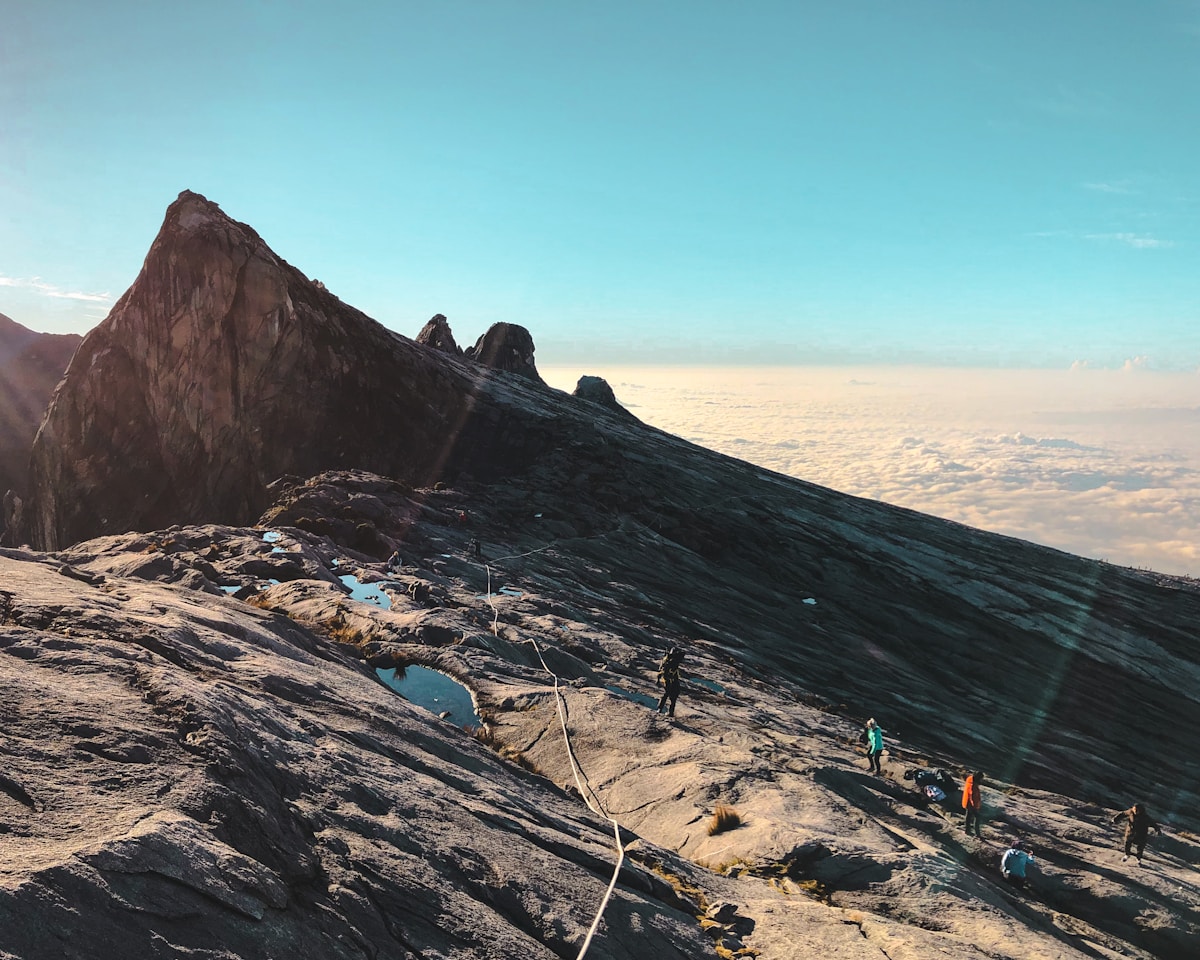
Mount Kinabalu (4,095 m) is Southeast Asia’s most accessible big summit - no ropes or mountaineering experience required, yet high enough that you watch sunrise above an ocean of cloud from bare granite. It is also heavily regulated, expensive by Malaysian standards, and frequently sold out months ahead. Here is exactly how the climb works as of 2026.
The System: Why You Cannot Climb Independently
Kinabalu sits inside Kinabalu Park, a UNESCO World Heritage Site, and Sabah Parks caps climbers at approximately 135 per day — set by bed capacity at the Laban Rata mountain huts (3,270 m), where every climber overnights. A licensed mountain guide is compulsory. Beds, permits, guide, and meals are bundled into packages; the standard product is 2D1N (two days, one night).
All climbing permits are managed exclusively through Sutera Sanctuary Lodges, which operates the mountain huts and controls the daily summit quota. To book directly: go to the Sutera Sanctuary Lodges website, create an account, select your summit date and accommodation (Laban Rata Resthouse or Pendant Hut), add a meal plan, and pay online — packages are non-refundable once confirmed. Cancellations occasionally free up last-minute slots, so check the portal regularly if you are already in Borneo.
You can also book through a Sabah-based operator (Amazing Borneo, Borneo Calling) — check 2D1N Kinabalu package availability here. Operator packages typically run RM1,800–3,000+ per person as of 2026, including permit, guide, accommodation, meals, transport, and insurance. International climbers pay significantly more than Malaysians.
What the components cost (booking direct via Sutera, as of 2026):
| Component | Approximate cost |
|---|---|
| Climbing permit | MYR 200–250 |
| Mandatory guide (shared, 1 per 5 climbers) | MYR 80–120 per climber |
| Laban Rata Resthouse (bunk dorm, dinner + breakfast) | MYR 150–200 |
| Pendant Hut (4-bunk en suite rooms, books first) | MYR 250–350 per person |
| National park entrance fee | MYR 15 |
| Via ferrata — Low’s Peak Circuit | MYR 350 |
| Via ferrata — World’s Edge | MYR 550 |
Private guides for solo climbers or small groups wanting more pace flexibility cost around MYR 200–300 extra. Add the return transfer from Kota Kinabalu (88 km, about 2 hours — approximately MYR 150–250 per vehicle, or included in fuller packages).
Getting to Kinabalu Park
Kinabalu Park HQ is 88 km from Kota Kinabalu city on the road to Ranau, around 2 hours by road.
- Minibus or shared taxi from Kota Kinabalu Padang Merdeka bus station: MYR 25–35, departs when full (early morning is most reliable)
- Hired car or day-transfer: MYR 150–250 for the full round trip — worth it if you arrive the afternoon before and want a guaranteed early start
- Sutera Sanctuary shuttle: Available as an add-on when booking via the portal
Most climbers spend the night before Day 1 in Kota Kinabalu and take an early morning transfer, arriving at the park by 8–9am to begin the ascent before afternoon clouds build.
Day One: Timpohon Gate to Laban Rata
Registration happens at Kinabalu Park HQ in the morning (bring your passport), then a shuttle runs to Timpohon Gate (1,866 m). The standard Timpohon Trail to Laban Rata is 6 km with about 1,400 m of gain — almost entirely steps: wooden, stone, and root staircases through three vegetation zones (oak-laurel forest, rhododendron forest, sub-alpine scrub), with rest shelters (pondok) every 500–900 m. Most climbers take 4–6 hours.
Alternative: The Mesilau Trail starts from Mesilau Nature Resort and adds 2 km and 200 m extra elevation gain, but passes through more diverse cloud forest. It rejoins the Timpohon route above the park gate. A separate taxi or transfer from Kinabalu Park HQ is required for the Mesilau trailhead.
Laban Rata Resthouse serves a buffet dinner (included in packages); unheated dorms are the norm, and Pendant Hut’s en suite rooms sell out first — book early if you want more comfort. Sleep early — wake-up is around 1.30–2am. Do not expect to sleep well at 3,270 m; few do.
Day Two: Summit Push and the Long Way Down
The final 2.7 km starts around 2.30am by headtorch: steep staircases to the Sayat-Sayat checkpoint (permit check), then open granite slabs with fixed ropes on the steeper sections. The last kilometre to Low’s Peak is a slow, cold scramble at over 3,900 m — expect near-freezing temperatures plus wind chill before dawn. The summit push covers 825 m of elevation gain and typically takes 2–4 hours depending on fitness.
Summiting for sunrise (around 6am), you descend the entire mountain the same day: back to Laban Rata for breakfast, then down all 6 km to Timpohon Gate, usually arriving early–mid afternoon. The descent takes 4–5 hours and wrecks more knees than the ascent — trekking poles (rentable at park HQ for approximately RM10–15) earn their keep here.
Training, Altitude, and Who Should Not Go
Train on stairs, hill repeats, or a stair machine for 4–6 weeks; strong legs matter more than cardio heroics. Altitude sickness above Laban Rata is common in mild forms (headache, nausea) - climbing higher than your acclimatisation allows is the main summit-failure cause, along with weather. Guides can and do turn groups around in storms; no refunds apply, which is worth knowing when booking a tight itinerary. Children under 10 and anyone with significant heart or knee conditions should consider the park’s lower trails instead.
What to Pack
- Headtorch (mandatory — phone torches do not survive summit morning)
- Warm layers: base layer (merino or synthetic), fleece or mid-layer, waterproof shell — summit temperatures drop to 2°C–5°C with wind chill approaching 0°C
- Gloves with grip for the fixed ropes; hat or buff
- 2 litres of water capacity (refill at Laban Rata) and fast snacks — the Laban Rata canteen serves meals but opens only at set times
- Rain jacket year-round — this is Borneo
- Cash for HQ extras, poles, and tips for your guide (RM50–100 per group is customary)
Porter service at the park costs approximately MYR 8 per kilogram per trip, maximum 10 kg per porter. Use it if your pack exceeds 7 kg — it is a legitimate income source for local communities and your knees will thank you on the descent.
Leave large suitcases and anything fragile at your Kota Kinabalu hotel before heading to the park.
When to Climb
March to September is the driest, most reliable window, with the clearest summit chances from April through August. October to January brings the highest storm-turnaround risk — slippery granite and likely via ferrata cancellations. Book dry-season weekday slots 3–6 months out.
Avoid Malaysian school holiday weeks (mid-May, mid-August, and the Christmas–New Year period) — the already-limited permit allocation books out within minutes of opening during these windows. Check our Malaysia monthly guides for the broader Sabah weather picture.
Practical details:
- Minimum age: 10 years for the standard summit trail; 15 for via ferrata
- No formal maximum age, but climbers above 60 should have a recent medical check-up
- Fitness level required: moderate to high — you should be comfortable with 6+ hours of uphill hiking
- Internet and phone signal: available at Laban Rata Resthouse but unreliable above that
- Accommodation near the park: Kundasang (15 km from park HQ) has guesthouses from MYR 80/night; spending a night there at 1,600 m before climbing is the easiest acclimatisation strategy
Building It Into a Sabah Trip
Most climbers base in Kota Kinabalu before and after - see our Kota Kinabalu city guide - and many pair the mountain with the Kinabatangan River’s wildlife (our Kinabatangan river cruise guide covers it) or diving at Sipadan via our Sipadan diving guide. Allow a rest day after the climb; your quadriceps will insist regardless. Two natural hot pools at Poring Hot Springs, 40 minutes from park HQ, are the traditional post-climb reward (entry approximately RM15 as of 2026).
If your Sabah plans are still taking shape, check our last-minute Malaysia tours page for available guided climbs and Kinabalu packages. You can also browse Kota Kinabalu tours and day trips on GetYourGuide to plan activities around the climb.