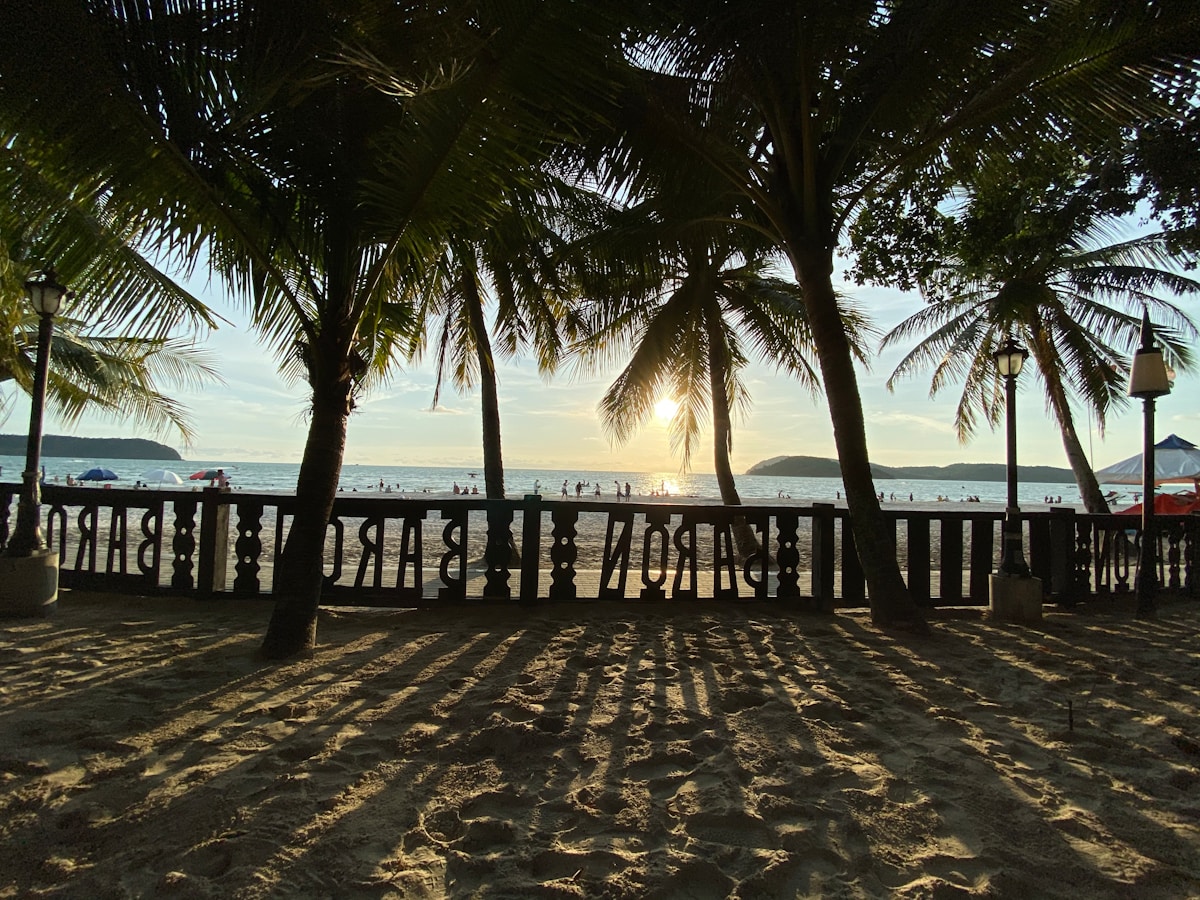
Langkawi is unlike the rest of Malaysia. As a designated UNESCO Global Geopark and duty-free island, it sits apart — in geography (99 islands scattered in the Andaman Sea), in tax status (no GST on alcohol and tobacco, which fills the ferry with day-trippers from the mainland) and in character (rainforest, limestone, white-sand beaches and very little of KL’s urban density). The island draws two types of visitor: resort guests who rarely leave their beach chairs, and people who came for a few days and ended up doing everything. This guide is for the second type. Below are the tours that distinguish a Langkawi trip from any other beach destination in Malaysia.
Island Hopping: Dayang Bunting, Beras Basah and Eagle Feeding
The standard Langkawi island-hopping tour visits three locations in a half-day boat trip, and it earns its popularity. Boats depart from Kuah Jetty (the main port, near Eagle Square) or from Cenang Beach, typically between 9am and 10am, and return by 1–2pm.
Pulau Dayang Bunting (Lake of the Pregnant Maiden) is the standout stop. The name refers to the freshwater lake — actually a collapsed limestone cave — that sits inside the second-largest island in the Langkawi archipelago. The silhouette of the island from the water resembles a pregnant woman lying on her back, which accounts for the legend: bathing in the lake is said to improve fertility. The practical reality is a cool, brackish-green lake ringed by limestone cliffs and jungle, reachable by a 10-minute walk from the jetty through a forest that echoes with the sound of dusky leaf monkeys. Swimming is permitted and a relief after the boat ride.
Pulau Beras Basah is the beach stop: a small island with a fine white-sand beach, clear water good for snorkelling (bring your own mask, or hire one from your tour operator for approximately RM 10) and a food kiosk selling coconuts and iced drinks. You get around 45–60 minutes here.
Eagle feeding — watching the Brahminy kites (sea eagles) that give Eagle Square its name swoop down to catch fish thrown from the boat — happens in the open water near the eagle sanctuary area, typically on the return leg. The eagles are wild; the fish scraps are not. It is worth seeing once.
Island-hopping tour prices: approximately RM 35–50 per person for a shared boat (6–12 people), RM 150–300 for a private charter (up to 8–10 people). Private charters allow flexibility in timing and snorkelling stops. Find island-hopping tour options in Langkawi to compare operators and read reviews before booking.
Langkawi Cable Car and Sky Bridge
The SkyCab gondola at Oriental Village in Burau Bay on the northwest coast is the most visited attraction in Langkawi, and the view from the summit makes it clear why. The cable car ascends 2.2 km from the village base at 105 m to the upper station at 708 m — a gradient that includes the world’s steepest free-span cable car section, tilting the gondola floor noticeably toward the mountain in the last few hundred metres.
At the top station (called Gunung Mat Cincang summit area, though the true summit at 881 m is higher), the Sky Bridge is the headline. The 125 m curved pedestrian bridge is suspended 660 m above the surrounding jungle on a single pylon, with glass sections in the floor and unobstructed views of the Andaman Sea toward Thailand on clear mornings. It opens at 9:30am and closes Tuesday for maintenance. The bridge has a separate entrance fee of approximately RM 5 on top of the cable car ticket.
The upper station also has a small observation platform and several walking trails, including the 15-minute descent to a midway station that passes through dense jungle. Bring a light jacket: the summit is noticeably cooler than the beach (typically 22–26°C vs. 30–33°C below).
Practical details: cable car return tickets cost approximately RM 55 per adult, RM 45 per child. Queues can be significant from 10am onward on weekends and Malaysian public holidays. The first ride at 9:30am is the best option for shorter queues and clearer skies. Oriental Village itself is free to enter and has several restaurants and craft shops for the post-cable-car hour.
Mangrove Kayaking Through Kilim Geoforest Park
The northern coast of Langkawi is almost entirely mangrove forest, part of the 478 sq km Kilim Karst Geoforest Park that forms one of three geoparks within the UNESCO designation. The mangrove system here is one of the most intact in Malaysia, and kayaking through it at low tide — when the tree roots are exposed and the water becomes glass-still in the sheltered channels — is the most immersive natural experience the island offers.
Guided kayaking tours run from operators based near the Jalan Ayer Hangat area on the northeast coast, with some launching from the Kilim River jetty near Kisap. A typical 3–4 hour tour follows the tidal channels through the mangroves, stopping at bat caves (roost sites for large colonies of cave nectar bats), an eagle-watching area and a fish farm that demonstrates the traditional cage aquaculture method used by Langkawi fishing families.
What to expect: the paddling is gentle — no significant current or whitewater. The channels are narrow enough that you can reach out and touch the pneumatophore roots (the breathing knobs the mangroves send above the waterline). Your guide will point out mudskippers, fiddler crabs and monitor lizards on the banks, and likely several kingfisher species including the Collared Kingfisher that is common here.
Prices: approximately RM 100–180 per person for a shared tour; RM 200–350 for a private guide with a smaller group. Tours are tide-dependent — your operator will advise on the best time slot for the day. Bring sun protection, as the channel sections between the mangrove areas are fully exposed.
Eagle Square and Kuah Town
Eagle Square (Dataran Lang) at the Kuah Jetty is Langkawi’s best-known landmark: a 12-metre bronze Brahminy kite sculpture rising from a tiered waterfront plaza, with the island-dotted sea behind it and the ferry terminal beside it. It is the first sight most visitors see on arriving by boat from Penang or Satun (Thailand), and it functions less as an attraction than as an orientation point for Kuah town.
Kuah town itself is Langkawi’s duty-free shopping centre: alcohol at mainland-minus-tax prices (a bottle of Tiger Beer approximately RM 6–8, a litre of blended Scotch from RM 60), a string of chocolate and confectionery shops (Cocoa Island, Chocaholic) selling duty-free imported products, and the Mahsuri International Exhibition Centre (MIEC) that periodically hosts trade expos. The shopping is genuine rather than spectacular — Langkawi’s duty-free status is most useful for buying wine and spirits to take back to KL or Penang, where alcohol is expensive.
The eagle feeding boats depart near Eagle Square, and several speedboat and island-hopping operators have offices here. Budget 60–90 minutes for a walk around the square, the waterfront promenade and the main duty-free shops before or after your ferry.
Langkawi Duty-Free Shopping
Langkawi’s duty-free status extends beyond alcohol. Electronics, cosmetics and certain luxury goods are available without the 6% GST that applies on the mainland, and the island has several malls and outlet centres targeting this trade. Langkawi Fair Shopping Mall (about 2 km from Kuah Jetty) concentrates the main duty-free outlets; Cenang Mall and Cenang Beach strip have a smaller range.
The practical reality: alcohol and tobacco are the clearest savings (mainland prices for imported wine can be 30–50% higher). Electronics savings are less dramatic than they once were, as online Malaysian prices have narrowed. Visitors from Singapore should be aware of Singapore customs duty-free allowances (2 litres of alcohol per adult) before loading up.
Most large resort hotels have on-site duty-free shops, and the airport departure area has extensive duty-free liquor and chocolate before the international gates. If you are connecting through Penang or KL, note that duty-free goods bought in Langkawi are technically not duty-free in those destinations — they are only for export from Malaysia.
Langkawi Tours on GetYourGuide
GetYourGuide lists the main Langkawi tour formats — the options below cover the three most popular. Prices are in MYR as of 2026; confirm current availability when booking.
- Langkawi: Island Hopping Shared Boat Tour (3.5 hrs, shared speedboat) — the standard 3-island circuit visiting Dayang Bunting Lake, Singa Besar eagle-feeding point, and Beras Basah beach. Shared group departures keep per-person costs low; most local operators charge RM 35–80 for the same route, and GYG pricing is comparable. Best for solo travellers or small groups who don’t need a private departure window.
- Langkawi: Island Hopping Shared or Private Boat Options (3.5 hrs) — same three-island route with a private boat upgrade available. The private option is worth considering for groups of 4+ who want flexibility on time at each island and to skip the shared-boat queue at Kuah Jetty.
- Langkawi Mangrove Kayaking — guided kayaking through Kilim Geoforest Park; typically 3–4 hours at RM 100–180 per person (confirmed above). Book at least 24 hours ahead; tours are tide-dependent.
[Browse all Langkawi tours and activities on GetYourGuide →](/go/tours-langkawi)
Practical Tips for Langkawi Tours
Getting to Langkawi: Langkawi International Airport has direct flights from KL (approximately 1 hour), Singapore (1 hour 20 minutes) and several other Malaysian cities. The high-speed ferry from Penang Georgetown takes approximately 2 hours 45 minutes (approximately RM 60–80 per person). Ferries also run from Kuala Perlis on the mainland (approximately 45 minutes, RM 23).
Getting around: Langkawi has no public bus system. Car hire from the airport is straightforward (from approximately RM 80–120 per day) and is the practical option for independent travellers. Taxis are available but expensive relative to car hire for a multi-day stay. Most tour operators pick up from beach hotels.
Where to base yourself: Pantai Cenang and Pantai Tengah on the southwest coast are the most convenient bases — close to the beach strip, most tour operators and the cable car (20 minutes by car). Kuah town suits early arrivals by ferry. For a quieter alternative, the north coast near Datai Bay places you closer to the geoforest but further from most tours.
Best time to go: May to September is the driest period on the west coast. November to March can bring northwest monsoon weather — heavy rain, rough sea — and some island-hopping operators suspend tours when conditions are poor. The cable car also closes during storms. If island-hopping and kayaking are your priority, plan for May–September.
For accommodation options across price ranges, see our Langkawi where to stay guide. For a broader look at the island before you arrive, the Langkawi city guide covers transport, beaches and what to expect by area.