No culture is more specifically Malaysian than the Peranakans - and nothing else you eat in this country took five hundred years to develop. This guide covers who the Baba-Nyonya are, where to experience the culture in Penang and Melaka, what to order, and which mansions are worth the entry fee.
Who the Peranakans Are
From roughly the 15th to 17th centuries, Chinese traders settled in the ports of the Melaka Straits and married local Malay and Indonesian women. Their descendants - the Baba-Nyonya (Baba for men, Nyonya for women), also called Straits Chinese - built a hybrid culture found nowhere else: Chinese ancestral religion and surnames, a creole Malay mother tongue (Baba Malay), Malay dress in the form of the embroidered kebaya nyonya, and English-medium education under the British. They grew wealthy as middlemen in the colonial Straits Settlements - Melaka, Penang and Singapore - and spent that wealth on famously ornate houses, beaded slippers, and food that takes days to prepare. The culture nearly vanished in the 20th century; today it is enjoying a deliberate revival, with both cities’ Peranakan quarters inside UNESCO World Heritage zones.
Penang or Melaka?
Melaka is the historical heartland - the oldest community, the most intact domestic architecture, and restaurants still run by Nyonya families cooking grandmother recipes. Penang offers the grander single attraction (Pinang Peranakan Mansion), a livelier heritage district in George Town, and the deeper food scene. The cuisines genuinely differ: Penang Nyonya cooking absorbed Thai sourness - tamarind, kaffir lime - while Melaka’s leans sweeter and more coconut-rich, with Indonesian influence. Purists eat in both and argue about it.
Nyonya Food: What to Order
- Laksa lemak / Nyonya laksa - rice noodles in a coconut-milk curry broth; approximately RM10–18 a bowl.
- Asam laksa (Penang) - the sour tamarind-and-mackerel cousin; RM8–15 at hawker stalls.
- Ayam buah keluak - chicken braised with the earthy black keluak nut, the benchmark of a serious Nyonya kitchen; RM25–40.
- Otak-otak - spiced fish custard grilled in banana leaf; RM2–5 a piece.
- Kuih - the jewel-toned steamed cakes (kuih lapis, onde-onde, ang ku); RM1–3 each from morning markets.
- Cendol - shaved ice, palm sugar, coconut milk and pandan jelly; RM5–10, best with Melaka’s gula melaka.
Where to eat, Penang: Auntie Gaik Lean’s Old School Eatery (Bishop Street, George Town - Michelin-starred, book ahead, mains roughly RM30–60) and Kebaya Dining Room at Seven Terraces for a refined set-menu take (approximately RM200+ per person). Where to eat, Melaka: Nancy’s Kitchen (mains RM15–30) and the cendol stalls of Jonker Street - both on our Melaka heritage walking route. Prices are as of 2026.
The Mansions and Museums
- Pinang Peranakan Mansion, Penang (Church Street, George Town) - the eccentric green mansion of a 19th-century Straits tycoon, stuffed with over a thousand antiques. Entry approximately RM25 as of 2026, typically open 9.30am–5pm daily. The attached Straits Chinese Jewellery Museum is the bonus round.
- Baba & Nyonya Heritage Museum, Melaka (Jalan Tun Tan Cheng Lock) - three connected townhouses preserved as a family home rather than a showcase, which is exactly its charm. Entry approximately RM20 as of 2026, typically 10am–5pm; confirm current hours and tour times on their site.
- Straits Chinese houses in George Town - several clan temples and shophouse museums cluster within walking distance of Armenian Street; pair them with our Penang street art walk.
Shophouse Architecture: What You’re Looking At
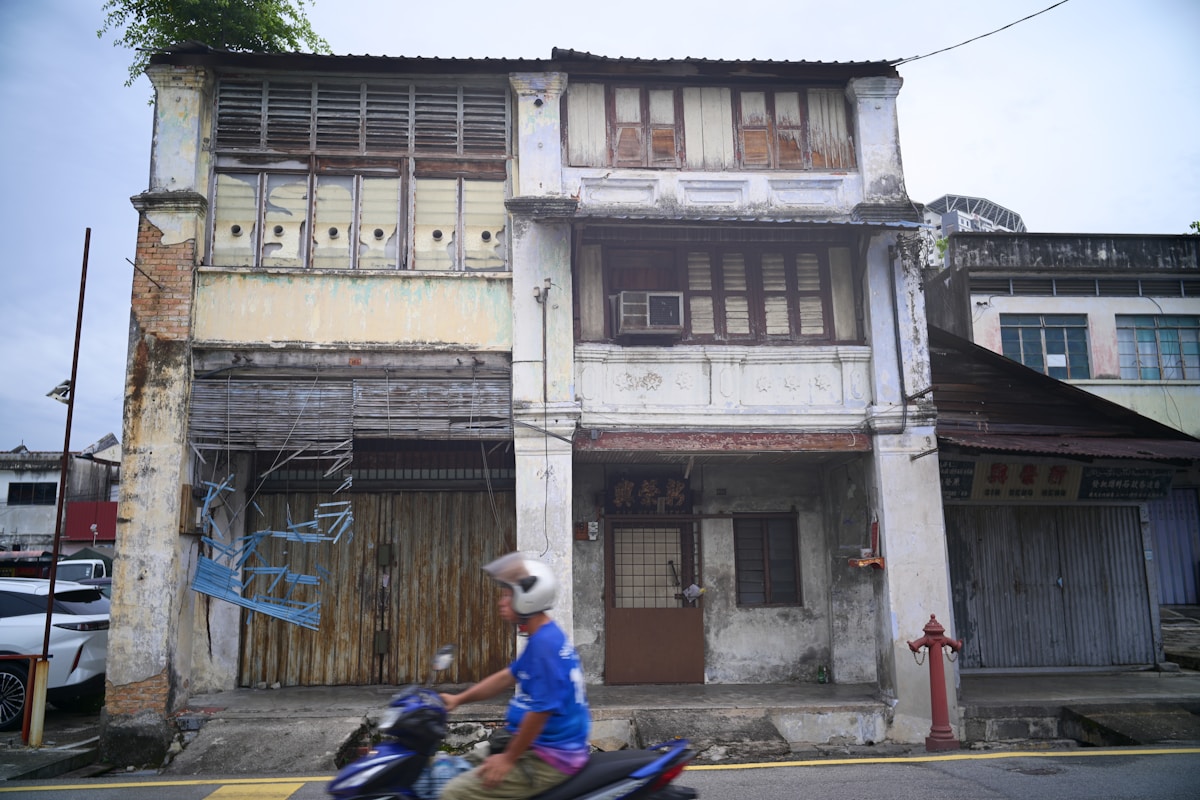
The Peranakan streetscape is the long, narrow shophouse: business in front, family quarters behind and above. Spot the signature features - the five-foot way (covered pedestrian arcade mandated in the colonial era), the air well courtyard open to the sky for light and rain, the carved pintu pagar half-doors that let breezes in while keeping privacy, and facades mixing Chinese auspicious symbols with European pilasters and Malay timber fretwork. The most photogenic runs are Jalan Tun Tan Cheng Lock and Heeren Street in Melaka, and the Armenian Street quarter in George Town - weathered, pastel-shuttered, and still lived in.
Get a Malaysia eSIM, Compare travel insurance, or Browse tours and activities.
Planning Your Visit
Give each city a full day minimum for the Peranakan layer alone. Morning markets for kuih, a mansion before the midday heat, a long Nyonya lunch, shophouse streets in the late-afternoon light. Both heritage cores are walkable; neither needs a car. For broader context on the two cities, see our Penang and Melaka guides.
Plan Your Trip
✈️ Book your flights to Malaysia 🛡️ Get travel insurance 📱 Stay connected with an eSIM 🚗 Rent a car 🏨 Search hotels in Malaysia on Booking.com