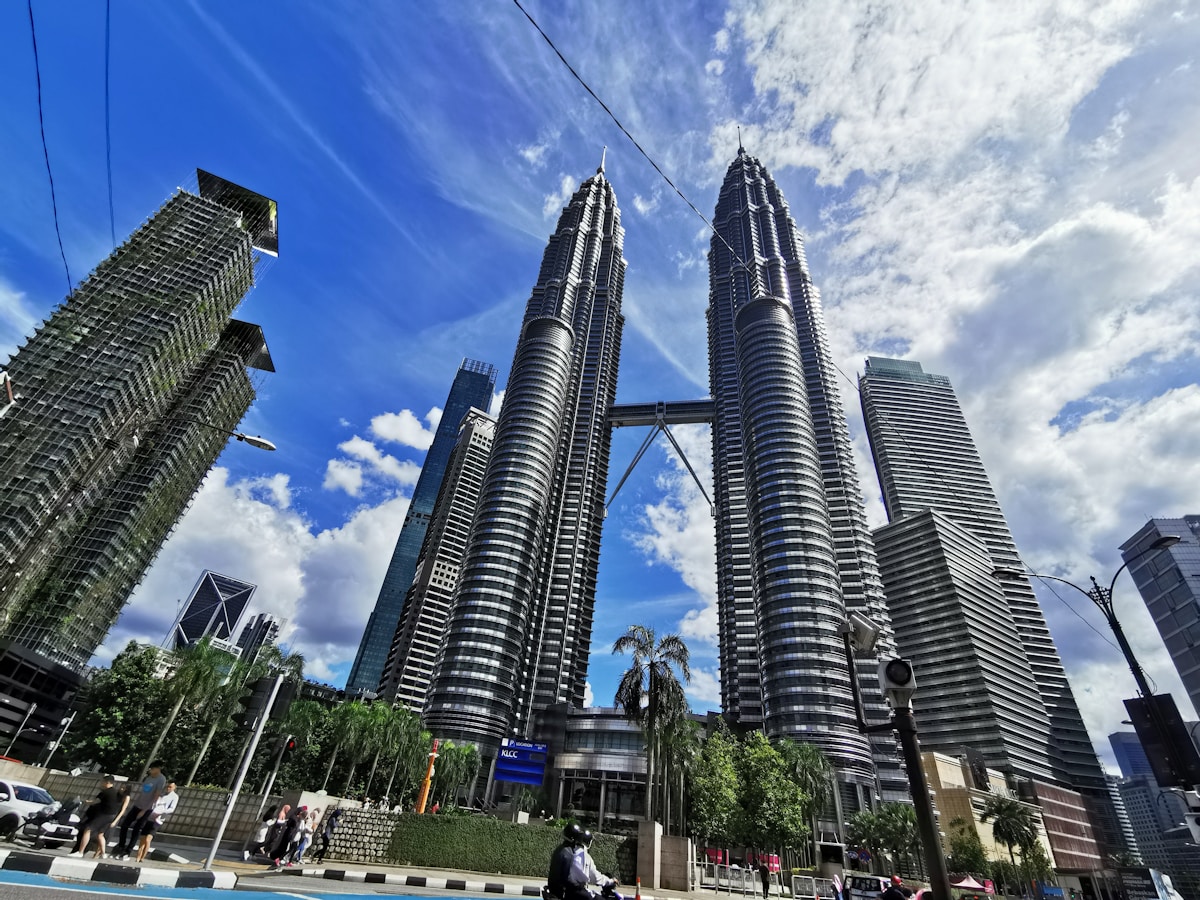
Kuala Lumpur has become one of Southeast Asia’s most practical cities for remote workers. English is widely spoken, the public transport network covers most major areas, and the cost of living is low enough that a mid-range income goes a long way. Fast fibre internet is the norm, not the exception — most coworking spaces test well above 200 Mbps — and the city’s food scene means you can eat exceptionally well for MYR 10–25 per meal without cooking.
The main trade-off is that KL is not a compact walking city. It sprawls, and the best nomad infrastructure is spread across several distinct neighbourhoods rather than concentrated in one district. Knowing where to base yourself makes a real difference.
The DE Rantau Nomad Visa
Malaysia’s DE Rantau Digital Nomad Pass is designed for remote workers and freelancers who want to live legally in Malaysia without the usual tourist visa restrictions. Key requirements as of 2026:
- Minimum annual income of USD 24,000 (approximately MYR 113,000) — either as an employee or freelancer
- Proof of remote employment (employment letter, client contracts, or freelance invoices)
- Valid passport with at least 14 months remaining
- Health insurance covering Malaysia for the stay duration
The pass is issued for an initial 3 months and can be extended up to 12 months, with a total stay of up to 2 years across extensions. Applications are processed through the MDEC (Malaysia Digital Economy Corporation) portal. Processing typically takes 2–6 weeks.
For shorter stays, Malaysia’s standard visa-on-arrival or visa-free entry (up to 90 days for most Western passport holders) is a practical option for a first stint before committing to DE Rantau.
Best Coworking Spaces in Kuala Lumpur
WORQ (Multiple Locations)
WORQ is the largest coworking network in Malaysia with locations across KL including TTDI, Kelana Jaya, and Bangsar South. The spaces are reliably professional — proper meeting rooms, phone booths for calls, standing desks in most hot-desk zones. Hot-desk memberships start at approximately MYR 350/month; dedicated desks from MYR 700/month.
The TTDI location is particularly popular with long-term members for its community events and cafe-quality coffee on-site. Internet consistently tests at 300+ Mbps. Day passes available for approximately MYR 50.
Common Ground
Common Ground has outposts across Southeast Asia but its KL locations — Bangsar and Menara Hap Seng in the city centre — are among the best in the region. The design is polished without feeling sterile, and the community team runs networking events most months.
Pricing: hot-desk from MYR 450/month, dedicated desk from MYR 900/month, private offices for teams from MYR 2,500/month. Day passes around MYR 70. The Bangsar location is the pick for nomads who want to be near good food options without fighting the city traffic.
Colony (Multiple Locations)
Colony pitches itself at the premium end — marble finishes, espresso bars, concierge services — but pricing is competitive. Locations in KLCC, Star Boulevard, and Eco City give good spread across the city.
Hot-desk access from MYR 500/month; private suites for small teams from MYR 3,000/month. The KLCC location has genuinely impressive views from higher floors, which matters if you spend long hours in front of a screen. Day passes approximately MYR 80.
Gridlines (Bangsar)
Smaller, community-focused, and cheaper than the above — Gridlines is a solid choice if you want a quieter environment and prefer not to pay the brand premium. Hot-desk from MYR 300/month, making it one of the most affordable dedicated coworking options in the city.
Ruang (Various Locations)
Ruang operates a network of affordable coworking spaces with a reputation for solid internet and no-frills reliability. Good for longer stays on a tight budget. Prices start around MYR 250–350/month for hot-desk access.
Best Neighbourhoods for Digital Nomads
Bangsar
Bangsar is the default recommendation for nomads staying more than a few weeks. It has a walkable strip of cafes, restaurants, and bars along Jalan Telawi; a Bangsar LRT station connecting directly to the city centre; and a good mix of serviced apartments and short-term rentals. A one-bedroom apartment in Bangsar costs approximately MYR 2,000–3,500/month in a mid-range building.
The main downside is that Bangsar is not cheap by KL standards — food runs MYR 15–30 at sit-down restaurants, and rent is noticeably higher than outer neighbourhoods.
KLCC (Kuala Lumpur City Centre)
KLCC puts you within walking distance of the Petronas Towers, Suria KLCC mall, and multiple premium coworking spaces. It is the most convenient base for business travel or client meetings. Rent is correspondingly higher: MYR 2,500–4,500/month for a one-bedroom in a mid-range condo.
The area is not particularly walkable beyond the immediate KLCC park zone, but the Ampang Park and KLCC LRT stations provide good transit access. Best for nomads who need regular face-time in the business district.
Damansara (Damansara Uptown / Damansara Heights)
A step away from the city centre but popular with longer-term residents for its quieter pace, abundant mid-range cafes, and slightly lower rents. Damansara Uptown has a good concentration of cafes that work well as informal office spots. One-bedroom apartments: MYR 1,800–2,800/month.
Transit is less convenient than KLCC or Bangsar — MRT connections exist but the area is somewhat car-dependent. A motorcycle rental (MYR 300–500/month) or a regular Grab habit helps.
Mont Kiara
Heavily expat-oriented with international schools and a large Japanese and Korean community. Serviced apartments are well-maintained, and the area has a 10:1 international restaurant-to-local-food-stall ratio. Rents are at the higher end — MYR 2,500–4,000/month — but the quality of apartment stock is generally better.
Day passes to WORQ or Common Ground in nearby Bangsar South make this workable as a base without paying for a coworking membership.
Average Monthly Costs for KL Nomads
| Expense | Budget (MYR/month) | Mid-range (MYR/month) |
|---|---|---|
| Accommodation (1-bed) | 1,400–2,000 (outer KL) | 2,000–3,500 (Bangsar/KLCC) |
| Coworking membership | 300–450 (hot-desk) | 700–1,200 (dedicated desk) |
| Food (eating out daily) | 600–900 (hawker-heavy) | 1,200–2,000 (cafes + restaurants) |
| Transport (Grab/transit) | 200–350 | 350–600 |
| SIM card / data | 50–80 | 80–120 |
| Total | ~2,600–3,800 | ~4,400–7,400 |
For reference, MYR 1 = approximately USD 0.21 as of mid-2026. A comfortable nomad lifestyle in KL costs roughly USD 700–1,100 per month, making it one of the more affordable major Southeast Asian cities for remote workers with a Western income.
For accommodation in KL, search hotels in Kuala Lumpur on Booking.com.
Fast Internet Cafes and Backup Spots
On days when the coworking space isn’t necessary, KL has no shortage of cafes with reliable Wi-Fi. A few that consistently work:
- VCR (Bangsar) — specialty coffee, fast Wi-Fi, good power outlet access; can get crowded by mid-morning on weekdays
- Feeka Coffee Roasters (Bangsar) — smaller and quieter than VCR; strong fibre connection
- Antipodean Café (Bangsar) — solid Australian-style brunch cafe with reliable Wi-Fi and outdoor seating
- Brew Beards (Damansara Uptown) — reliable 50+ Mbps connection, ample seating
- Starbucks Reserve (KLCC) — not exciting, but large, open all day, and always has power points available
The main caveat: Malaysian cafe etiquette expects a purchase every hour or two in busy spaces. Nobody will explicitly say this, but it is the norm. Budget for a coffee and a meal if you plan a full working day at a cafe.
Useful Logistics
Getting a SIM card: Pick up a tourist SIM at KLIA on arrival from Maxis, Celcom, or U Mobile. A 30-day prepaid plan with 30–60GB data costs MYR 30–50. For longer stays, a postpaid plan is cheaper — U Mobile’s unlimited data plan runs approximately MYR 55/month.
Banking: Wise (TransferWise) is the simplest way to manage foreign income in MYR without paying conversion fees. Most coworking spaces accept online payment or bank transfer — physical bank accounts take 1–2 weeks to set up for foreigners.
Healthcare: Malaysia has a two-tier healthcare system: government hospitals (cheap but slow) and private hospitals (fast, English-speaking, expensive by local standards but well below Western prices). Pantai Hospital and Gleneagles are the most commonly recommended private options in KL. Ensure your travel or DE Rantau health insurance covers private hospital admissions.
Power: Malaysian power sockets use the British 3-pin BS 1363 standard. Bring a universal adaptor or a British-style plug for your laptop charger.
Get a Malaysia eSIM, Compare travel insurance, or Book airport transfers.
Kuala Lumpur rewards nomads who take a few weeks to find their rhythm. The first week is often spent figuring out transit and neighbourhoods; by week three, the city starts to feel genuinely comfortable and surprisingly affordable.
Next steps for your KL stay: For detailed neighbourhood breakdowns and hotel options, see our complete guide to where to stay in Kuala Lumpur. If you’re planning a longer stint, the KL long-stay accommodation guide covers extended lease options and residential areas beyond the tourist zones. For anyone considering a Southeast Asia base, KL is worth serious consideration.