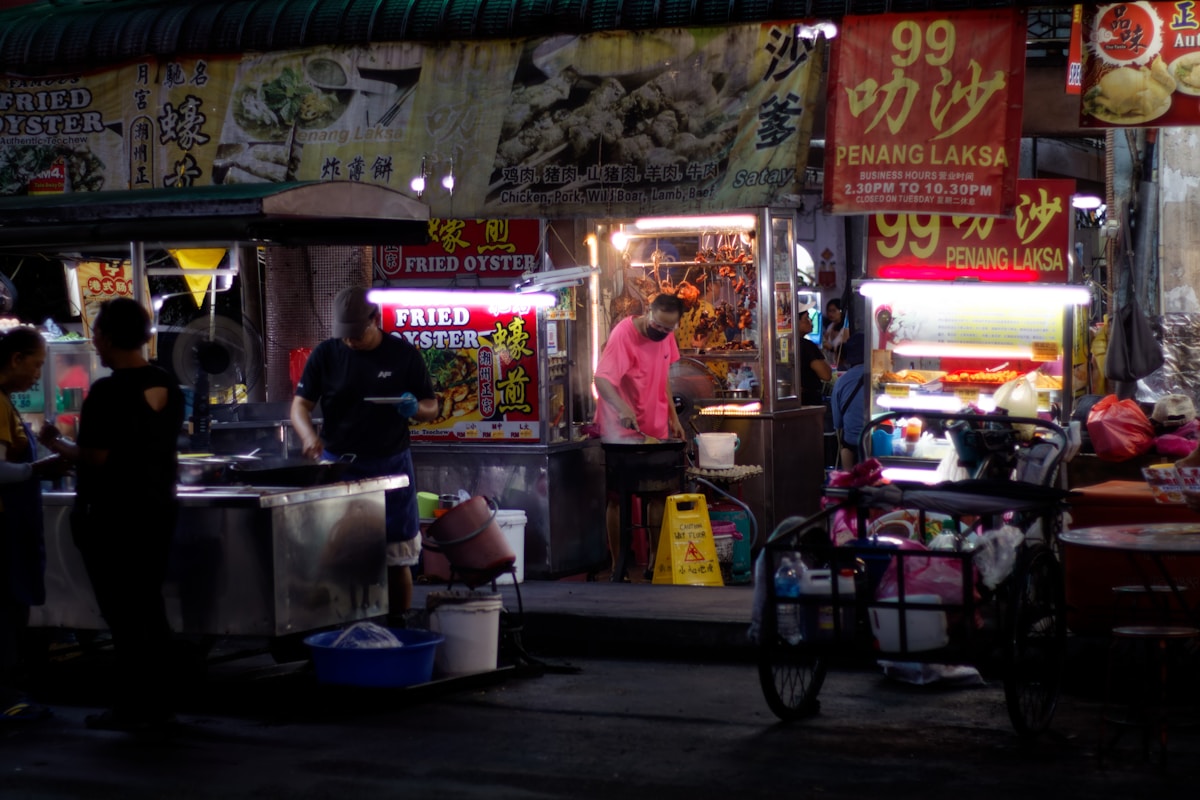
Langkawi’s status as a duty-free island shapes its food scene in two ways: alcohol is sold at roughly half the price you’d pay on the Peninsular, and the island has attracted enough tourist infrastructure around Pantai Cenang to support a wide range of cuisines. The underlying food identity is Malay, with Chinese options in Kuah town and a pronounced Thai influence along the northern coast due to the island’s proximity to Thailand.
Nasi Lemak
Nasi lemak - coconut rice with sambal, boiled egg, cucumber, and fried anchovies - is the default breakfast across the island. Every warung (small roadside stall) and morning market serves a version; prices run RM3–6 for a basic portion, more if you add chicken or fish. The quality at small roadside warungs is generally on par with hotel coffee shops at a fraction of the price. Morning markets in Kuah town and Ulu Melaka village are the most reliable spots to find it freshly made before 9am.
Fresh Seafood
The most compelling food reason to eat well in Langkawi is the seafood. The island sits in the Andaman Sea with daily landings of grouper, snapper, tiger prawns, squid (sotong), and crab.
The Kuah town jetty area is the main concentration of seafood restaurants. Wonderland Food Store is among the most consistently recommended - a large open-air setup near the waterfront serving grilled fish and prawns by weight, sotong prepared several ways, and cold duty-free beer alongside. It operates on the Chinese seafood model: choose your fish from the display, agree on a price, and specify preparation (grilled, steamed, or fried with garlic). Budget RM60–120 for two people including drinks.
The evening fish market near Kuah town has fresh catch displayed from around 4pm - worth visiting even if you’re eating elsewhere, and useful if you have kitchen access.
Langkawi Laksa
Langkawi has its own lighter variant of assam laksa - the tamarind-soured fish soup found across northern Malaysia. The island version tends toward a cleaner broth with less sweetness than the Penang version, served at roadside stalls and small coffee shops rather than dedicated laksa restaurants. It is worth seeking out as a regional variation rather than a substitute for the Penang original. Ask at morning markets or stalls near Ulu Melaka village where the food is more distinctly local.
Tom Yam
The Thai influence from the border proximity shows up clearly in the tom yam available across Pantai Cenang and Pantai Tengah. Tom yam seafood - the hot and sour prawn soup with lemongrass, galangal, and kaffir lime - is on almost every restaurant menu in the tourist strips, and several places do it well. Quality varies; the better versions use fresh herbs rather than paste. At beachside restaurants along Pantai Cenang the average is RM18–28 per bowl.
Duty-Free Drinks
One of Langkawi’s practical advantages for alcohol-drinking visitors is the price differential. Tiger beer, Carlsberg, and local spirits (Wincarnis, local arak) are available at most restaurants and every 7-Eleven at prices roughly 40–50% below what you’d pay in Kuala Lumpur or Penang. A 325ml Tiger at a sit-down restaurant typically costs RM6–9; cans from a 7-Eleven run RM4–5. This is the one meaningful duty-free advantage for most visitors - the electronics and luxury goods deals are less compelling than they once were.
Best Areas to Eat
Pantai Cenang is the tourist strip and has the widest variety - Malay, Chinese, Thai, Indian, and international options within a short walk. The quality ceiling is decent and the prices are higher than Kuah town, reflecting the tourist concentration.
Kuah town is the island’s main settlement and has the most authentically local eating, particularly for Chinese and Malay food. Less polished but cheaper and more representative of how residents actually eat.
Ulu Melaka village in the island’s interior is the best option for traditional Malay cooking - rice dishes, curries, and kuih made by local families rather than for tourist trade.
Take a Guided Food Tour of Langkawi
Langkawi’s food scene is smaller than Penang’s but has a character of its own — duty-free pricing means seafood restaurants here are genuinely good value, and the kampung villages in the island’s interior have traditional Malay cooking that rarely makes it onto tourist itineraries. A guided food tour across Langkawi covers both the Cenang beach area and the local Kuah town markets where residents eat, including the Wednesday and Friday night markets that see almost no visitors. For a short-stay visitor, a guided tour is the most efficient way to eat beyond the resort strip.
Book a guided food tour of Langkawi.
Night Markets
The Kuah night market runs on Wednesday and Friday evenings near the town centre. Stalls sell grilled corn, satay, nasi lemak packets, kuih, and local snacks; prices are RM2–8 per item and the atmosphere is genuinely local. It is one of the better cheap food options on the island and worth building an evening around if your timing aligns.
For more on planning your time on the island, see our Langkawi travel guide.