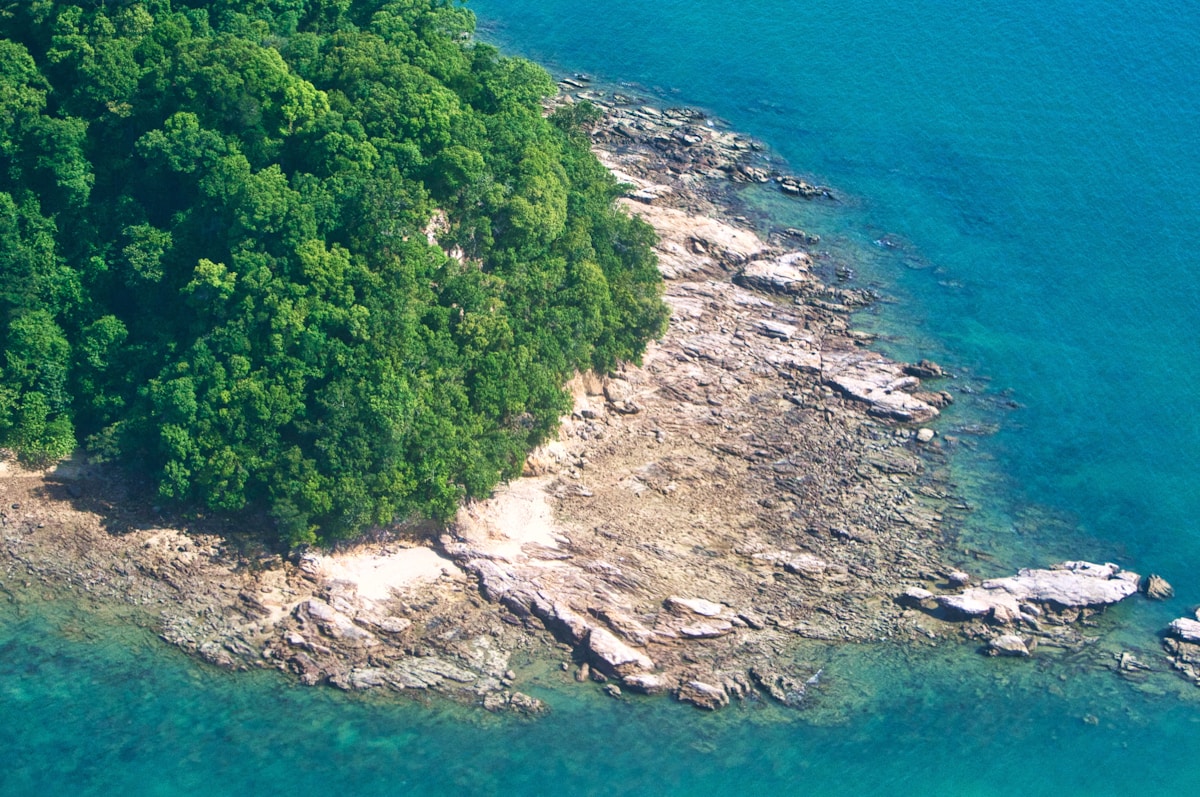
Langkawi’s beaches vary considerably - from the lively and convenient south coast strip to genuinely quiet coves only accessible by car or boat. None of them have the powdery white sand and crystal-clear water of Thailand’s best islands, but several are attractive and the setting - forested hills dropping to the Andaman Sea with smaller islands on the horizon - is consistently good.
Pantai Cenang
The main beach on the island and the one most visitors spend the most time at. Pantai Cenang runs for about 2 km along the southwest coast. The sand is reasonably fine and pale, the water is calm on most days (rougher during the southwest monsoon from May to September), and the beach is lined with restaurants, beach bars, watersports operators, and vendors renting sun loungers for RM10–20.
Activities available directly on the beach include parasailing (RM80–100 per person), jet skiing, banana boat rides, and kayak rental. The sunset from Cenang is solid - the beach faces west, directly into the Andaman.
It is the most convenient beach on Langkawi, which also makes it the busiest. At peak times - Malaysian school holidays, December–January - it can feel crowded. Weekday mornings are noticeably calmer.
Pantai Tengah
Immediately south of Cenang and separated from it only by a small headland, Pantai Tengah is quieter without being remote. The beach is slightly narrower, the vendor presence is reduced, and the restaurants are fewer - some visitors specifically base themselves here to have easier beach access without the Cenang density.
The water character is the same as Cenang - gentle waves and adequate swimming conditions in calm season. Pantai Tengah has a slightly higher proportion of longer-stay visitors and expatriates staying in the guesthouses and apartments along the strip.
Tanjung Rhu
The standout beach on Langkawi. Tanjung Rhu sits at the northern tip of the island, reached by a 40-minute drive from Cenang through rubber plantations and mangrove forest. The beach itself is a shallow lagoon - calm, clear, and sheltered by limestone outcrops and casuarina trees. At low tide the water is knee-deep for a long way out, making it unusually safe for children.
The visual setting is striking. The combination of pale sand, calm translucent water, and the forested karst background is among the best in Malaysia. The lack of vendors and noise makes it feel genuinely peaceful.
The Four Seasons Tanjung Rhu Resort occupies part of the beachfront, but the public section of the beach is accessible and free. There is a car park and a basic food stall. A car is essential to get here - there is no viable way to reach Tanjung Rhu without one.
Datai Bay
The beach inside The Datai Langkawi resort is technically the most beautiful on the island - a sheltered crescent of pale sand inside old-growth rainforest, with the Andaman Sea ahead and the resort’s forest canopy behind. The problem is access: it is effectively a private beach for resort guests. Non-guests cannot enter the resort grounds. If you are staying at The Datai or the Four Seasons next door, this is exceptional. If not, it remains inaccessible.
Pasir Hitam
The “black sand beach” on the north coast is a curiosity rather than a swimming destination. The dark colouring comes from mineral deposits washed in from the surrounding hills. It is a short stop - worth 15 minutes if you are driving the northern coastal road - but the water here is not clear enough for swimming and there are no facilities.
Burau Bay
On the west coast, near the cable car base station and Oriental Village. A quiet bay with calm water, largely undeveloped. A few resorts occupy the headland above it. Not the most scenic beach on the island but very uncrowded.
Book a diving or snorkel trip, Get a Malaysia eSIM, or Compare travel insurance.
Snorkelling from the Shore
Snorkelling directly off Langkawi’s mainland beaches is not worthwhile. The water visibility on the main beaches is generally low - silt from the mangrove systems and tidal activity reduces underwater clarity. For any meaningful reef and marine life, a boat trip to Pulau Payar Marine Park is necessary. Pulau Payar is 45 minutes by speedboat from Cenang and has the only established snorkel and dive site near the island.
For island hopping trips that include a snorkel stop, day trips to the outer islands can include stops at Pulau Beras Basah and Pulau Dayang Bunting, where the water is cleaner than on the main island’s beaches, though still not comparable to the east coast dive sites. For accommodation, search hotels in Langkawi on Booking.com.