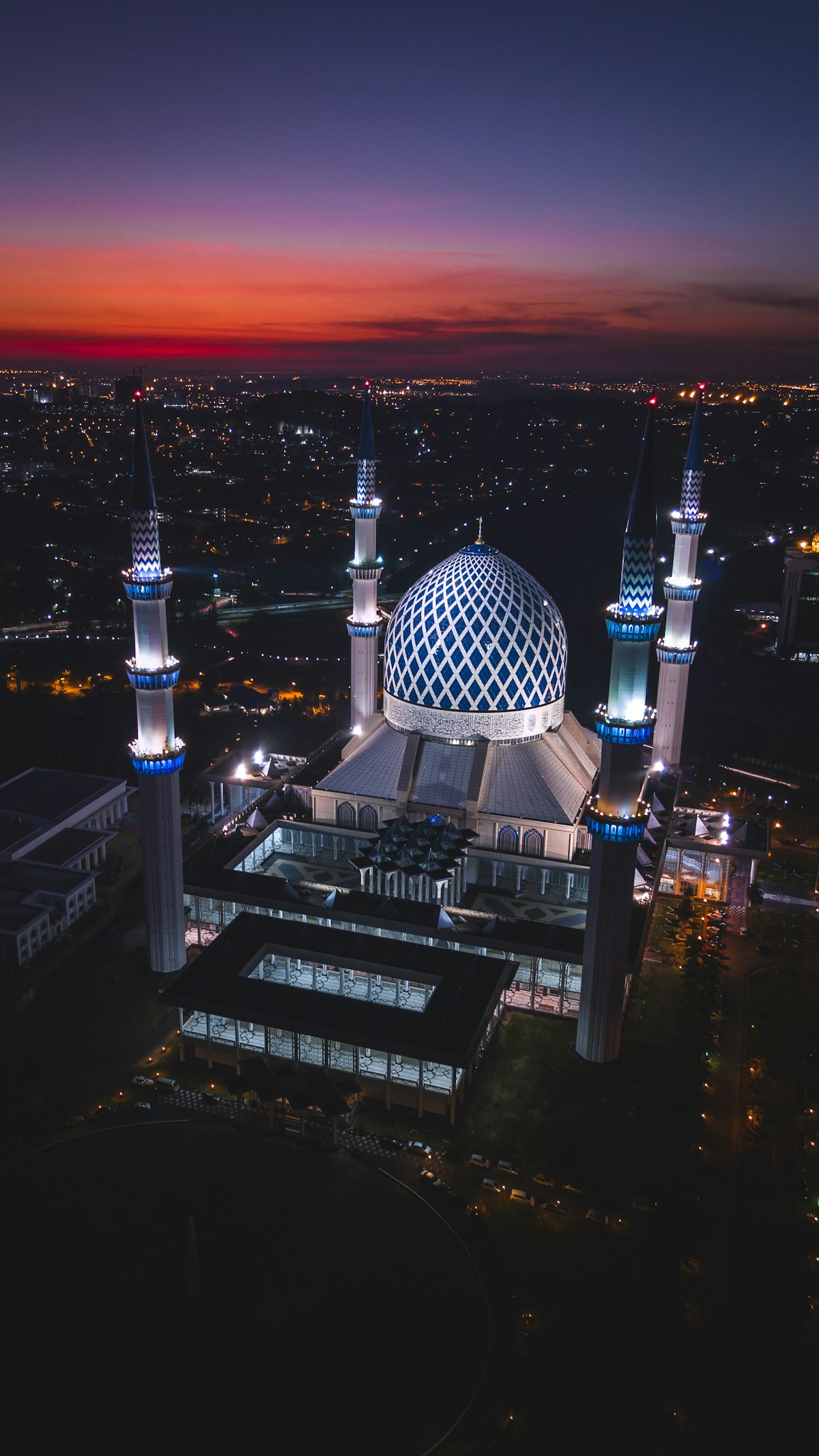
Kota Bharu is the capital of Kelantan state, sitting near the Thailand border in Malaysia’s northeast corner. It is the most conservative and culturally Malay-Muslim city in the country - a characterisation that is accurate without being pejorative. KB has its own distinct urban identity: female-dominated markets, traditional performing arts that survive here when they have faded elsewhere, and a food culture built on east coast Malay cooking that differs meaningfully from peninsular Malay food further south. For most international travellers, KB appears in itineraries either as a cultural destination in its own right or as the jumping-off point for the Perhentian Islands.
Pasar Siti Khadijah (Central Market)
The central market is Kota Bharu’s most distinctive landmark and the most immediately striking thing about the city. The market is named after Siti Khadijah, the first wife of the Prophet Muhammad, and its workforce is overwhelmingly female - a longstanding tradition in Kelantan where women have historically dominated market trade. The building itself is a modern multi-storey structure, but the activity within it is thoroughly traditional.
The ground floor has the freshest and most varied produce - fish from the South China Sea, local vegetables, jungle produce, and the spice and condiment stalls that form the backbone of Kelantanese cooking. The upper floors have dry goods, textiles, and ready-made food. The fabric and batik section has Kelantan’s distinctive silk and hand-printed batik at prices below Kuala Lumpur retail.
The market is most active from 6am to noon; afternoons are quieter and some stalls close. Go early if you want to see it at full capacity. Entry is free; bring small change for market purchases.
Gelanggang Seni (Cultural Centre)
Located near the central padang (town green), Gelanggang Seni is a dedicated venue for Kelantan’s traditional performing arts. The programme varies by season and is most active during school holidays and cultural festivals; activities include wayang kulit (shadow puppet theatre, one of the most technically complex traditional art forms in Southeast Asia), main puteri (a ritual dance-drama with roots in pre-Islamic spiritual practice), silat (Malay martial arts), gasing (top spinning - competitive spinning of large wooden tops, a sport taken seriously in Kelantan), and dikir barat (group vocal performance with percussion).
Check the current schedule with the tourism office or your accommodation on arrival - performances are not daily and may be cancelled without notice. When they are running, the wayang kulit performances are particularly worth attending: the puppeteer (dalang) controls all the puppets while narrating and providing character voices for a full dramatic story, traditionally performed over several hours.
Istana Jahar
The Istana Jahar (Jahar Palace) was built in 1887 as a royal residence during the reign of Sultan Muhammad II. It is now preserved as the Royal Customs Museum (Muzium Adat Istiadat Diraja), documenting the ceremonial customs and royal traditions of the Kelantan sultanate. The building itself - a wooden palace on stilts with carved timber detailing - is one of the better examples of traditional Malay royal architecture still standing in the northeast. Entry RM6. Allow one hour.
Islamic Museum (Muzium Islam)
Located near Padang Merdeka, the Islamic Museum occupies the former Annex building of the Istana Besar and focuses on the history and practice of Islam in Kelantan, with particular reference to the east coast Malay cultural context. Collections include Islamic manuscripts, artefacts, and ceramics. The museum is modest in scale but provides useful context for understanding KB’s religious orientation. Entry RM2.
Padang Merdeka and the Royal Precinct
The area around Padang Merdeka (Independence Square) has a cluster of heritage buildings from the colonial and late-Malay-sultanate period within walking distance: the Istana Besar (the current royal palace, viewable from outside), the war memorial, and several government buildings in a mix of colonial and Malay architectural styles. A morning walk through this area covers the main structures in 45–60 minutes.
Gateway to the Perhentian Islands
Kota Bharu is the most common arrival point for travellers heading to the Perhentian Islands by the overland-and-ferry route. The Perhentians’ ferry departs from Kuala Besut, approximately one hour south of KB by bus or taxi. Buses from KB’s main station to Kuala Besut run regularly (RM5–10, approximately 1 hour); Grab taxis take around 45 minutes and cost RM40–60 depending on the time of day.
The Perhentian Islands ferry season runs March to October; outside this window the boats do not operate and island accommodation closes. If the Perhentians are the goal, the KB leg is purely logistical - but the city warrants a half-day stop for the market alone.
Browse tours and activities, Get a Malaysia eSIM, or Compare travel insurance.
Dress Code and Local Customs
Kota Bharu is a conservative city and Kelantan is governed with significant influence from Islamic law (hudud has been passed by the state legislature, though not yet enacted at federal level). Non-Muslim visitors are not subject to religious law but should dress modestly in public areas - cover shoulders and knees when visiting the market, museums, and the city centre generally. Alcohol is not sold in most establishments, including all convenience stores; Chinese-operated restaurants are the main exception. Loud or disruptive behaviour in public is best avoided.
Comparing Guided Tour Options in Kota Bharu
Kota Bharu’s guided tour offer is narrower than most Malaysian cities — the main attractions are market-based and walkable rather than logistics-intensive, and most visitors move through on the way to the Perhentian Islands rather than making KB the primary destination. That said, two formats are worth knowing about.
Cultural and craft walks cover the Handicraft Village (Kraftangan complex), the Gelanggang Seni performance space, the Zheng He Museum, and the central market in a half-day sequence. A knowledgeable guide adds practical context — understanding what you are watching at a wayang kulit workshop, identifying weaving patterns in the batik section, navigating the multiple sections of Pasar Besar Siti Khadijah without missing the wet market upstairs — that the sites don’t supply independently. These run approximately RM80–120 per person and are bookable through KB-based operators.
Food market tours — guided navigation through the morning market’s Kelantanese specialties before the stalls close at midday — are a second format, less commonly structured as an organised tour than as a guesthouse arrangement with a local guide. Kelantanese food vocabulary (nasi dagang, nasi kerabu, ayam percik) is specific enough that orientation on the first visit is genuinely helpful. Browse Kota Bharu tours for current operator options if you want a structured introduction to the market circuit.
For context on getting to Kota Bharu, the Thailand border crossings, and practical notes on the city’s conservative character, see the Kota Bharu travel guide. Search hotels in Kota Bharu on Booking.com.