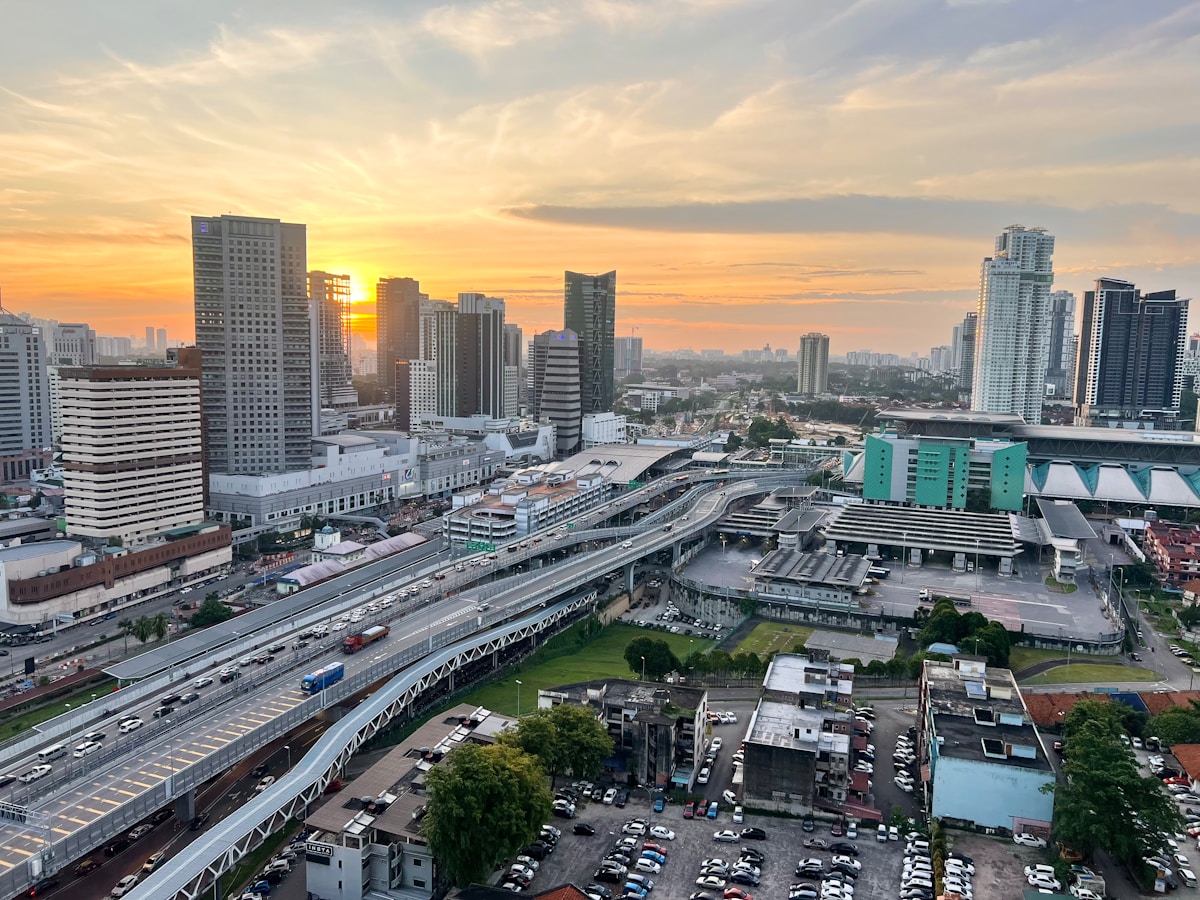
Johor Bahru is Malaysia’s southernmost major city, separated from Singapore by the Straits of Johor and connected to the island-state by the Johor-Singapore Causeway. The Causeway - a 1km road and rail link carrying over 350,000 people daily - defines much of JB’s contemporary identity: the city functions partly as a suburban extension of Singapore, drawing Singaporeans across for cheaper food, fuel, and shopping, while many Malaysian residents cross daily for work. Beyond the cross-border dynamic, JB has its own stock of cultural attractions, markets, and a waterfront area that repay a day or two of independent exploration.
Arulmigu Sri Rajakaliamman Glass Temple
The most visually distinctive attraction in JB is this active Hindu temple, located in the Stulang area approximately 5km from the Causeway. The interior walls, ceiling, pillars, and surfaces are covered entirely in coloured glass mosaic - over 300,000 pieces of glass in patterns depicting Hindu deities, religious symbols, and geometric designs. The effect under the temple’s internal lighting is disorienting in the best sense: a complete environment of colour and pattern unlike any other temple in Malaysia or Singapore.
The temple is dedicated to Goddess Kali and is an active place of worship. Visitors are welcome outside prayer times; modest dress is expected (shoulders and knees covered), and shoes are removed at the entrance. Entry is free. Allow 30–45 minutes. A taxi or Grab from the Causeway area costs RM15–20.
Royal Abu Bakar Museum (Muzium Diraja Abu Bakar)
The museum occupies the former Istana Besar (Grand Palace) built in 1866 by Sultan Abu Bakar of Johor, who was an early advocate of modernisation and maintained close diplomatic relations with the British colonial administration. The Victorian-style palace overlooking the Johor Strait houses an extensive collection of royal regalia, hunting trophies, porcelain, and period furniture accumulated across several generations of Johor sultans.
Entry is RM10 for foreign adults. Photography is restricted inside the main hall but permitted in the grounds, which include a formal garden with views across the Strait to Singapore. The collection is large and the building is impressive; allow 90 minutes to two hours. Take note of the taxidermy collection - an extraordinary accumulation of hunting trophies from the colonial era that reflects the royal family’s historical relationship with safari hunting.
Johor Bahru Old Chinese Temple (Johor Bahru Old Temple)
Located near the waterfront in the old commercial district, this 1870 temple is one of the oldest in Johor and houses shrines to several Chinese deities. The Chingay Festival - one of the largest Chinese cultural parades in Malaysia - originates here and takes place annually. The temple is modest in scale but active and well-maintained, set in a shophouse district that gives a sense of JB’s nineteenth-century commercial history.
Danga Bay Waterfront
Danga Bay is a redeveloped waterfront district approximately 5km west of the city centre, with a seafront promenade, restaurants, and an amusement park. The view across the Johor Strait from Danga Bay is more open than from the central waterfront, and the evening atmosphere with the lights of Singapore visible across the water is pleasant. The area has been heavily developed with mixed-use towers and theme park infrastructure; it is less gritty than the central waterfront but easier to navigate with families.
Several seafood restaurants at Danga Bay specialise in live seafood - choose from tanks and pay by weight. The Tepian Tebrau area (a different stretch of the waterfront, closer to the central district) has a cluster of open-air seafood restaurants in a more local atmosphere.
LEGOLAND Malaysia
LEGOLAND Malaysia is located in Medini, the Iskandar Malaysia development zone approximately 20km west of the Causeway. As the largest LEGOLAND park in Asia, it draws the majority of its visitors from Singapore - the park is a standard day trip by shuttle from various Singapore points or by taxi from JB. The park has the standard LEGOLAND attractions: MINILAND (scale LEGO models of Southeast Asian landmarks), themed rides, a waterpark section (separate entry), and a LEGOLAND Hotel on site.
Tickets cost approximately RM130–180 for adults, RM110–150 for children, with various combination packages including waterpark access. Book online in advance - the Singapore visitor market means the park is frequently at capacity on weekends and public holidays. Transport from JB’s Causeway area by taxi costs roughly RM40–60 each way; shuttle services run from several Singapore points directly to the park.
Night Markets and Street Food
JB has a solid night market circuit. The Pasar Malam Taman Pelangi (operating several nights weekly) is one of the larger night markets in the city, with a mix of food stalls, clothing, and household goods. The JB City Square mall area and the streets around Jalan Wong Ah Fook have hawker centres and restaurant clusters active into the late evening.
Seafood at Tepian Tebrau: the cluster of seafood restaurants on the waterfront promenade near the Customs complex serves fresh shellfish, grilled fish, and prawn dishes in an open-air setting with views across the Strait. This is where Singaporeans traditionally come for a seafood dinner that costs a fraction of the equivalent Singapore meal.
Browse tours and activities, Get a Malaysia eSIM, or Compare travel insurance.
Day Trip to Singapore
The Causeway crossing is straightforward: buses (SBS 160 or Transtar) depart from several points in JB and cross the Causeway to Woodlands Checkpoint in Singapore; the journey takes 10–25 minutes plus time at immigration. An Uber/Grab on the Malaysian side to the Causeway crossing point, followed by a Singapore bus or taxi, is the common independent traveller route. Prices for a full day in Singapore and back are significantly reduced if you are staying in JB - accommodation in JB typically costs 30–50% less than equivalent rooms in Singapore.
Comparing Guided Tour Options in Johor Bahru
Johor Bahru’s guided tour options divide into two main categories: LEGOLAND and theme park packages, and cultural day tours of the city’s heritage area. LEGOLAND packages — typically including a return transfer from the Causeway area, entrance, and a defined number of hours in the park — run approximately RM180–280 per adult (RM150–220 for children) including transport from JB’s central area. For visitors arriving from Singapore, Singapore-based operators run direct shuttles to LEGOLAND; the JB-based options are useful for those already in the city. JB tours on GetYourGuide list several LEGOLAND package formats with current pricing and pickup logistics.
Cultural walking tours of the heritage area around Jalan Wong Ah Fook and the waterfront cover the Johor Bahru Old Chinese Temple, the Sultan Abu Bakar Royal Museum, and the colonial streetscape. These are less common than in Penang or Malacca — JB’s heritage offering is narrower — but available through JB-based operators at approximately RM80–130 per person for a half-day walk. For visitors with a morning to spare before or after crossing into Singapore, the heritage walk makes practical use of the time.
For food-focused options, evening street food tours through the night market circuit and the seafood waterfront area are bookable as private arrangements and cost approximately RM120–160 per person. Browse Johor Bahru tours to compare current options and pickup logistics from your accommodation.
For border crossing logistics, accommodation, and context on JB’s cross-border economy, see the Johor Bahru travel guide. Search hotels in Johor Bahru on Booking.com.