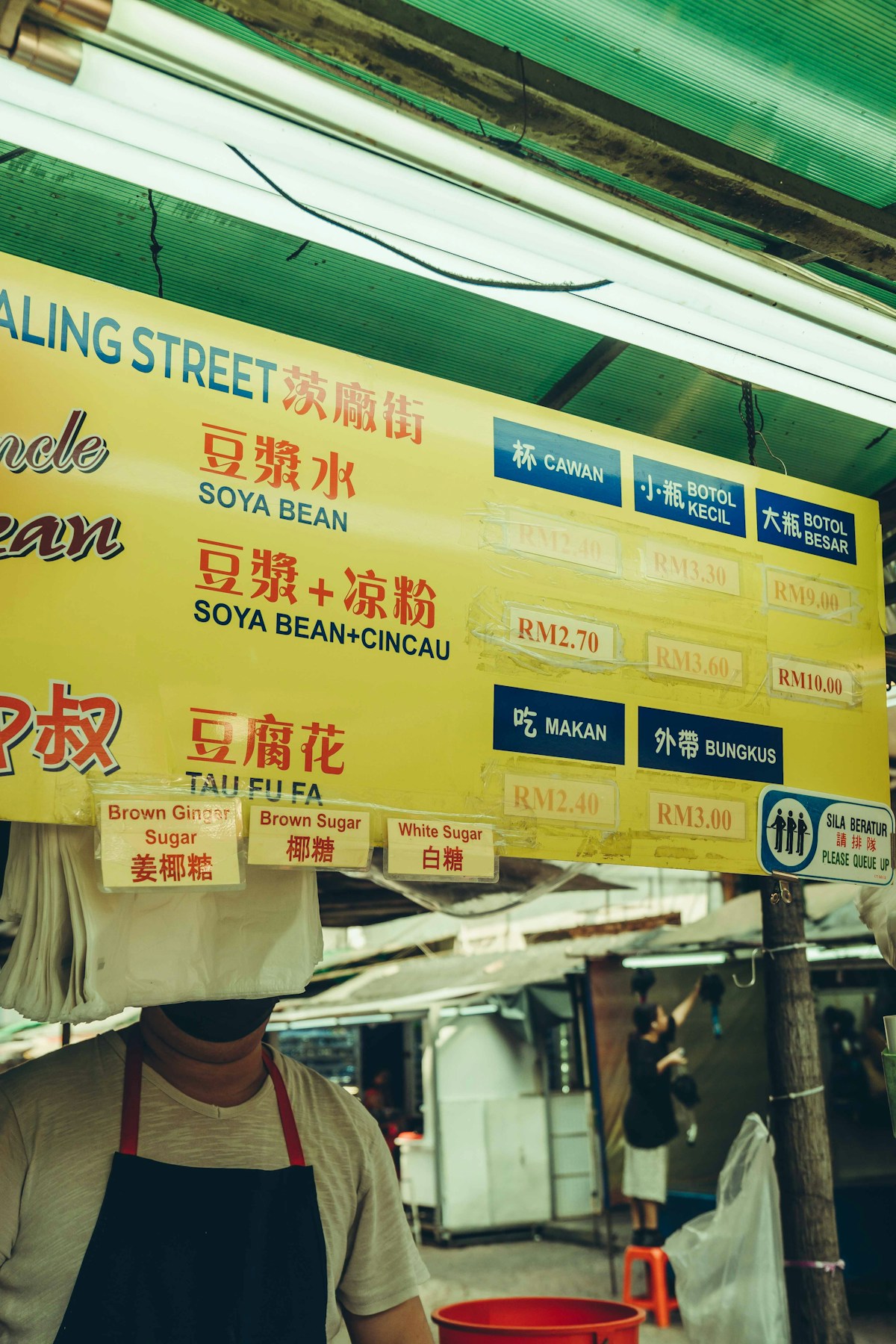
Johor Bahru’s food scene is routinely underestimated because visitors treat the city as a transit point between Singapore and Kuala Lumpur. That is a reasonable logistical decision but a mistake for eating: JB has a distinct culinary identity with several dishes found nowhere else in Malaysia, a strong Johorean Chinese tradition, and restaurants operating at roughly half the price of equivalent quality in Singapore - which is why Singaporeans cross the causeway for food on a regular basis.
Johor Laksa
The most important food distinction in JB is the laksa. Johor laksa is not the tamarind-soured fish soup of Penang, nor the coconut curry broth of Kuala Lumpur - it is its own thing: a rich coconut milk broth made with fish and spiced with galangal, lemongrass, and toasted coconut, served over spaghetti rather than rice noodles. The use of spaghetti is unique to Johor and dates from colonial-era ingredient availability; it works in the finished dish because the pasta holds the thick broth better than soft rice noodles would.
Sri Bistari and Laksa Sri Mersing are among the most consistently recommended spots in the city for Johor laksa. Portions run RM6–10. The dish is specifically a lunchtime and daytime food - most stalls are closed by mid-afternoon.
Lontong
Lontong is a popular Johor breakfast: compressed rice cakes (lontong) cut into cubes and served in a coconut milk gravy loaded with vegetables - cabbage, long beans, carrots, and boiled egg. The gravy is mild and slightly sweet, closer to a vegetable curry than a laksa. It is a Malay-origin dish with clear Javanese influence (Johor historically had significant Indonesian migration) and is eaten with a spoon and fork rather than chopsticks. Available at Malay stalls and markets in the morning.
Bak Kut Teh
Johor Bahru style bak kut teh is herb-forward and dark - pork ribs simmered overnight in a broth of soy sauce, dark soy, star anise, cinnamon, cloves, and other dried herbs until the meat falls from the bone. It is distinct from the Klang Valley version (lighter, more peppery) and closer in style to the traditional Hokkien-Chinese preparation. Several old-established shops near Jalan Wong Ah Fook and the older parts of the city centre have been doing this for decades. Budget RM20–35 per person including rice and side dishes of braised tofu and preserved vegetables.
Hiap Joo Bakery Banana Cake
Hiap Joo (Jalan Tan Hiok Nee) has been producing the same wood-fired banana cake since 1919. The cake is dense, slightly caramelised on the outside from the oven heat, and has a strong banana flavour without the sweetness of commercial banana bread. It is baked in batches each morning and afternoon; queues form before the doors open and the fresh batches sell out within minutes. The shop also produces curry puffs and bread rolls, but the banana cake is the reason people queue.
The practical advice is to arrive 15–20 minutes before the stated opening time and expect to wait. Take-away only; it keeps for a day or two at room temperature.
Otak-Otak
Otak-otak is spiced fish paste - made from mackerel blended with coconut milk, egg, chilli, turmeric, and a range of aromatic herbs - wrapped in banana leaves or coconut leaves and grilled over charcoal until the exterior chars slightly. The Johor version is wrapped in coconut leaves and has a firmer, drier texture than the Muar style (which is wrapped in banana leaf and steamed). It is a significant Johor specialty and sold at night markets, roadside stalls, and as a snack outside bakeries.
Take a Guided Food Tour of Johor Bahru
Johor Bahru’s food identity owes a lot to its position on the Johor Strait: otak-otak from the fishing villages, southern Malay cooking from Muar, and Chinese coffee-shop culture from the old city core all converge in a city that most visitors pass through quickly. A guided food tour through JB’s older neighbourhoods and night markets moves past the malls and into the streets where the interesting food actually is — the kampung-style Malay cooking near the waterfront, the Pelangi market hawker stalls, and the coffeeshops in the Johor Bahru City Square area that have been serving the same dishes since the 1970s.
Book a guided food tour of Johor Bahru.
Tepian Tebrau Waterfront
The Johor Strait waterfront (Tepian Tebrau) has several large open-air seafood restaurants with views across to Singapore, a few hundred metres away. The setting is more atmospheric in the evening when Singapore’s lights are visible across the water. The seafood restaurants here are popular with both residents and Singaporeans who cross specifically for a meal; prices are high by JB standards but remain well below Singapore equivalents. Expect to pay RM80–150 for two people for a full seafood dinner with drinks.
For more on planning your time in the city, see our Johor Bahru travel guide.