Ipoh is a former tin-mining city in Perak state, about 200km north of Kuala Lumpur. Its prosperity peaked in the first half of the twentieth century, when Kinta Valley was one of the world’s richest tin-producing regions. The decline of the industry left behind an extraordinary concentration of colonial-era architecture, Chinese shophouses, and public buildings in a city that subsequently avoided over-development. That built environment is now the basis for a well-established tourism scene centred on the Old Town, the cave temples, and a food culture that attracts visitors from across the country.
Old Town: Architecture, Murals, and Kong Heng Square
Ipoh’s Old Town sits on the west bank of the Kinta River and is navigable on foot in half a day. The core streets - Jalan Panglima, Jalan Market, Jalan Bandar Timah - have prewar shophouses in varying states of restoration, several of which now house cafes, boutiques, and guesthouses.
Kong Heng Square (or Concubine Lane - Lorong Panglima) is the most commercialised section, with souvenir shops, art studios, and dessert cafes occupying a narrow alley flanked by restored heritage buildings. Worth 30 minutes; more atmospheric in the morning before the tour groups arrive.
Street art murals across the Old Town replicate the Georgetown model - large-format paintings on shophouse walls referencing local history, trades, and community life. The murals are concentrated on Jalan Panglima and adjacent streets; a printed map available from most guesthouses marks the main works.
Ipoh Town Hall and the railway station (Ipoh Station, built in 1935 in a Moorish-revival style sometimes compared to KL’s old station) are the architectural centrepieces of the colonial public buildings. The station remains operational and the exterior is one of the most-photographed structures in the city.
Han Chin Pet Soo
Han Chin Pet Soo is the former clubhouse of the Hakka Mining Association - a private members’ club established in 1893 for Chinese tin miners, now restored as a museum documenting the tin-mining era and the Hakka community’s role in it. The building itself is a fine example of late-nineteenth-century Sino-colonial architecture; the interior has been carefully restored with period furniture, photographs, and objects. The exhibition covers mining techniques, the social structure of the mining community, opium use (explicitly addressed rather than sanitised), and the eventual decline of the industry.
Entry costs RM16 for adults. Guided tours run at fixed times and include access to floors not open for independent visitors. Allow 60–90 minutes. This is one of the better local history museums in Malaysia - the curation is specific and honest rather than celebratory.
Cave Temples
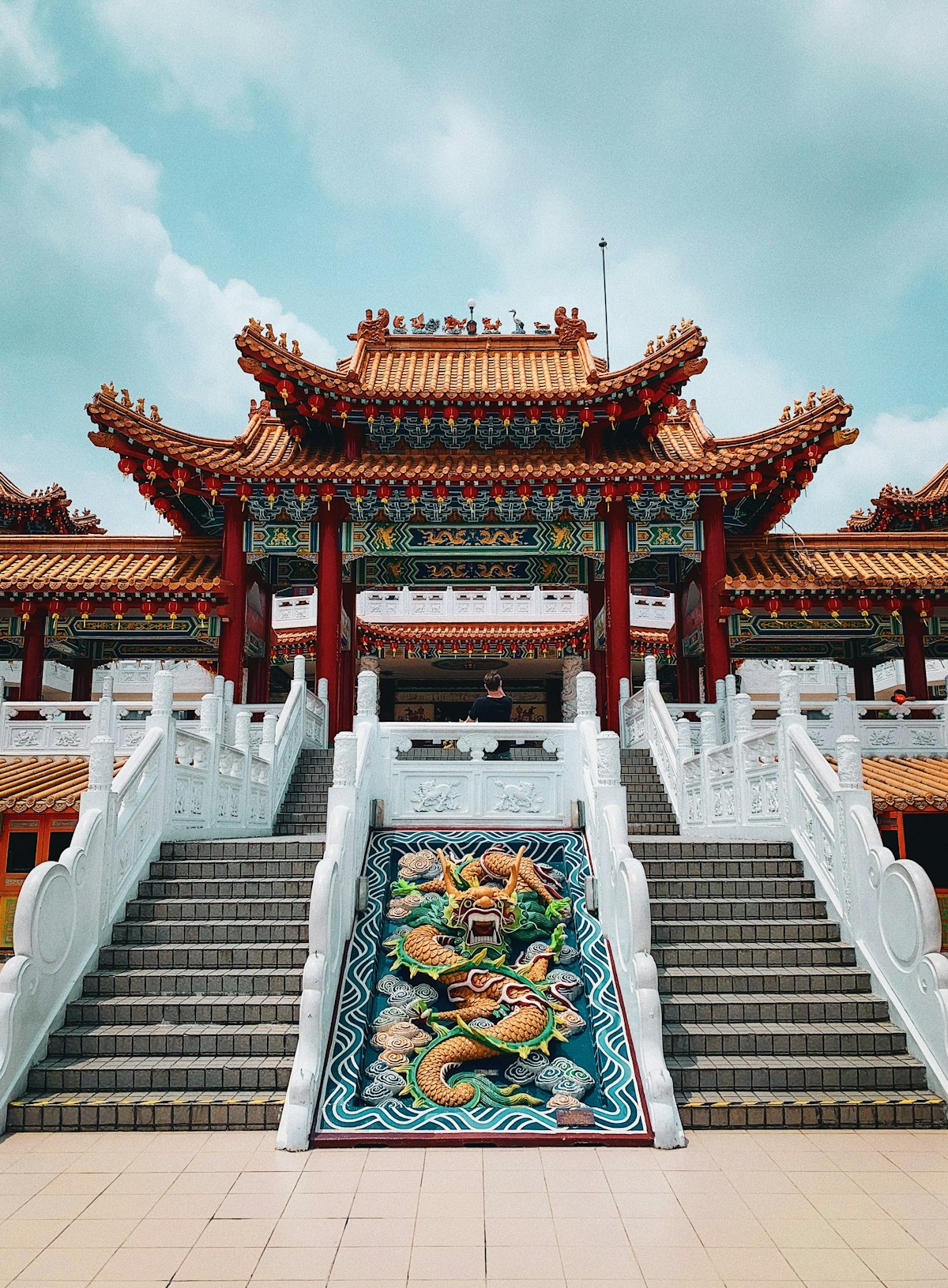
Ipoh’s limestone karst hills contain several Buddhist and Taoist cave temples, some of which have been in active use for over a century. The most accessible are:
Sam Poh Tong (approximately 5km south of Old Town): a large cave complex with shrines set into the cavern walls, a Chinese garden at the rear, and a resident tortoise pond. The cave interiors have been developed significantly over time - there is electric lighting and extensive shrine furniture - but the scale of the cavern is impressive. Free entry; active place of worship.
Perak Tong (approximately 6km north of Old Town): a quieter, less-developed cave temple with a seated Buddha figure at the entrance and a staircase leading up through the limestone to an open hilltop viewpoint. Fewer visitors than Sam Poh Tong. Free entry.
Both temples are accessible by Grab from the Old Town.
White Coffee Trail
Ipoh is the acknowledged origin of ipoh white coffee - a preparation using beans roasted with palm oil margarine rather than sugar and butter, producing a lighter colour and less bitter flavour than standard kopi. The style was developed in Ipoh’s Old Town coffee shops in the early twentieth century and the Oldtown White Coffee brand, now a national chain, traces its origins here.
The practical version of the white coffee trail is simply visiting a few of the traditional kopitiam in Old Town that still prepare coffee in the original style: Sin Yoon Loong (Jalan Bandar Timah) and Thean Chun (Jalan Bandar Timah, a few doors down) are the most cited. Both serve coffee and tea with traditional kaya toast and half-boiled eggs. Arrive early - both fill up by 8am on weekends and are often sold out of their signature kaya toast by 10am.
Funny Mountain Soya Milk and Plan B
Funny Mountain Soya Beancurd (Jalan Sultan Iskandar) is an institution: a street-side stall selling fresh soya milk and silken tofu (tau fu fah) that has operated in the same location for decades. The soya milk is fresh and unsweetened; the tofu is served warm with light syrup. A bowl costs RM2–3. Queue is expected at peak hours.
Plan B is a cafe-restaurant that anchored the Old Town’s revival as a food destination when it opened in the 2010s. It is now a chain, but the Ipoh branch in Kong Heng Square remains a useful stopping point for coffee and a menu that bridges local and international styles.
Gua Tempurung
Gua Tempurung is a show cave complex approximately 25km south of Ipoh, with a 3km passage through one of the largest dry caves in Peninsular Malaysia. Guided tours range from a 40-minute walkway tour (RM10) to a full passage tour involving river wading and tight squeezes (RM35–50 depending on level). The cave has impressive formations - flowstones, stalactites, and a domed main chamber - and the full tours that follow the underground river give a sense of the cave’s scale. Accessible by bus from the old bus station in Ipoh or by Grab.
Browse tours and activities, Get a Malaysia eSIM, or Compare travel insurance.
Kellie’s Castle
About 15km south of Ipoh, Kellie’s Castle is an unfinished colonial mansion begun in 1915 by Scottish rubber planter William Kellie Smith, who died before its completion. The ruins consist of a multi-storey shell with open doorways, a rooftop terrace, and an underground tunnel. The site has developed a local mythology disproportionate to its historical significance, but the unfinished Moorish-influenced architecture against the palm oil backdrop is distinctive. Entry RM5.
Comparing Guided Tour Options in Ipoh
Ipoh’s guided tour market centres on two main draws: Old Town heritage walks and cave temple combinations. The heritage walk format — covering Kong Heng Square, the murals off Concubine Lane, Han Chin Pet Soo, and the traditional shophouse strip — runs 2–3 hours in small groups and costs approximately RM70–120 per person. The advantage of a guide over self-navigation is primarily pacing: most first-time visitors underestimate how much time the murals and museum consume and end up rushing the cave temples on the back half of the day. A guide who has pre-allocated the timing makes the difference. Ipoh tours on GetYourGuide list current group and private walk operators with verified reviews.
Cave temple tours — covering Perak Tong, Sam Poh Tong, and Kek Lok Tong in sequence — require transport and the cave-to-cave navigation is not straightforward without a driver. Half-day guided cave circuits run approximately RM90–150 per person including transport. The alternative is a self-drive or Grab-based approach, which is cost-effective but burns significant time on logistics between sites; for visitors with limited time, the guided format is worth the premium.
Full-day combination packages — Old Town in the morning, cave temples in the afternoon, Gua Tempurung if time permits — are available from several operators and run approximately RM180–280 per person. These are the right option for visitors arriving on the overnight train from KL who want to cover the city comprehensively before moving on. Browse Ipoh tours and activities to compare operators and current pricing before booking.
For planning context on Ipoh - getting there from KL, cave temple logistics, and accommodation - see the Ipoh travel guide. Search hotels in Ipoh on Booking.com.