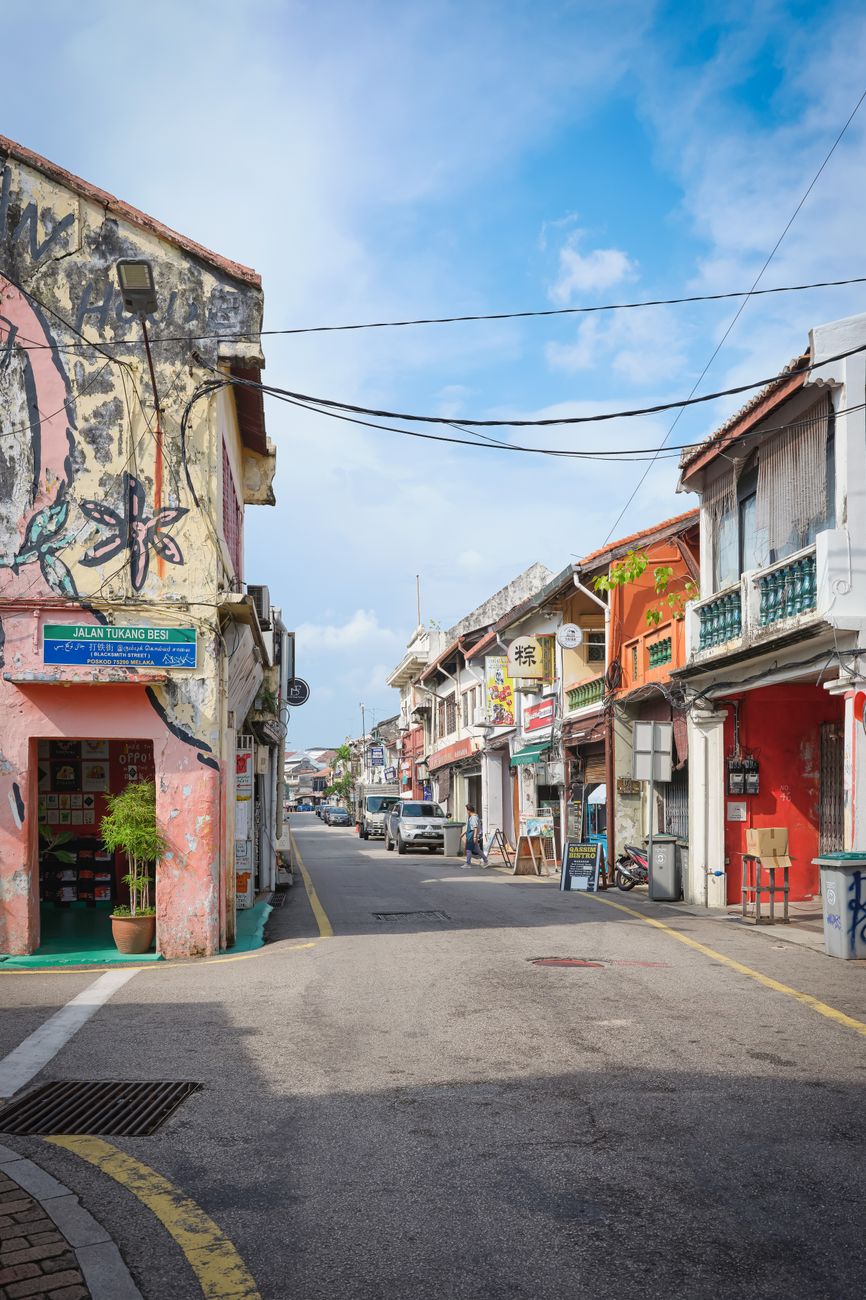
Penang is Malaysia’s most compelling city for long-stay visitors and digital nomads. Georgetown, the island’s UNESCO World Heritage core, is compact, walkable, café-dense, and historically layered — a combination that KL’s sprawling, car-oriented layout cannot match. Monthly accommodation costs run approximately 20–30% below comparable options in Kuala Lumpur, and the food scene, built around hawker centres and coffee shops that have operated in the same lanes for generations, makes eating well on a modest budget straightforward.
This guide covers Penang’s five main residential areas for long-stay visitors, realistic rental price ranges by property type as of 2026, and three named hotel properties with direct booking links for those who prefer a managed extended-stay option over a direct lease.
Understanding Penang’s Residential Areas
Penang Island is roughly 30km long from east to west. Georgetown occupies the north-eastern corner; beach resorts cluster along the northern coast at Batu Ferringhi; the interior and south of the island are more residential and suburban. For a stay of one month or longer, neighbourhood choice directly determines daily quality of life.
Georgetown — The Digital Nomad Heartland
Georgetown is the obvious base for most long-stay visitors, and particularly for remote workers. It is the most walkable urban area in Malaysia: the UNESCO Heritage Zone core is roughly 3km across, with most daily needs — cafés, hawker centres, supermarkets, pharmacies, post office — within walking distance or a short Grab ride.
The café-and-co-working culture here is the strongest in Penang. Numerous independent cafés along Jalan Penang, Love Lane, Chulia Street, and the Armenian Street corridor operate with fast WiFi as a baseline expectation. Several dedicated co-working spaces (including Common Ground and a number of smaller independent spaces) operate within or adjacent to the Heritage Zone.
Furnished accommodation in Georgetown divides between modern condominiums in the outer Heritage Zone and monthly-rented rooms or units in renovated shophouses — heritage properties converted into short-to-medium-term residential use. Shophouse units tend to be atmospheric but often require careful due diligence: air conditioning may be a wall-unit installation in an older building rather than central system, and some units have limited natural light due to the traditional shophouse layout.
Furnished one-bedroom condos and shophouse units in Georgetown run approximately RM 1,500–4,500 per month as of 2026, with significant variation by property condition and precise location within the zone. Units on popular streets with street-level cafés beneath are at the upper end; quieter residential lanes within walking distance of the action are typically cheaper.
Gurney Drive and Gurney Paragon — Upscale Seafront
Gurney Drive runs along the seafront north-west of Georgetown. The area is dominated by newer high-rise condominiums, the Gurney Paragon Mall, and Gurney Plaza — KL-equivalent retail and dining infrastructure in a more accessible, walkable format than most KL equivalents. This is the premium end of Penang’s residential market.
Furnished one-bedroom condos in the Gurney Drive corridor run approximately RM 2,500–6,000 per month as of 2026. The area is popular with business travellers on extended assignments and Malaysian professionals. Georgetown is approximately 3–4km away by Grab or bicycle. The seafront esplanade is a genuine amenity — one of the few in Malaysia where walking by the sea in an urban setting is practical.
Batu Ferringhi — Beach Setting, Higher Relative Costs
Batu Ferringhi is Penang’s main beach resort corridor, 15km north-west of Georgetown along the coast road. It is a pleasant but somewhat tourist-oriented environment: the beach itself is functional rather than spectacular by Southeast Asian standards, and the surrounding area is dominated by resort hotels and tourist-facing restaurants.
Extended stays are possible here — furnished units and some hotel long-stay rates are available — but costs run approximately RM 2,000–5,000 per month as of 2026 for furnished accommodation, which is relatively high given the distance from Georgetown’s amenities and the limited walkability outside the resort strip. Best suited to visitors who prioritise a beach environment over urban access.
Tanjung Tokong and Pulau Tikus — Established Expat Residential
Tanjung Tokong and the adjacent Pulau Tikus area sit between Georgetown and Gurney Drive — approximately 4–6km from the Heritage Zone core. These are established middle-class and expat residential neighbourhoods with a good supermarket selection (Jaya Grocer and Mercato both have branches here), decent café coverage, and a quieter residential pace than Georgetown.
Furnished one-bedroom condos in this corridor run approximately RM 1,800–4,000 per month as of 2026. The area is popular with families and professionals on longer-term relocation assignments. Grab is the practical transport mode — bus coverage is available but infrequent on some routes.
Island Glades and Farlim — Budget Inland
Island Glades, Farlim, and the adjacent inland residential areas of Penang Island represent the budget end of the market. These are local residential neighbourhoods with minimal tourist infrastructure, good local hawker food, and genuinely low rental costs: furnished one-bedroom units from approximately RM 1,000–2,000 per month as of 2026.
The trade-off is complete car or motorbike dependency — walking and public transit options are limited — and a significant distance from Georgetown’s attractions and co-working infrastructure. Best suited to long-stay visitors who have their own transport and are primarily in Penang to live rather than to explore.
Rate Comparison by Property Type
The table below shows approximate monthly rate ranges across Penang as of 2026.
| Accommodation Type | Budget | Mid-Range | Upper |
|---|---|---|---|
| Serviced apartment (monthly) | RM 1,500 | RM 2,500–4,000 | RM 6,000+ |
| Heritage shophouse room (monthly) | RM 800 | RM 1,500–2,500 | RM 3,500+ |
| Direct condo rental (furnished) | RM 1,000 | RM 2,000–3,500 | RM 5,000+ |
Shophouse room rates at the budget end assume a private room in a shared or semi-shared property. Self-contained shophouse units occupy the mid-to-upper end of that range. All condo figures are for a one-bedroom furnished unit. Weekly rates are proportionally higher than monthly rates across all categories — always ask for the monthly figure explicitly if you plan to stay 28 days or more.
Named Properties with Booking Links
Cititel Express Penang
Cititel Express Penang is a well-maintained urban hotel positioned for access to both Georgetown’s Heritage Zone and the Penang business district. It is one of Penang’s more reliable options for extended hotel stays — the property is established, the housekeeping is consistent, and the central location reduces daily transport costs. Long-stay rates for monthly bookings start from approximately RM 2,800 per month as of 2026 and represent reasonable value given the location and included housekeeping. Confirm current monthly deal availability directly with the property, as extended-stay rates are not always visible on standard OTA booking interfaces.
Bayview Hotel Georgetown Penang
Bayview Hotel Georgetown Penang is a mid-upper city hotel on Farquhar Street, adjacent to the Penang Museum and within easy walking distance of the Georgetown Heritage Zone core. It is a full-service hotel — restaurant, pool, gym — in a building that dates to the colonial era, though the interior is modernised. Monthly long-stay rates start from approximately RM 3,200 as of 2026. The Farquhar Street location is quiet for Georgetown’s core but is central enough to reach the main hawker streets and café strip within 10 minutes on foot.
G Hotel Kelawai Penang
G Hotel Kelawai Penang sits on Jalan Kelawai in the Gurney Drive corridor, positioning it between Georgetown and the upscale Gurney Paragon retail cluster. It is G Hotel Group’s upper-mid property (the original G Hotel on Penang Road is the group’s flagship) and offers serviced suite configurations with kitchenette facilities better suited to extended stays than standard hotel rooms. Monthly rates for suites start from approximately RM 4,500 as of 2026. The Kelawai location is within comfortable cycling or Grab distance of Georgetown and walking distance of the Gurney Drive seafront esplanade.
Digital Nomad Considerations
Penang’s case for digital nomads rests on a clear combination of factors: lower cost of living than KL, a walkable city centre, and a café culture that treats WiFi connectivity as standard. Specialty cafés along Love Lane, Chulia Street, and the streets running off Armenian Street routinely offer stable connections suitable for video calls, and the density of options means there is rarely a need to rely on a single venue.
The Malaysia DE Rantau digital nomad pass covers the whole of Malaysia — there is no separate Penang application. Requirements as of 2026 are the same as for KL: proof of remote employment or freelance income exceeding USD 1,000 per month from non-Malaysian clients, processed through the MDEC portal before arrival. Visa-on-arrival covers most nationalities for 30–90 days without a work component; DE Rantau is only required if you are working remotely and want legal certainty about your status.
Co-working options in Georgetown have expanded since 2022. Common Ground and several smaller independent spaces operate within or adjacent to the Heritage Zone. Some longer-stay visitors use well-equipped cafés exclusively — the café co-working model works well in Georgetown in a way it does not in most larger cities, because the competition for café space is lower and proprietors are generally comfortable with laptop workers occupying a seat for several hours.
Practical Tips for Long Stays in Penang
Shophouse air conditioning: If you are renting a unit in a heritage shophouse, ask explicitly about the air conditioning setup before committing. Older properties may have a single wall unit in the main room with no cooling in the bathroom or kitchen. This is manageable but relevant to know in advance — Penang’s humidity is real, and even at the lower temperatures of an air-conditioned room, the rest of the unit can be uncomfortable if poorly ventilated.
Georgetown free shuttle: The CAT (Central Area Transit) is a free bus shuttle that loops through the Georgetown Heritage Zone during the day. It does not cover all residential streets but is a useful supplement to walking for covering the longer stretches of the Heritage Zone without Grab costs.
Ferry and airport connections: The Penang Ferry from Georgetown Jetty to Butterworth on the mainland runs frequently (approximately every 30 minutes) and costs approximately RM 1.20 one way as of 2026. Penang International Airport (IATA: PEN) serves KL (multiple daily), Singapore (multiple daily), Bangkok, and several regional cities direct. For those who plan to travel regionally during a month-long stay, Penang’s flight connections are a significant practical advantage over a more landlocked base.
Food costs: Penang’s hawker food is nationally famous and remains genuinely cheap. A full meal at a hawker centre or coffee shop costs approximately RM 7–15 as of 2026. This matters for monthly budgeting: a visitor who eats hawker food consistently can keep monthly food costs to approximately RM 700–1,200 — lower than the equivalent in KL and dramatically lower than equivalent eating in Singapore or Bangkok.
Healthcare: Penang has two major private hospitals — Penang Adventist Hospital and Island Hospital — with English-speaking staff. Private GP consultations run approximately RM 80–120 per visit as of 2026. Travel insurance with inpatient and emergency medical coverage is advisable for stays over 30 days.
Connectivity: Fibre internet in Georgetown condos and serviced apartments is standard and typically fast — 100Mbps+ is common in properties marketed toward expats and long-stay visitors. Mobile data on Celcom, Digi, or Maxis prepaid SIMs is reliable across the island; confirm SIM plan data caps before committing if you rely on mobile data as a backup.