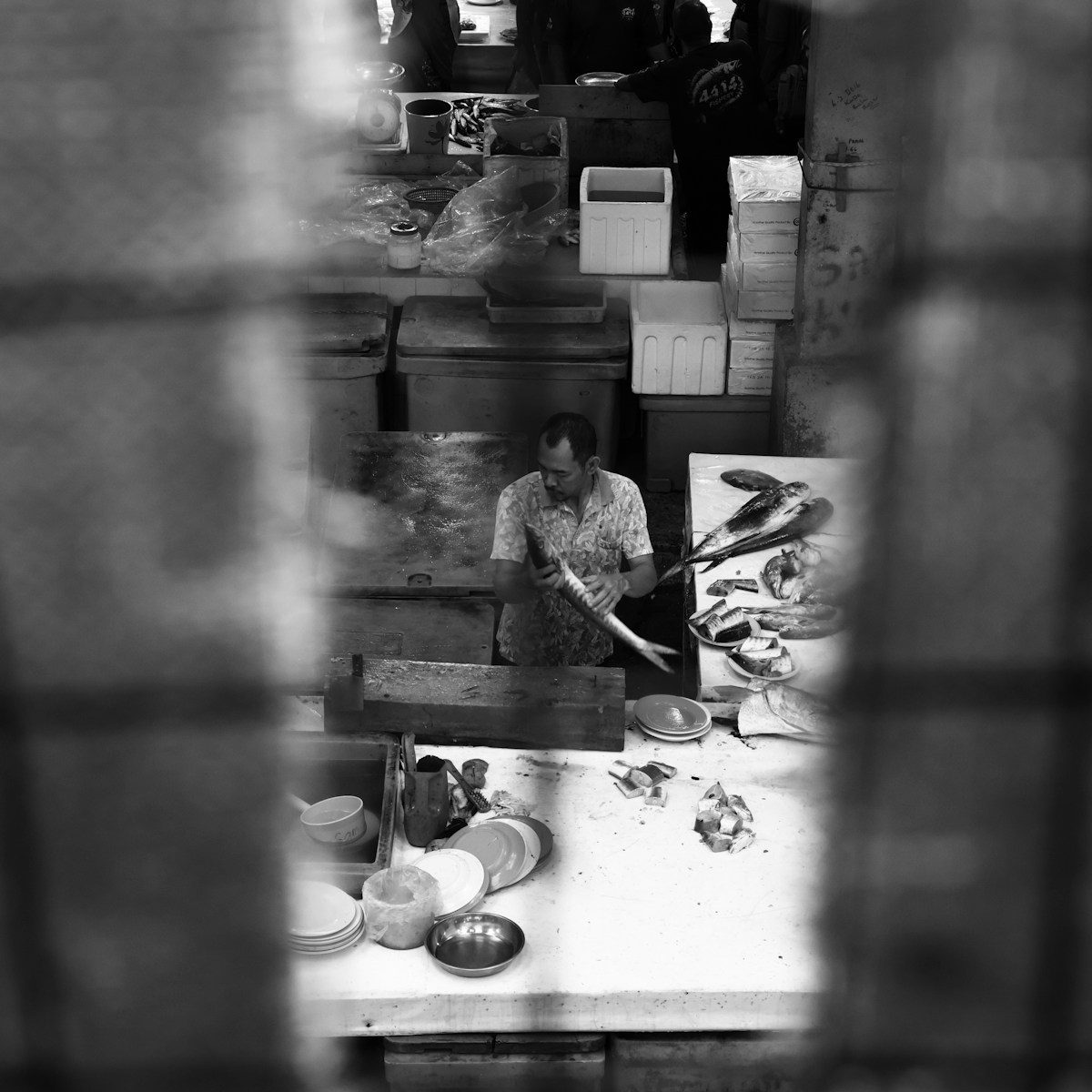
Sandakan’s food identity comes from its history as a trading port. The town was a major centre for the timber trade in the late nineteenth and early twentieth centuries, and the Cantonese and Hakka Chinese communities who settled here during that period established a food culture that remains the dominant influence in the city’s coffee shops, markets, and restaurants. The Sulu Sea to the east provides fresh seafood daily; the surrounding rainforest and agricultural land supplies the rest.
Sandakan is a practical base for wildlife visits to the Sepilok Orangutan Rehabilitation Centre, the Kinabatangan River, and Turtle Islands - most visitors spend one to three nights here. The eating, concentrated around the central market and waterfront, is straightforward and reasonably cheap.
Sandakan Bun (Sei Pau)
Sandakan’s variant of the steamed bun - locally called sei pau - is among the most specific local foods in the city. The buns are soft, slightly sweet, and filled with barbecue pork (char siu) or red bean paste. The Sandakan version is distinguished by a particularly tender steamed dough and a filling with a balance of sweet and savoury that reflects the Cantonese kitchen tradition. They are served at hawker stalls and traditional coffee shops (kopitiam) in the central market area from around 6am, typically alongside kopi (local coffee) and soft-boiled eggs.
The English Tea House & Restaurant also serves a version in a more formal setting, though the definitive Sandakan bun experience is at the working kopitiam stalls near the central market rather than the colonial tearoom.
Fresh Seafood
Sandakan faces the Sulu Sea and has a functioning fishing industry. The waterfront wet market receives fresh catch daily - grouper, snapper, tiger prawn, mud crab, squid, and various reef fish are reliably available. The Sim Sim water village, a stilt community built over the water east of the city centre, has several restaurants serving fresh seafood at tables over the water; the setting is atmospheric and the prices are lower than the more formal restaurants in the city. Expect to pay RM50–100 for two people with a selection of dishes and rice.
At the central market waterfront area, seafood restaurants operate in the evening on a similar model to KK’s Filipino Market - choose from displayed fish and specify preparation.
Prawn Mee (Prawn Noodles)
Sandakan-style prawn mee is sweeter and richer than the Penang version - the broth is made from prawn shells and heads simmered with pork bones, producing a darker, more intensely flavoured soup than the Penang variant. It is served with yellow noodles, rice vermicelli, prawns, pork slices, and bean sprouts, topped with fried shallots and chilli sambal. Kedai Kopi Min Lon is among the most cited spots for this dish; it operates in the morning and sells out by midday. Budget RM8–14 per bowl.
English Tea House
The English Tea House & Restaurant sits on a hill above central Sandakan in a colonial-era building with a croquet lawn and views across the town and sea. It is not cheap by Sandakan standards - a full afternoon tea with sandwiches and scones runs RM45–70 per person - but the setting is genuinely distinctive and the Sabah tea (served here as a specialty) is worth trying in this context.
The Tea House is one of the few functioning remnants of Sandakan’s colonial past - the town was almost entirely destroyed in World War Two and rebuilt without the architectural character of Penang or Ipoh. As a food stop it is optional; as an experience for visitors interested in Borneo’s colonial history it is the single most evocative spot in the city.
Book a diving or snorkel trip, Get a Malaysia eSIM, or Compare travel insurance.
Take a Guided Food Tour of Sandakan
Sandakan’s food scene reflects the city’s history as a Borneo trading port: Malay, Chinese Hokkien, Sulawesi, and Filipino influences all show up in the hawker stalls and coffee shops near the waterfront. A guided food tour through Sandakan’s covered market and Old Quarter coffee shop circuit covers the dishes that most wildlife visitors miss entirely — the Sandakan-style prawn mee, the sei pau bun bakeries, and the seafood preparation at the central waterfront that follows a similar order-from-the-display model to the Filipino Market in KK. Tours are less common here than in Penang or KL but do run, and they are worth booking if the food culture of Borneo interests you as much as the wildlife.
Book a guided food experience in Sandakan.
The Night Market (Batu 4)
The night market near the Batu 4 area (approximately 4 kilometres from the city centre along Jalan Leila) is a local hawker area that opens from around 5pm. It is less visited by tourists than the central market but offers cheap and representative local food - grilled chicken, rice dishes, noodles, and fruit stalls. Budget RM5–10 per item. Transport by Grab or taxi from the centre takes under 10 minutes.
For planning your visit, see our Sandakan travel guide.