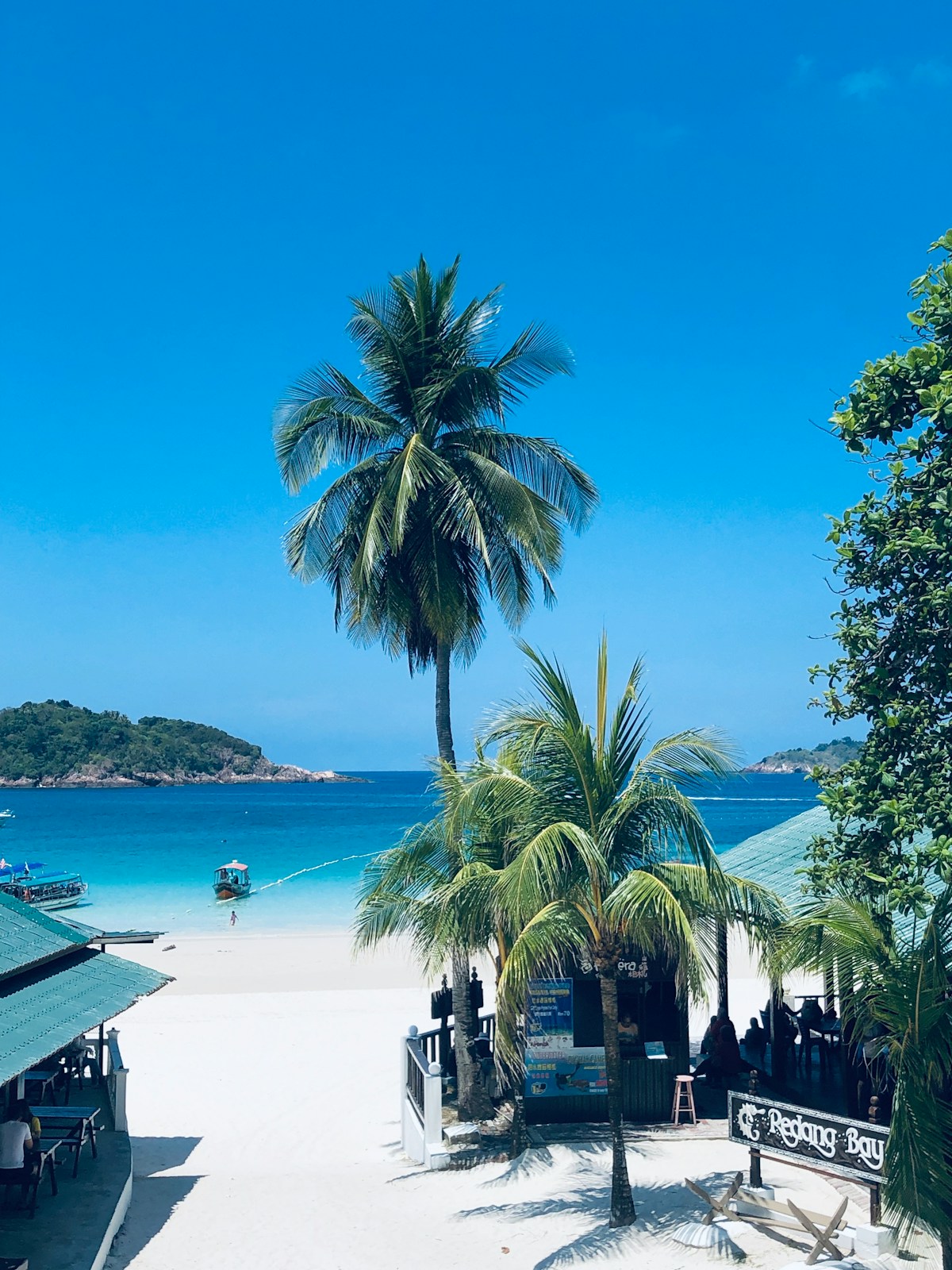
The Perhentian Islands sit inside a designated Marine Park, which restricts anchoring on coral, fishing within park boundaries, and all motorised water sports beyond dive and snorkel boats. The practical effect is that the reef systems here are in meaningfully better condition than at many comparable destinations in the region. Visibility is good, marine life encounters are reliable, and entry-level conditions make the sites accessible to a wide range of divers and snorkellers.
Marine Park Rules
All visitors to the Perhentians are subject to Marine Park regulations. The park fee - typically RM30 per person per trip - is included in resort and guesthouse accommodation costs. Key rules:
- No touching, standing on, or collecting coral or marine organisms
- No feeding fish (this applies to both snorkellers and divers)
- No anchoring on live reef - boats use fixed buoys
- No fishing within park boundaries
- No motorised water sports (jet skis, banana boats) inside the Marine Park
Violations can result in fines. Enforcement is carried out by Marine Department rangers, who patrol the park during peak season. Most operators brief guests on the rules before entering the water.
Snorkelling: Best Sites
Turtle Beach (Besar, western coast): The most visited snorkel spot in the Perhentians - a bay with seagrass beds where green and hawksbill turtles feed throughout the day. Encounters are near-certain during peak season. The water is shallow (2–5 metres at the snorkel area) and generally calm. This is the appropriate site for non-swimmers with a life jacket.
D’Lagoon (Kecil, north coast): A sheltered bay with coral heads starting from 2 metres. Regular turtle sightings, fewer boats than Turtle Beach, and slightly more varied reef than many sites around Kecil. Accessible by a short boat ride or a 30-minute kayak from Long Beach in calm conditions.
Three Coves Bay (Kecil): Three adjacent coves with rocky headlands between them. More topography than flat reef sites - small caves at the base of the headlands attract resting reef sharks (predominantly black-tip), octopus, and lionfish. Current can be stronger than other sites; best visited with an experienced guide.
Boat snorkel trips from Long Beach and Coral Bay cover 3–4 sites per trip and cost RM50–80 per person including mask, fins, and life jacket. Snorkelling trips at the Perhentian Islands can be booked directly with operators on both islands.
Diving: Conditions and Sites
Visibility: 10–20 metres on average. June through August offers the clearest conditions - visibility at the better sites can reach 20 metres or more. May and September see more plankton in the water, which reduces visibility but attracts larger filter feeders. Water temperature holds at 27–29°C year-round.
Depth: Most Perhentian dive sites are accessible between 5 and 25 metres. The deepest commonly dived sites reach 25 metres at sites like Tokong Laut (a submerged rock pinnacle) and the outer reef of Besar. There are no walls or oceanic drop-offs comparable to Sipadan - the Perhentians are reef and rocky pinnacle diving rather than wall diving.
Marine life: Black-tip and white-tip reef sharks are regularly encountered at several sites. Sea turtles are diveable at the same locations as snorkel sites, with the additional depth giving access to turtles resting on the reef at 10–15 metres. Moray eels, bumphead parrotfish, blue-spotted stingrays, and reasonably dense reef fish populations fill out most dives. The Perhentians are not a macro diving destination - the emphasis is on accessible reef fish and charismatic megafauna rather than nudibranchs or frogfish.
No liveaboards operate in the Perhentian Marine Park. All diving is day-based.
PADI Courses
PADI Open Water certification is available at multiple dive centres on Kecil. A standard three-day course costs RM800–1,100 including PADI materials, pool confined-water sessions, and four qualifying open-water dives. The price typically includes the Marine Park fee for open-water sessions.
Recommended operators with established reputations:
- Turtle Bay Divers - Long Beach, Kecil; strong track record for Open Water courses
- Panorama Dive Centre - Long Beach, Kecil; also offers Rescue Diver and Divemaster programmes
- Quiver Dive Team - Long Beach, Kecil; known for small group sizes
All three are PADI-affiliated and registered with the Marine Department. Book ahead for June–August as course slots fill.
Advanced Open Water courses are available through the same operators. Discover Scuba Diving introductory experiences (no prior certification required) can typically be arranged same-day in low season but should be booked ahead in peak.
Comparison with Other Malaysian Dive Sites
The Perhentians offer a more accessible and affordable diving experience than Semporna’s dive scene, which centres on the permit-controlled Sipadan and the macro-heavy Mabul. Sipadan is objectively the superior dive destination in Malaysia by most metrics; the Perhentians are a practical alternative for those without the budget or time for a Sabah trip. For comparable diving on Malaysia’s east coast, the Perhentians and Tioman are the two strongest options on Peninsular Malaysia.
For full Perhentians context - accommodation choices, budget guide, what to pack, and how to get there - see the Perhentian Islands travel guide. For accommodation, search hotels near Perhentian Islands on Booking.com.